Understanding the Mind–Body Connection

Hospital bed side rails are one of the first safety features buyers notice on a medical bed, yet they are also one of the most commonly misunderstood. For hospitals, nursing homes, rehabilitation centers, and home care projects, side rails are not simply metal or plastic barriers attached to the bed. They affect patient positioning, fall prevention strategy, caregiver access, bed transfers, cleaning routines, maintenance workload, and the way a facility manages risk across many different patient conditions.

For B2B buyers, this makes the side rail system an important part of hospital bed procurement. A bed may have an excellent motor system, a strong frame, and a comfortable mattress, but if the rail system is difficult to operate or poorly matched with the mattress, the daily user experience can suffer. The best purchasing decision comes from looking at the bed as a complete system: frame, rails, mattress, casters, control functions, and the training that will support real nursing work.

LOHO manufactures electric hospital beds, nursing beds, and medical bed accessories for hospitals, elderly care facilities, rehabilitation institutions, and home healthcare projects. This guide explains how to evaluate hospital bed side rails from a practical procurement perspective, while staying aligned with widely recognized safety concerns described by organizations such as the FDA.

Why Hospital Bed Side Rails Matter in Modern Care Environments

Side rails are often associated with fall prevention, but their role is broader. In many care settings, patients use rails to reposition themselves, stabilize their body while turning, and feel more secure during rest. Caregivers may use the rails as part of a wider care routine, especially during linen changes, patient turning, and transfer preparation. For facilities managing long-term or high-dependency patients, rail reliability becomes part of day-to-day care efficiency.

At the same time, side rails must be handled with care. The FDA notes that bed rails can be involved in risks such as entrapment and falls when the bed system is not properly assessed. This is why buyers should avoid thinking of rails as a universal solution. A side rail system must be evaluated together with the patient profile, mattress type, bed dimensions, rail spacing, locking mechanism, and facility procedures.

For procurement teams, the practical question is not simply whether a bed has rails. The question is whether the rail system supports the intended care environment. A ward bed, ICU bed, rehabilitation bed, nursing home bed, and home care bed may all need different priorities. Some buyers need full-length support. Others need split rails for easier transfers. Some require slow-down lowering systems to reduce sudden movement. Others need rails that are quick to clean, replace, and maintain across a large fleet.

Side Rails Are Not Just Barriers: What Procurement Teams Should Evaluate

The first evaluation point is rail structure. Materials may include aluminum alloy, ABS, steel, or mixed designs. Each material choice affects durability, weight, cleaning, tactile comfort, and visual appearance. For example, ABS rails are common on many modern hospital beds because they are smooth, easy to clean, and can integrate ergonomic handholds. Aluminum alloy rails may offer strength with a lighter feel. Steel structures can provide robustness, but coating quality and corrosion resistance become important.

The second point is operation. A side rail should lower smoothly and lock securely. Caregivers should not need excessive force or awkward posture to adjust the rail. In busy facilities, the difference between a rail that moves smoothly and one that requires repeated effort becomes meaningful over hundreds of daily interactions. Slow-down systems, pneumatic assist, clearly defined locking points, and intuitive release handles can reduce frustration and improve consistent use.

The third point is compatibility. A rail cannot be evaluated alone. It must fit the bed platform, mattress height, and patient transfer needs. If the mattress is too high relative to the rail, protection may be reduced. If gaps appear between the mattress and rail, additional risk assessment is needed. Buyers should confirm that the supplier can provide bed, mattress, and rail information as a complete configuration rather than separate unrelated components.

Key Safety Risks Around Hospital Bed Side Rails

Side rails can support safer care, but they can also create risks if used without assessment. The most discussed risks include entrapment, climbing over rails, pinching during adjustment, unexpected rail lowering, and poor visibility of locked or unlocked states. These risks are especially important for elderly patients, confused patients, patients with reduced mobility, and long-term bedridden patients.

Entrapment risk is usually related to openings and gaps in the bed system. These gaps may appear between the rail and mattress, between split rail sections, between the rail and headboard, or around the bed frame. The FDA's hospital bed resources explain why dimensional assessment matters for reducing entrapment hazards. Facilities should not treat the rail as an isolated accessory; the mattress, rail, frame, and patient condition all matter.

Another risk is misuse. If caregivers are not trained, a rail may be left partially locked, lowered too quickly, or used as a substitute for proper supervision. If patients are likely to climb over a rail, a raised rail can increase fall height. In these cases, clinical assessment and facility policy become as important as hardware quality. For this reason, procurement should involve nursing, maintenance, infection control, and project management teams instead of only price comparison.

Design Features That Improve Daily Nursing Use

A good rail system should feel natural to operate. Release points should be obvious to trained staff but protected from accidental activation. The rail should not shake excessively after locking. Lowering should be controlled rather than sudden. Edges should be rounded, surfaces should be smooth, and cleaning access should be considered.

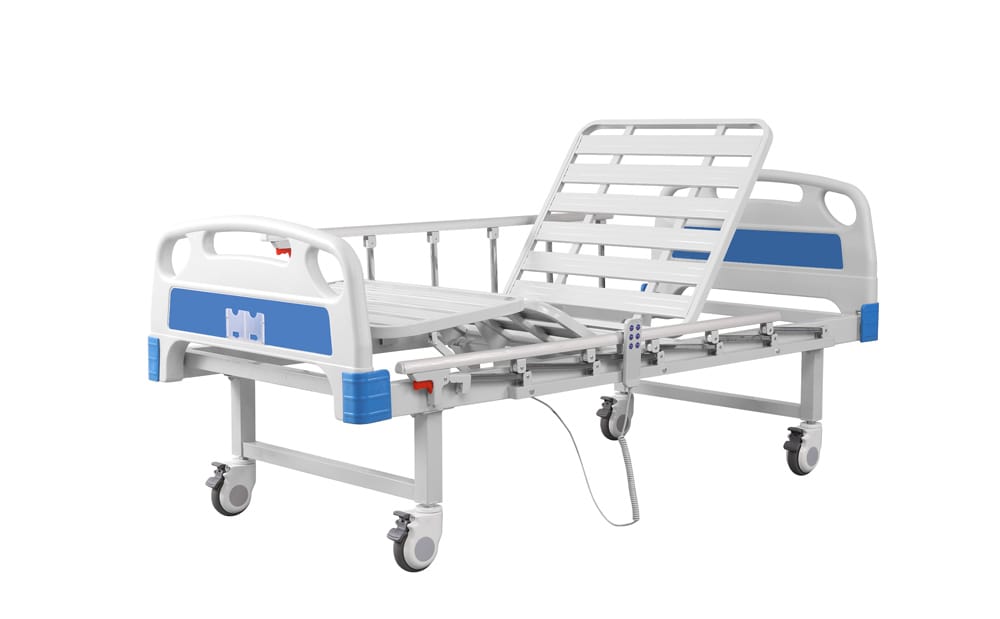
For beds used in hospitals and nursing homes, caregivers often prefer rails that support several tasks: patient repositioning, transfer preparation, infusion care, and quick access during emergencies. Split rails can make side access easier. Full-length rails may provide a stronger sense of enclosure. Four-section ABS rails are common in electric hospital bed designs because they can balance protection, access, and modern appearance.

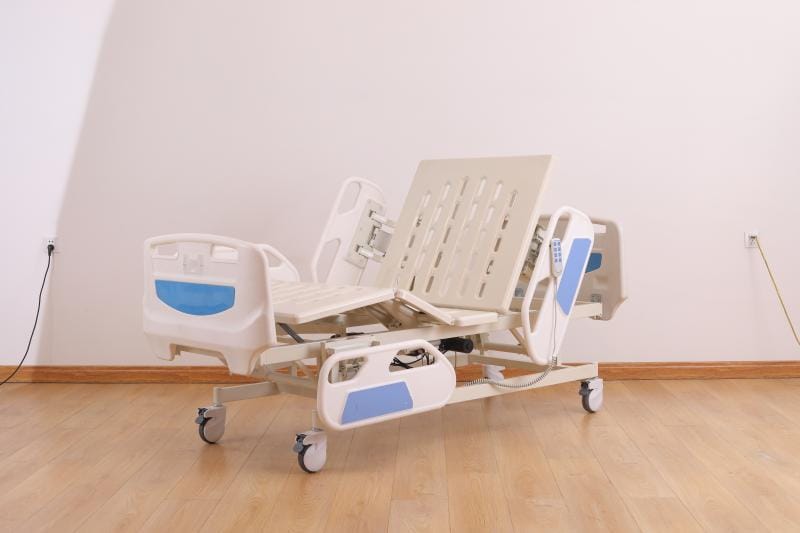
LOHO's Electric Hospital Bed category includes models with ABS safety rails, full aluminum alloy safety rails, central-lock casters, emergency functions, and medical mattresses. Buyers can review models such as the Three-Function Electric Hospital Bed when evaluating how rail design integrates with height adjustment, backrest adjustment, leg positioning, and ward mobility.

Matching Side Rails With the Bed Frame and Mattress

The bed system should be specified as one package. Mattress thickness, mattress firmness, bed deck articulation, rail height, and rail position all influence the final safety profile. A mattress that compresses deeply under patient weight may create different effective gaps than an uncompressed measurement suggests. A replacement mattress from another supplier may change the relationship between the rail and patient.

This matters for distributors and project buyers because facilities often purchase beds in batches and later replace mattresses or accessories. A supplier should be able to advise on compatible mattress dimensions and accessory options. For long-term maintenance, buyers should record the original bed model, rail type, mattress specification, and replacement part numbers.

When comparing suppliers, ask whether the bed is sold with a matched mattress option and whether the side rail configuration has been designed for that mattress. Also ask how replacement rails, release handles, locking components, and rail panels are supplied. A low initial price may not be attractive if replacement parts are difficult to obtain later.

How Side Rail Priorities Change by Care Setting

In general hospital wards, side rails need to support frequent patient movement and caregiver access. Beds may be moved between rooms, cleaned often, and adjusted by different staff members. Durability and simple operation are important.

In ICU and high-acuity environments, emergency access and bed positioning become more important. A rail system should not interfere with CPR access, monitoring, IV management, or rapid patient care. Buyers often evaluate rail function together with Trendelenburg positioning, one-touch CPR, central locking, and overall bed stability.

In nursing homes and elderly care centers, long-term comfort and fall-risk management become central. Residents may use rails for support while turning or sitting up. However, facilities must also assess cognitive status and individual risk. In home care, family caregivers need rails that are easy to understand and not intimidating. Clear manuals and supplier guidance become valuable.

Hospital Bed Side Rail Procurement Checklist

Evaluation AreaWhat to CheckWhy It Matters
Rail materialABS, aluminum alloy, steel, coating qualityAffects durability, cleaning, weight, and appearance
Locking systemSecure lock, clear engagement, low shakeReduces accidental lowering and daily frustration
Lowering controlSmooth movement, slow-down design where neededHelps caregivers operate rails safely
Mattress fitRail height, gap control, matched mattress optionReduces mismatch between bed frame, mattress, and rail
Cleaning accessSmooth surfaces, fewer dirt traps, removable componentsSupports infection-control routines
Replacement partsRail panels, handles, lock parts, supplier supportProtects long-term fleet maintenance
Care settingWard, ICU, nursing home, rehab, home careEnsures the rail design fits actual use
DocumentationManuals, specifications, training guidanceHelps facilities standardize safe use

Maintenance, Cleaning, and Training Considerations

Even strong side rails need regular inspection. Care teams should check whether rails lock securely, move smoothly, and show signs of damage. Maintenance staff should inspect screws, hinges, release handles, rail panels, and any pneumatic or slow-down components. If a rail becomes loose or difficult to operate, it should be repaired before normal use continues.

Cleaning is also important. Rails are high-touch surfaces, especially in long-term care environments. Smooth surfaces and accessible joints reduce cleaning time. Buyers should ask suppliers about recommended cleaning methods and whether common disinfectants are suitable for rail materials and coatings.

Training should be practical. Staff should know when to raise or lower rails, how to confirm locking, how to check for gaps, and when to request maintenance. For home care projects, family caregivers may need simpler instructions with visual guidance. A supplier that provides documentation and after-sales support can reduce confusion after delivery.

In larger facilities, maintenance should not depend only on individual staff memory. A simple inspection schedule can help standardize rail checks across wards or buildings. For example, daily visual checks can confirm whether rails move normally and lock securely, while monthly technical checks can focus on hinges, fasteners, release mechanisms, and any signs of structural fatigue. If a bed is moved frequently, caster and rail checks should be coordinated because both systems affect safe positioning around the patient.

Procurement teams should also think about cleaning workflow before placing a bulk order. A rail with many small openings, sharp corners, exposed fasteners, or rough surface areas may take longer to clean. Over time, that extra cleaning time becomes a real operating cost. In shared rooms and high-turnover wards, easy-clean surfaces can support faster bed preparation between patients. In nursing homes, where the same resident may use a bed for a long period, easy cleaning supports dignity, comfort, and odor control.

Training materials should be written for the people who will actually use the bed. A technical manual is useful for maintenance staff, but caregivers often need quick, visual instructions. Buyers can ask whether the supplier provides operation videos, labeled diagrams, or simplified care instructions. For distributors, this kind of support can reduce after-sales questions and improve customer satisfaction in new markets.

Questions to Ask Before Approving a Side Rail Design

Before confirming a hospital bed order, procurement teams should ask several practical questions. How does the rail lock? Can one caregiver operate it easily? What material is used for the rail panel and support structure? Is the rail compatible with the supplied mattress? What happens if the facility later uses a different mattress thickness? Are spare rail parts available, and how are they identified in the parts list?

It is also useful to ask how the rail behaves during bed articulation. When the backrest rises, the patient may shift position and interact differently with the rail. When the leg section moves, the mattress may flex and change its relationship with the rail. Buyers should check whether the bed feels stable through the full range of movement, not only when the platform is flat.

For export buyers, packaging and replacement logistics matter. Rails can be damaged during transport if packaging is weak or if protruding parts are not protected. Ask the supplier how rails are packed, whether they are preassembled or installed after delivery, and whether replacement panels can be shipped separately. These details are not glamorous, but they influence the success of real projects.

Balancing Patient Dignity, Access, and Protection

A good side rail system supports care without making the patient feel trapped. This balance is especially important in elderly care and long-term care settings, where residents may use the bed every day for months or years. Facilities should consider how rails look, how they feel to the patient, and whether they support normal activities such as sitting up, turning, reading, eating, and speaking with caregivers.

Caregiver access is equally important. If rails block too much access, staff may lower them repeatedly and forget to raise them again. If rails are hard to operate, staff may avoid using them consistently. A practical rail design should support safe routines rather than depend on perfect behavior in a busy environment.

For project buyers, this is why sample evaluation matters. A specification sheet can show rail height and material, but it cannot fully show how a caregiver feels when lowering the rail, changing a mattress cover, or assisting a patient to sit up. Requesting samples or product videos can help buyers identify small usability issues before a large purchase is approved.

Another useful step is to include side rail evaluation in the facility's broader bed acceptance process. When a new batch arrives, staff can check that all rails match the ordered configuration, that locks engage properly, that no transport damage is visible, and that the mattress sits correctly on the platform. This acceptance check should happen before beds are placed into patient rooms.

For distributors, side rail communication should be clear in sales materials. If a bed uses ABS rails, aluminum alloy rails, split rails, or full-length rails, the catalog should say so directly. Photos should show the rail in raised and lowered positions when possible. This prevents customer misunderstanding and helps buyers compare models accurately.

Clear terminology also helps after-sales teams identify the correct replacement rail quickly.

For international buyers, rail terminology should also be consistent across quotation sheets, user manuals, packing lists, and spare parts catalogs. A phrase such as "ABS guardrail" in one document and "plastic side rail" in another may refer to the same component, but it can confuse customers after delivery. Consistent naming is a small detail that supports professional project handover.

Facilities should also record any rail-related decisions in their internal equipment file. This may include the bed model, mattress model, rail type, accessory list, and supplier contact. When a maintenance issue appears months later, this record helps the facility identify whether the correct bed and rail combination is still in use. It also helps distributors respond faster when customers request replacement parts.

For tenders and institutional purchasing, side rail specifications should be written in a way that can be evaluated objectively. Instead of only asking for "safe side rails," the buyer can request rail material, locking method, lowering method, compatibility with the supplied mattress, spare part availability, and cleaning requirements. This makes quotations easier to compare and reduces the risk that suppliers interpret the requirement differently.

Buyers should also think about future standardization. If a facility purchases several bed models over time, staff may have to learn several rail systems. Standardizing the rail operation style across similar beds can reduce training time and make daily use more predictable. This does not mean every bed must be identical, but it does mean that similar care areas should avoid unnecessary variation.

In export projects, rail design may also influence customer perception. A bed with smooth, stable, well-finished rails looks more professional than a bed with loose or noisy rails, even when the frame specifications are similar. For distributors building a brand in a local market, this user impression can affect repeat orders.

Choosing a Hospital Bed Supplier for Rail Safety and Support

A reliable supplier should be able to explain the rail system, not just list it as a feature. Ask for bed dimensions, rail material, rail height, mattress compatibility, load capacity, caster system, motor functions, and available accessories. If the supplier offers OEM or ODM support, confirm how rail design changes will be validated before production.

LOHO provides electric hospital beds, manual hospital beds, electric nursing beds, manual nursing beds, hospital furniture, medical bed accessories, and rehabilitation equipment. For facilities, distributors, and elderly care projects, this product portfolio makes it possible to discuss the bed as a complete care solution rather than a single item. Buyers can review the Electric Hospital Bed category or contact LOHO for project-specific recommendations.

FAQ

Are hospital bed side rails always required?

Not always. Side rail use should depend on the care setting, patient condition, transfer needs, and facility policy. Rails can support safety, but they should be evaluated as part of a complete bed system.

What is the main safety concern with hospital bed side rails?

Entrapment and falls are major concerns. Gaps between the mattress, bed frame, and rails should be assessed, and staff should be trained to use rails correctly.

Which side rail material is best?

There is no single best material for every setting. ABS, aluminum alloy, and steel designs can all work well when they are durable, easy to clean, securely locked, and suitable for the bed model.

Can side rails be replaced after purchase?

In many cases, yes, but replacement depends on the bed model and supplier support. Buyers should confirm spare part availability before purchasing a large batch of beds.

Should side rails be evaluated together with the mattress?

Yes. Mattress height, compression, and dimensions can affect rail performance and gap control. It is best to specify the bed and mattress as a matched configuration.

For project buyers, the right hospital bed side rails are part of a wider care system. contact LOHO to discuss electric hospital beds, nursing beds, accessories, and matched configurations for hospitals, nursing homes, rehabilitation centers, and home care projects.

hospital bed side rails on an adjustable LOHO medical bed
hospital bed side rails with safe lowering design
hospital bed side rails and mattress fit for reduced gaps
hospital bed mattress with adjustable electric hospital bed
官网询盘
官网询盘