A manual hospital bed for home care can be a practical choice for long-term patient support, elderly care, rehabilitation, and home nursing projects. While electric beds are often preferred when frequent positioning is required, manual hospital beds remain important because they are simple, durable, cost-conscious, and suitable for many environments where electrical functions are not essential.
For distributors, elderly care project managers, medical equipment buyers, and home healthcare providers, the key is to avoid choosing a manual bed only by appearance. A good manual hospital bed should support safe positioning, stable caregiving, easy cleaning, reliable adjustment, and long-term parts availability. It should also be matched with the right mattress, rails, casters, and accessories.
This guide explains how to evaluate manual hospital beds for home care from a B2B procurement perspective. It focuses on practical use rather than price, because the best choice depends on patient condition, caregiver capacity, room layout, maintenance expectations, and project requirements.
Why a manual hospital bed for Home Care Still Matters
Home care is expanding in many markets as families, care providers, and health systems look for ways to support patients outside hospital wards. The World Health Organization has emphasized the importance of long-term care systems for older people, and fall prevention remains a major concern in ageing populations. A properly selected bed can help caregivers manage daily care more safely and efficiently.
manual hospital beds are useful because they offer essential positioning without relying on electric motors. In regions with unstable power, limited maintenance teams, or budget-sensitive public health projects, manual beds can be easier to deploy. They are also suitable for patients whose position is adjusted only a few times per day rather than many times per shift.
For buyers, the goal is not to decide that manual is always better or worse than electric. The goal is to match bed type with real use. If the patient requires frequent height adjustment, electric positioning, or advanced ICU functions, an electric hospital bed may be more suitable. If the project requires reliable basic care, straightforward operation, and simple maintenance, a manual hospital bed can be a strong option.
When Manual Beds Are the Right Fit
manual hospital beds are often suitable for home care, general recovery rooms, nursing homes, rehabilitation support, community health centers, and temporary care setups. They are especially useful when caregivers are trained, patient mobility is relatively stable, and advanced electric functions are not required.
They may also fit procurement projects where long-term maintenance simplicity is a priority. A manual crank system has fewer electronic components than an electric motor system. This can make troubleshooting easier in remote areas or facilities without dedicated biomedical maintenance teams. However, the crank mechanism must still be strong, smooth, and protected from damage.
Manual beds are less ideal when caregivers need to reposition patients frequently throughout the day, when bed height must be adjusted often for ergonomic nursing, or when patients benefit from independent electric control. In those cases, an electric nursing bed or electric hospital bed may reduce caregiver strain and improve user comfort.
Core Functions Buyers Should Compare
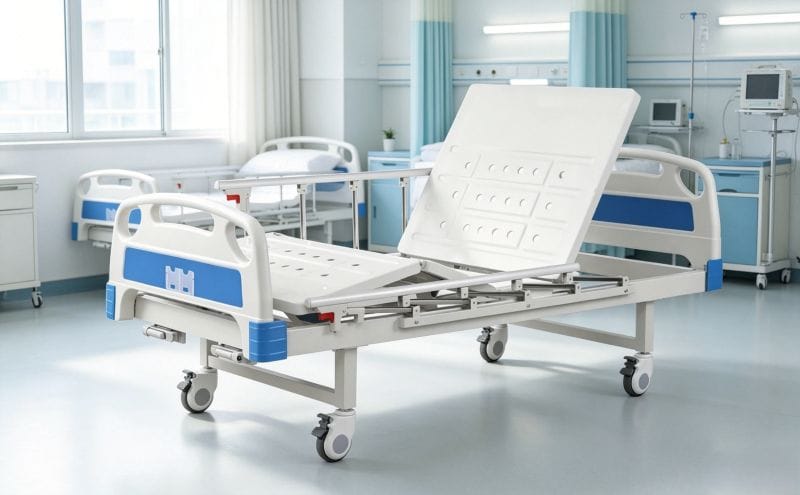
The most common manual functions include backrest adjustment, leg rest adjustment, and sometimes height adjustment. A two-function manual bed usually supports back and leg movement. A three-function manual bed may add height adjustment. Some nursing beds may include turning functions, toilet openings, or more specialized care features, depending on the product category.
Backrest adjustment helps patients sit up for meals, conversation, breathing comfort, and general care. Leg adjustment can support circulation, comfort, and positioning. Height adjustment, when available, can help caregivers work at a safer level and make transfers easier. Buyers should confirm the adjustment range, crank position, operating effort, and whether adjustments remain stable under load.
A strong manual bed should not feel loose or unstable when adjusted. The crank should rotate smoothly. Moving sections should rise and lower without sudden shifts. The frame should remain stable when the patient changes position. These details matter in home care because family caregivers may not have the same experience as hospital staff.
Caregiver Workload and Daily Operation
Caregiver workload is one of the most important differences between manual and electric beds. Manual adjustment requires physical effort. This may be acceptable for occasional positioning, but it can become tiring if the patient needs frequent changes. Buyers should consider who will operate the bed: professional nurses, nursing home staff, family caregivers, or rotating attendants.
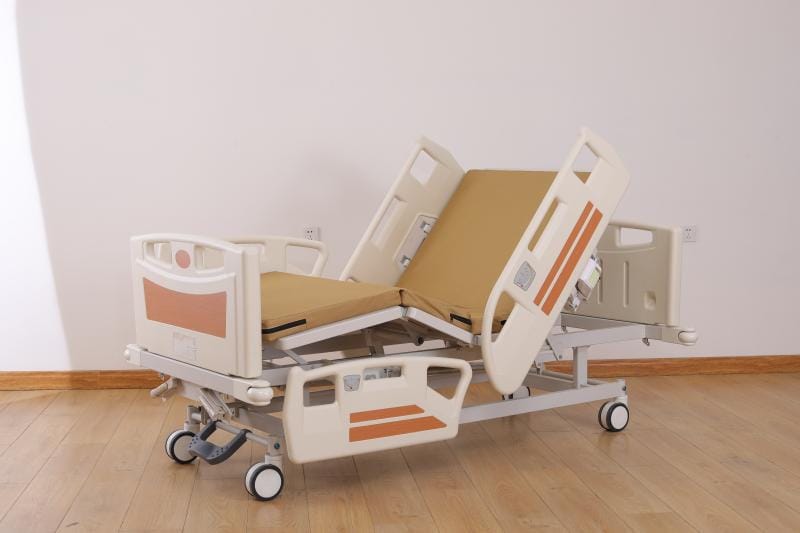
Crank placement is also important. A poorly positioned crank can force caregivers into awkward postures or make the bed difficult to operate in small rooms. In home care settings, space is often limited by walls, furniture, and medical accessories. Buyers should check whether the crank can be accessed easily from the foot or side of the bed and whether it can be folded away when not in use.
For B2B projects, it is useful to test a sample bed before bulk ordering. Ask staff to adjust the bed through the full range while simulating real room conditions. If the bed is difficult to use during testing, it will likely become more difficult after months of daily care.
Safety Features That Should Not Be Overlooked
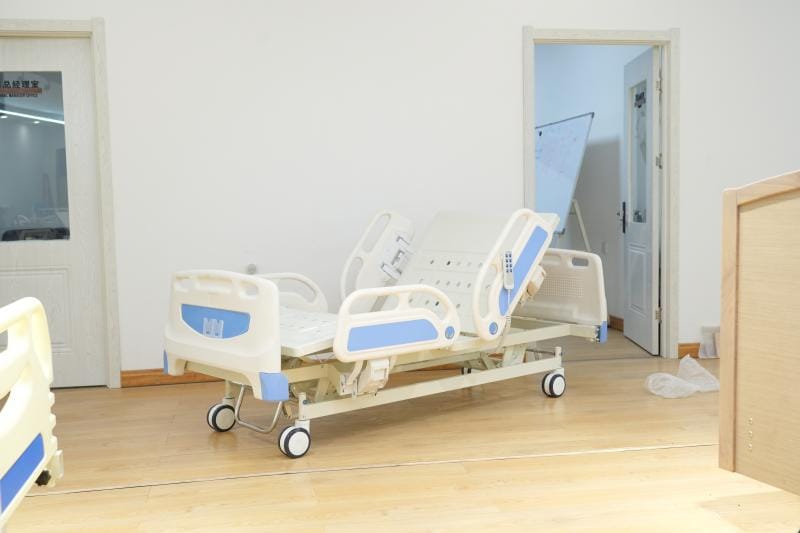
Safety should remain central even when choosing a basic manual model. Buyers should evaluate the frame, side rails, headboard and footboard, casters, brakes, mattress support deck, and load capacity. The bed should feel stable during adjustment and transfer. Casters should move smoothly when needed and lock securely when the bed is stationary.
Side rails deserve special attention. They may help patients reposition and reduce accidental rolling, but rail use should be assessed based on the patient and environment. The FDA provides hospital bed safety resources that discuss bed systems, side rails, and entrapment risk. Buyers should treat the bed frame, mattress, and rails as one system rather than separate parts.
For home care, caregivers should receive clear instructions on locking casters, using rails, adjusting the backrest, and checking the bed before use. Manuals should be easy to understand. If the bed is supplied through a distributor, the distributor should be able to provide guidance after delivery.
Mattress, Rails, and Accessories for Home Care
The mattress can strongly affect patient comfort and bed performance. A home care patient may spend many hours per day in bed, so the mattress should support comfort, hygiene, and cleaning needs. Buyers should confirm mattress thickness, cover material, breathability, waterproof performance, and compatibility with the bed platform.
Rails should be matched with the mattress. If the mattress is too thick or shifts easily, rail effectiveness may change. Accessories such as IV poles, overbed tables, bed sheets, transfer aids, and spare parts should also be considered. A home care bed is rarely used alone; it becomes part of a care room.
LOHO's product categories include manual hospital beds, manual nursing beds, hospital furniture, medical bed accessories, and rehabilitation equipment. This makes it easier for buyers to plan a complete solution rather than source every item separately.
manual hospital bed Buying Checklist
| Item to Compare | What to Ask | Procurement Impact |
|---|---|---|
| Function count | Backrest, leg rest, height, turning, toilet function | Determines patient positioning and caregiver workload |
| Crank system | Smooth operation, foldable handle, accessible location | Affects daily ease of use |
| Frame strength | Steel structure, coating, load capacity | Supports long-term durability |
| Side rails | Material, lock quality, mattress compatibility | Influences safety and transfer access |
| Casters and brakes | Wheel size, brake type, movement stability | Matters for room movement and secure positioning |
| Mattress | Thickness, cover, waterproofing, cleaning | Affects comfort and hygiene |
| Spare parts | Cranks, rails, casters, mattress options | Reduces long-term maintenance risk |
| Supplier support | Manuals, OEM options, export experience | Helps distributors and project buyers scale confidently |
Choosing a Supplier for Home Care Projects
A supplier should understand the difference between a home care bed and a general hospital bed. Home care buyers often need clearer instructions, simpler operation, and product configurations that fit smaller spaces. Distributors may need consistent packaging, documentation, replacement parts, and OEM support.
When speaking with a manufacturer, ask about product categories, load capacity, bed dimensions, adjustment ranges, mattress options, rail design, caster type, and available accessories. Avoid vague answers. A reliable supplier should be able to explain how each feature supports the intended care environment.
LOHO manufactures medical beds and elderly care equipment for hospitals, nursing homes, rehabilitation centers, and home care projects. Buyers can review the manual hospital bed and manual nursing bed categories, then Contact LOHO with patient type, project scale, target market, and accessory needs.
Room Layout and Home Installation Factors
Home care rooms are usually less predictable than hospital rooms. A bed may need to fit beside wardrobes, windows, oxygen equipment, family furniture, or narrow doorways. Before ordering a manual hospital bed for home care, buyers should confirm the bed's overall length, width, caster movement, turning radius, and recommended clearance around the crank. If the crank cannot be accessed easily, the caregiver may struggle to adjust the bed even if the function itself is reliable.
Doorway and elevator access should also be checked for project deliveries. Some home care beds are delivered partially assembled, while others require installation on site. Distributors should ask the manufacturer about packaging size, assembly steps, required tools, and whether installation instructions are suitable for local service teams. In export markets, unclear assembly can create unnecessary after-sales pressure.
Floor conditions matter as well. In some homes, floors may be uneven, soft, or easily scratched. Caster material and brake stability should be appropriate for the expected environment. A bed that moves smoothly in a showroom may behave differently on tile, wood, or textured flooring. Buyers should not assume every caster system performs the same in every setting.
Manual Bed Specifications That Distributors Should Standardize
Distributors often sell manual hospital beds to multiple customer types. To reduce confusion, it helps to standardize a few core specifications. These may include bed size, safe working load, backrest angle, leg angle, crank count, side rail type, caster size, mattress option, headboard material, footboard material, packaging method, and spare part list.
Standardization makes quotations clearer and helps after-sales teams respond quickly. If every batch uses different rails, cranks, or casters, spare parts become harder to manage. If model numbers are unclear, customers may order the wrong replacement component later. A manufacturer that supports consistent documentation can make distributor work much easier.
At the same time, distributors may need optional configurations for different markets. Some customers may prefer ABS headboards and footboards. Others may prefer stainless steel or powder-coated steel components. Some may need a waterproof mattress, while others may request a more breathable option. Buyers should separate standard features from optional features in their catalog so customers can compare clearly.
Comparing manual hospital beds With manual nursing beds
The terms manual hospital bed and manual nursing bed are sometimes used loosely, but buyers should look at the intended use. A manual hospital bed is often designed around clinical care, patient positioning, easy cleaning, and ward-style use. A manual nursing bed may focus more on long-term care, elderly support, toileting assistance, turning, or caregiver convenience, depending on the model.
For home care, both categories may be relevant. A recovering patient after surgery may need a simpler manual hospital bed with backrest and leg adjustment. A long-term bedridden elderly user may need nursing-focused features such as easier turning support, more comfortable rails, or a care-friendly mattress. The right choice depends on the user's daily care routine, not only the product name.
Procurement teams should describe the patient scenario to the supplier. How many hours per day will the patient stay in bed? Can the patient sit up independently? Is toileting assistance needed? How often will caregivers reposition the patient? Does the room need frequent bed movement? These questions help the supplier recommend a suitable category and configuration.
Avoiding Common Procurement Mistakes
One common mistake is choosing the lowest-cost model without checking daily operation. A bed that looks acceptable in a photo may have a stiff crank, weak brakes, or limited spare parts support. Another mistake is overlooking the mattress. If the mattress is uncomfortable, difficult to clean, or poorly matched with the bed platform, the patient experience can suffer.
Buyers may also forget to confirm after-sales support. Manual beds are simpler than electric beds, but they still have moving parts. Cranks, hinges, rails, casters, and panels can wear or become damaged. A supplier should be able to provide replacement parts and clear identification for each component.
Finally, buyers should avoid assuming home care users are trained like hospital staff. Family caregivers need intuitive products. Clear labels, simple manuals, and reliable mechanisms matter more in a home than many procurement teams expect.
Another mistake is failing to plan the delivery and service model. A manual hospital bed for home care may be sold through medical equipment dealers, elderly care projects, rehabilitation service providers, or direct institutional procurement. Each channel has different needs. Dealers may need compact packaging and fast spare parts. Project buyers may need batch labeling and consistent documentation. Home care service providers may need installation training and a simple checklist for caregivers.
Buyers should also be careful with overly generic product descriptions. Terms such as "high quality" or "strong frame" are not enough. Ask for measurable information: bed size, backrest angle, leg angle, height range if applicable, load capacity, caster diameter, rail material, mattress thickness, and packing dimensions. These details make comparison more reliable and reduce misunderstandings after purchase.
For home care programs, it is also important to think about patient change over time. A patient who can sit up today may need more assistance later. An elderly user who only needs occasional backrest adjustment may later require more frequent repositioning. Buyers should consider whether the selected manual model can continue to serve the user as care needs develop, or whether an electric nursing bed would be a better long-term choice.
How to Prepare a Better Inquiry for a Manufacturer
The quality of the supplier's recommendation depends on the quality of the inquiry. Instead of asking only for a manual hospital bed quotation, buyers should describe the use case. Include the target setting, expected patient type, preferred function count, required quantity, destination market, accessory needs, and any packaging or documentation requirements.
For example, a distributor might explain that the beds will be used for home care rental, need two manual functions, should include side rails and mattress, and must be easy to assemble by local technicians. A nursing home project might request stronger casters, more comfortable mattresses, and spare rail components. A rehabilitation center might care more about transfer access and stable braking.
Clear inquiries help manufacturers respond with the right configuration instead of a generic model. They also help buyers compare quotations fairly. If one quotation includes mattress, rails, and spare parts while another includes only the frame, the lower number may not represent better value.
Why Documentation Matters for Home Care Beds
Documentation is often overlooked because it is not part of the visible product. In home care, however, documentation can influence safety and satisfaction. Family caregivers may need to learn how to lock the bed, operate the crank, adjust the backrest, clean the mattress cover, and identify when maintenance is needed.
For export buyers, documentation should be clear enough for local service teams. If the bed requires assembly, diagrams should show each step. If parts are packed separately, labels should match the manual. If accessories are optional, the packing list should make the configuration obvious. These details reduce installation errors and after-sales disputes.
Good documentation also supports repeat orders. When customers understand how to use and maintain the bed, they are more likely to view the product as reliable. For distributors building a home care product line, this can become an important competitive advantage.
Documentation should also explain what users should not do. For example, caregivers should not use the crank as a lifting handle, should not move the bed while brakes are locked, and should not replace the mattress with an incompatible size without checking rail fit. Clear warnings reduce misuse and protect both the patient and the supplier's after-sales reputation.
For bulk buyers, documentation should be reviewed before shipment rather than after delivery. If manuals need a local language, distributor logo, model number, or accessory list, these details should be confirmed during production. A manual that does not match the delivered configuration can create confusion for installers and caregivers. This is especially important when the order includes several manual bed models with different crank systems.
Another useful step is to create a simple inspection form for the first installation. The form can confirm that the crank works, side rails lock, casters brake, mattress fits, headboard and footboard are secure, and all accessories are present. This kind of checklist is easy to prepare, but it helps distributors and project managers document that the product was delivered in usable condition.
manual hospital beds can provide excellent value when the project is planned carefully. The strongest results come when buyers think beyond the frame and consider the people who will adjust, clean, move, maintain, and sleep in the bed every day.
FAQ
Is a manual hospital bed for home care suitable for long-term patients?
Yes, it can be suitable when the patient does not require frequent electric positioning and caregivers can operate the manual functions safely.
What is the main advantage of a manual hospital bed?
Manual beds are simple, durable, and easier to maintain because they do not rely on electric motors for basic adjustment.
When should buyers choose an electric bed instead?
An electric bed is often better when frequent repositioning, height adjustment, patient independence, or reduced caregiver effort is important.
Does a manual hospital bed need side rails?
Side rails may be useful, but they should be evaluated based on patient condition, mattress fit, room layout, and caregiver policy.
What should distributors confirm before ordering manual beds?
Distributors should confirm dimensions, load capacity, adjustment functions, packaging, spare parts, mattress compatibility, and after-sales support.
For home care projects, the right manual hospital bed should balance comfort, safety, maintenance, and caregiver practicality. Contact LOHO to discuss manual hospital beds, manual nursing beds, accessories, and project-ready configurations for your market.
manual hospital bed for home care with adjustable backrest and safety rails” class=”wp-image-1708″/>
manual hospital bed for home care crank adjustment system” class=”wp-image-1730″/>
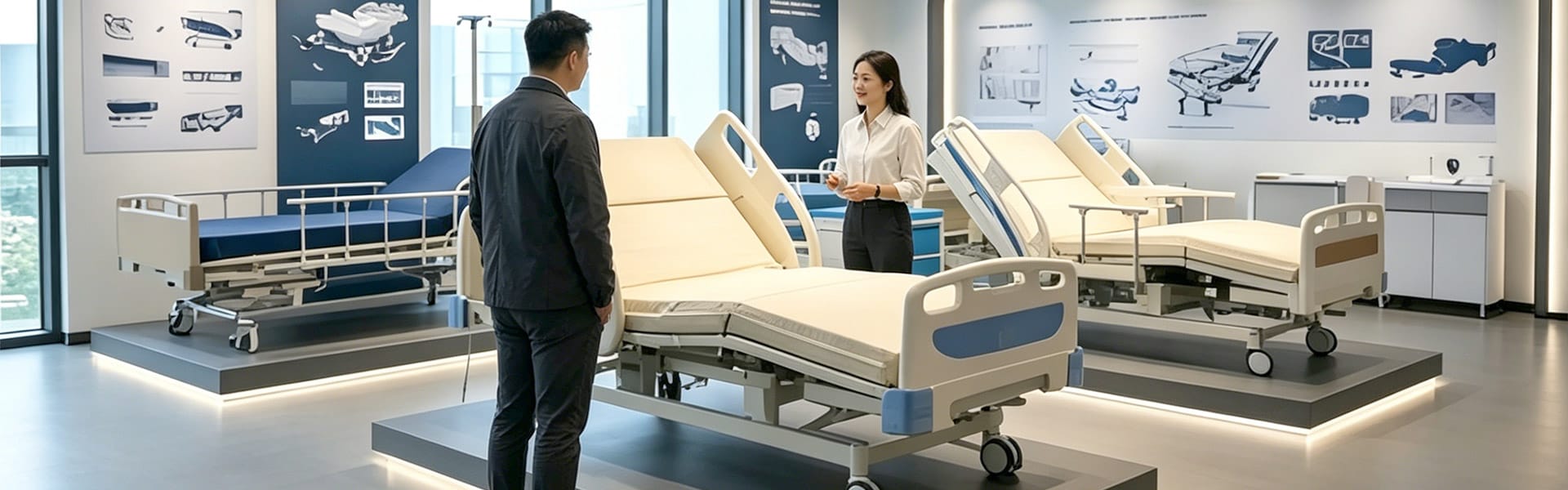
manual hospital bed for home care and long term nursing” class=”wp-image-1692″/>