Table of Contents
Hospital bed after-sales service should be part of procurement planning, not a topic raised only after a problem appears. Beds are used daily, moved between rooms, cleaned frequently, and operated by different people. Service planning protects both uptime and buyer confidence.
This guide explains how to prepare hospital bed after-sales service for care facilities, distributors, importers, and project buyers. It focuses on practical documents, spare parts, communication, and maintenance routines.
Discuss Service Before Ordering
Hospital bed after-sales service starts before the purchase order. Buyers should ask how common parts are identified, how issues are reported, and what documents come with the shipment.
Early discussion reveals whether the supplier understands long-term support or only the initial sale.
Build a Spare Parts List
Hospital bed after-sales service is faster when spare parts have clear names, photos, and compatibility information. Rails, casters, brakes, controllers, cranks, panels, and small hardware should be considered.
Distributors may need local stock for fast response. Facilities may need a simple reorder reference.
Keep Documents Easy to Use
Hospital bed after-sales service depends on manuals, diagrams, packing lists, and model references that ordinary staff can understand. Overly generic documents slow problem solving.
If OEM branding or local language support is required, confirm this before production.
Train Staff on Routine Checks
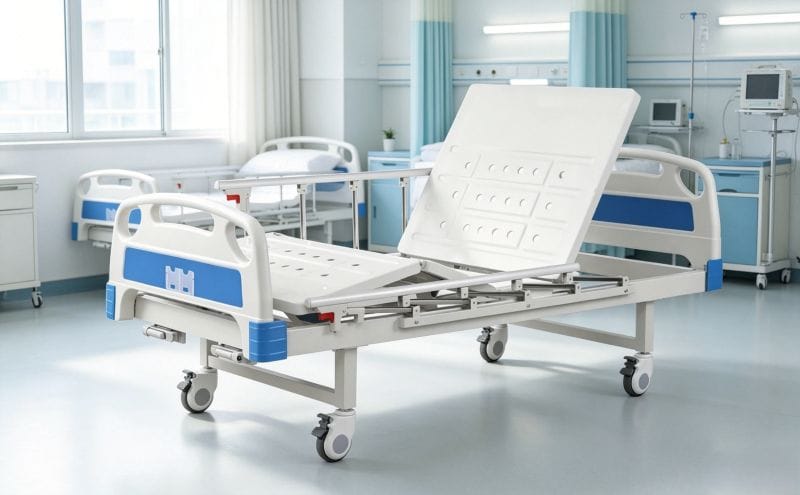
Hospital bed after-sales service can be reduced through better routine inspection. Staff should know how to check brakes, rails, controls, cranks, cables, and visible damage.
Training should be practical and short enough to fit real facility workflow.
Use Clear Issue Reporting
Hospital bed after-sales service improves when buyers send photos, videos, model names, serial references when available, and a clear description of the problem.
A vague message creates delays. Good evidence helps the supplier identify parts and suggest next steps.
Support Distributors With Consistency
Hospital bed after-sales service is especially important for distributors because they stand between the manufacturer and local customers. Stable model references and repeatable configurations make service easier.
Changing small components without documentation can create large support problems later.
| Service Element | What to Prepare | Result |
|---|---|---|
| Spare parts | Names and photos | Faster replacement |
| Manuals | Model-specific documents | Clearer operation |
| Training | Routine checks | Fewer avoidable issues |
| Reporting | Photos and videos | Faster diagnosis |
| Warranty | Written scope | Better expectations |
Clarify Warranty and Responsibility
Hospital bed after-sales service should include clear warranty terms and limitations. Buyers should understand what is covered, what is wear-related, and what information is needed for a claim.
This prevents unrealistic expectations and keeps the commercial relationship more transparent.
Use Service Feedback for Future Orders
Hospital bed after-sales service can improve future procurement. Repeated issues may indicate a need for different accessories, better packaging, clearer training, or a more suitable bed model.
Service records are not only repair history. They are useful purchasing intelligence.
For related LOHO products, buyers can review <a href="https://lohomed.com/product-category/electric-hospital-bed/">electric hospital beds</a>, <a href="https://lohomed.com/product-category/manual-hospital-bed/">manual hospital beds</a>, <a href="https://lohomed.com/product-category/electric-nursing-bed/">electric nursing beds</a>, <a href="https://lohomed.com/product-category/medical-bed-accessories/">medical bed accessories</a>, and <a href="https://lohomed.com/product-category/hospital-furniture/">hospital furniture</a>. For general background on hospital beds and care environments, useful external references include <a href="https://www.fda.gov/medical-devices/general-hospital-devices-and-supplies/hospital-beds">FDA hospital bed information</a> and <a href="https://www.who.int/europe/news-room/questions-and-answers/item/long-term-care">WHO long-term care resources</a>.
FAQ
What is the first thing to check when evaluating
Start with the real care setting, daily users, room conditions, and the bed model being considered. hospital bed after-sales service should be reviewed as part of a complete bed system, not as an isolated catalog phrase.
Is hospital bed after-sales service only important for hospitals?
hospital bed after-sales service can also matter in nursing homes, rehabilitation centers, distributor projects, and home care supply programs. The right configuration depends on users, documentation needs, and local service capacity.
Should buyers request technical documents before ordering?
Yes. Product specifications, manuals, packing references, and spare part information help buyers compare hospital bed after-sales service details with less ambiguity and better after-sales planning.
Can hospital bed after-sales service be customized for OEM orders?
Some appearance, label, packaging, or accessory details may be discussed for OEM projects, but functional changes should always be confirmed through engineering review before production.
How should an inquiry be prepared for LOHO?
Share the target market, care environment, quantity, required bed functions, accessory list, documentation needs, and any OEM expectations. That gives LOHO enough context to recommend a practical hospital bed configuration.
Contact LOHO with your target market, product line, and service expectations to plan hospital bed after-sales service before the next order.