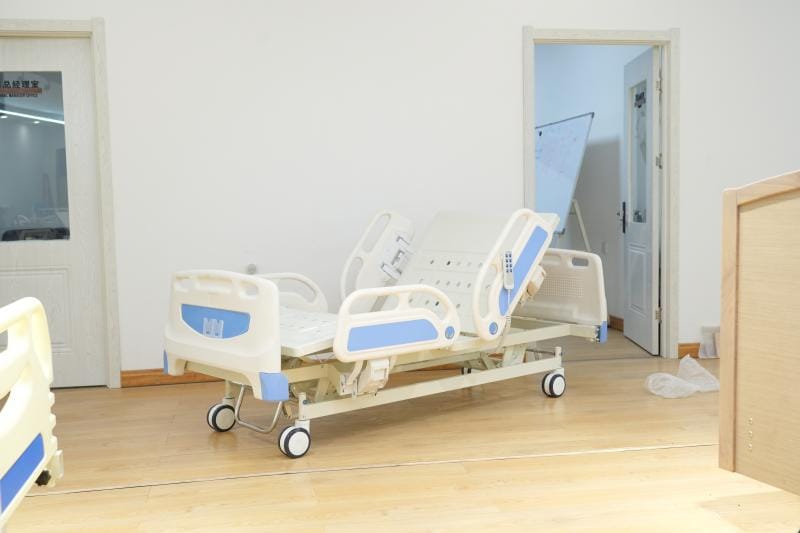
Choosing the right electric hospital bed is not only about buying a bed with adjustable functions. For hospitals, nursing homes, rehabilitation centers, and home care projects, the bed directly affects patient comfort, caregiver efficiency, clinical safety, and long-term operating cost.
A good electric hospital bed should support daily nursing tasks, reduce physical strain for caregivers, and provide stable positioning for patients with different care needs. Whether you are purchasing for a hospital ward, elderly care center, rehabilitation room, or medical equipment distribution project, understanding the key selection points will help you make a safer and more practical decision.
In this guide, we will explain what buyers should check before choosing an electric hospital bed, including functions, frame structure, motor system, safety design, mattress configuration, application scenarios, and supplier reliability.
Table of Contents
What Is an Electric Hospital Bed?
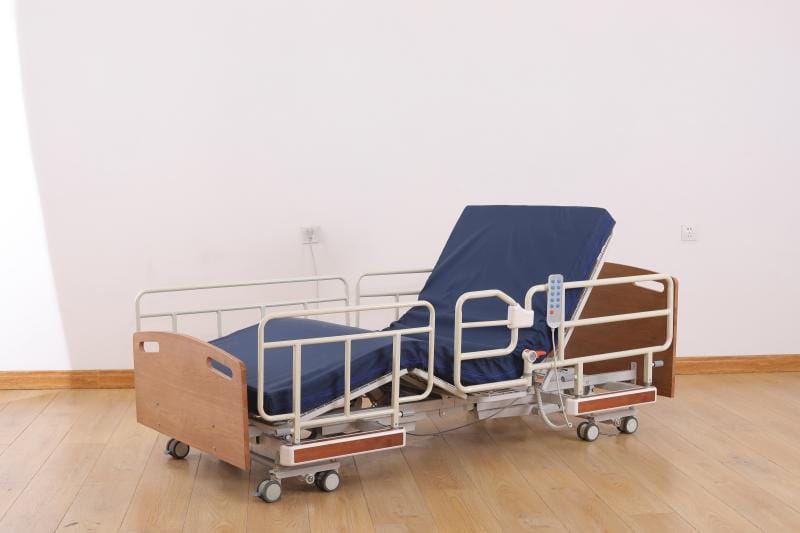
An electric hospital bed is a medical bed equipped with an electric motor system that allows caregivers or patients to adjust bed positions through a controller. Compared with manual hospital beds, electric beds reduce the need for physical operation and make patient positioning faster, safer, and more comfortable.
Common electric adjustments include backrest lifting, leg lifting, bed height adjustment, Trendelenburg position, reverse Trendelenburg position, and overall bed positioning. Different models may provide different levels of functionality depending on clinical requirements.
For basic nursing care, a 2-function or 3-function electric hospital bed may be enough. For intensive care, long-term rehabilitation, or high-dependency patients, a 5-function electric hospital bed or ICU hospital bed may be more suitable.
Why the Right Electric Hospital Bed Matters
In a real healthcare environment, a hospital bed is used many times every day. Patients may need to sit up for meals, adjust their legs for better circulation, lower the bed for safe entry and exit, or raise the bed to help caregivers perform nursing tasks.
If the bed is unstable, difficult to move, noisy, or poorly designed, it can create problems for both patients and staff. For example, a low-quality motor may fail after frequent use. Weak side rails may increase fall risk. Poor casters may make bed movement difficult in a busy ward. A mattress that is not breathable or easy to clean may affect hygiene and patient comfort.
That is why healthcare buyers should not choose a bed based only on appearance. The better approach is to compare structure, functions, materials, safety systems, and long-term usability.


Main Types of Electric Hospital Beds
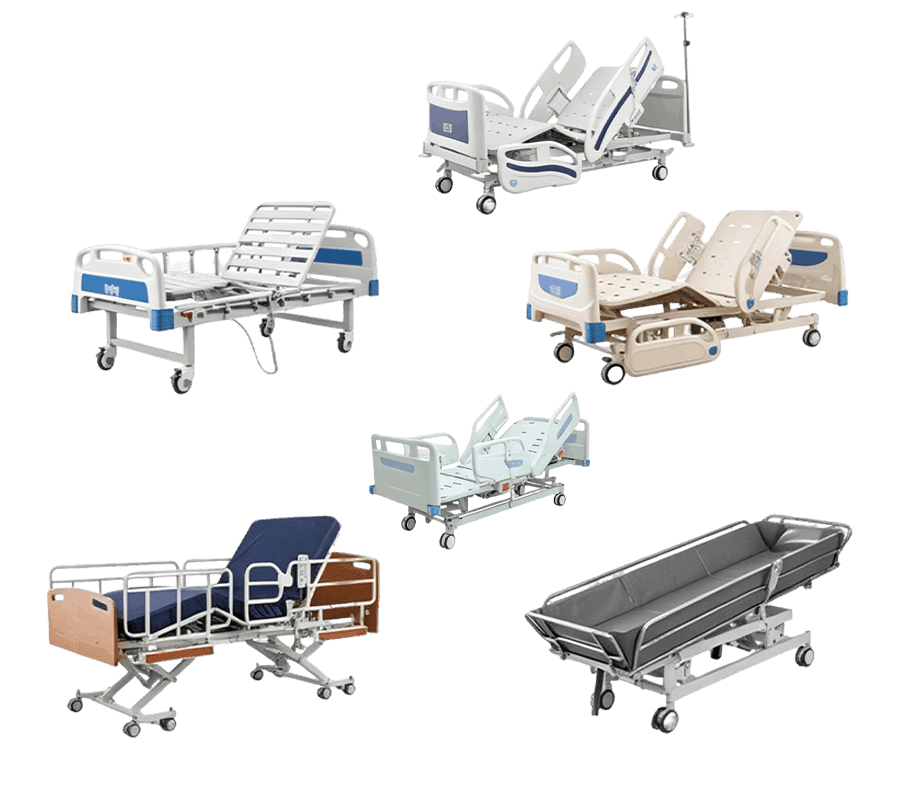
Different facilities need different bed configurations. Before purchasing, buyers should understand the most common types.
2-Function Electric Hospital Bed
A 2-function electric hospital bed usually supports backrest adjustment and leg adjustment. It is suitable for general wards, basic nursing care, and patients who need simple posture adjustment.
This type is often used when the budget is controlled, but electric operation is still needed to reduce manual adjustment.
3-Function Electric Hospital Bed
A 3-function electric hospital bed usually includes backrest adjustment, leg adjustment, and height adjustment. This is one of the most practical choices for hospitals, nursing homes, rehabilitation centers, and home care environments.
Height adjustment is especially important because it helps caregivers work at a safer height and makes patient transfer easier. For many facilities, a 3-function electric hospital bed provides a strong balance between function, cost control, and daily usability.
5-Function Electric Hospital Bed
A 5-function electric hospital bed usually provides more advanced positioning functions, such as backrest adjustment, leg adjustment, height adjustment, Trendelenburg, and reverse Trendelenburg.
This type is more suitable for ICU rooms, advanced hospital wards, rehabilitation centers, and patients who require more complex positioning support.
ICU Electric Hospital Bed
ICU electric hospital beds are designed for intensive care environments. They usually require stronger structure, advanced safety systems, central braking, multiple positioning modes, higher stability, and more clinical accessories.
For ICU procurement, buyers should pay extra attention to reliability, emergency operation, anti-fall protection, motor durability, and compatibility with medical equipment.
Key Functions Buyers Should Compare
When choosing an electric hospital bed, functions should match the actual care scenario. More functions do not always mean better. The best choice is the one that solves the daily care needs of your facility.
Backrest Adjustment
Backrest adjustment allows the patient to sit up for eating, reading, communication, respiratory support, and general comfort. A wide backrest angle range is useful for patients who spend long periods in bed.
For elderly care and rehabilitation, backrest lifting is one of the most frequently used functions.
Leg Rest Adjustment
Leg adjustment helps improve patient positioning and comfort. It can support circulation, reduce pressure in certain positions, and make long-term bed rest more manageable.
For patients recovering from surgery or with limited mobility, leg rest adjustment can be an important daily care function.
Bed Height Adjustment
Height adjustment is one of the most valuable features in an electric hospital bed. It helps caregivers raise the bed to a comfortable working height during nursing tasks, then lower it when the patient needs to get in or out of bed.
For nursing homes and rehabilitation centers, height adjustment can improve both safety and efficiency.
Trendelenburg and Reverse Trendelenburg
These functions are more common in 5-function electric hospital beds and ICU beds. They allow the whole bed surface to tilt in specific directions and are useful in certain clinical and nursing situations.
Facilities with more complex patient care needs should consider whether these functions are necessary.
Emergency Positioning
Some electric beds include emergency functions such as CPR quick release, emergency stop, or backup operation. These features are especially important in hospitals and ICU environments.
For general home care, these may not always be required, but for medical institutions, they can be critical.
Electric Hospital Bed Function Comparison
| Bed Type | Main Functions | Suitable Use | Best For |
|---|---|---|---|
| 2-Function Electric Hospital Bed | Backrest and leg adjustment | Basic nursing care | General wards, simple care rooms |
| 3-Function Electric Hospital Bed | Backrest, leg, and height adjustment | Daily patient care | Hospitals, nursing homes, rehabilitation centers, home care |
| 5-Function Electric Hospital Bed | Backrest, leg, height, Trendelenburg, reverse Trendelenburg | Advanced positioning | Hospital wards, rehabilitation centers, high-dependency care |
| ICU Electric Hospital Bed | Multiple electric positions, stronger safety systems, clinical accessories | Intensive care | ICU rooms and advanced medical facilities |
Check the Bed Frame and Material
The frame is the foundation of an electric hospital bed. A strong frame improves stability, load-bearing performance, and service life.
For healthcare procurement, the bed frame should be made from durable medical-grade materials. Reinforced steel structure is commonly used because it provides strength and long-term reliability. The surface should also be treated to resist corrosion, moisture, cleaning chemicals, and daily wear.
When reviewing a bed frame, buyers should check:
The overall size of the bed
The bed platform structure
The welding quality
The surface coating
The safe working load
The stability during movement and height adjustment
The compatibility with mattresses and accessories
A strong bed frame is especially important for facilities with high daily usage, such as hospitals, nursing homes, and rehabilitation centers.
Pay Attention to Load Capacity
Load capacity is not just a number in the product specification. It directly affects safety and durability.
A reliable electric hospital bed should support the weight of the patient, mattress, accessories, and any movement during care. If the bed is used in nursing homes or rehabilitation centers, the load capacity should be suitable for different patient body types.
For B2B buyers, choosing beds with sufficient load capacity helps reduce risk and improve long-term performance across different care environments.
Motor System: The Core of an Electric Hospital Bed
The motor system determines how smoothly and reliably the bed functions. Since electric adjustments are used repeatedly every day, the motor must be stable, quiet, and durable.
A good motor system should provide:
Smooth lifting and lowering
Low-noise operation
Stable performance under frequent use
Waterproof and dustproof protection
Safe control response
Reliable power connection
Long service life
Low noise is especially important in hospital wards, elderly care rooms, and home care settings. Patients need a quiet environment, and caregivers need equipment that works smoothly without disturbing others.
For distributors and project buyers, motor quality is also related to after-sales risk. A poor motor system may lead to frequent complaints, repairs, and replacement costs.
Side Rails and Fall Protection
Side rails are one of the most important safety features of an electric hospital bed. They help prevent patients from falling and provide support during repositioning.
When comparing side rails, buyers should check:
Height and coverage
Locking stability
Ease of operation
Material strength
Anti-pinch design
Patient comfort
Cleaning convenience
For elderly care centers and long-term care facilities, side rail safety is especially important because many patients may have limited mobility, weakness, or cognitive decline.
Good side rails should protect the patient without making the bed difficult for caregivers to operate.

Casters and Braking System
Hospital beds often need to be moved for cleaning, room transfer, emergency response, or daily management. That makes caster quality very important.
Medical-grade casters should move smoothly, reduce noise, resist wear, and support stable movement. A central brake system is often preferred in hospitals and care facilities because it allows caregivers to lock or unlock the bed more efficiently.
When choosing casters, buyers should consider:
Wheel size
Movement smoothness
Brake stability
Anti-hair entanglement design
Noise level
Floor compatibility
Long-term wear resistance
For busy clinical environments, poor casters can create daily inconvenience. Good casters make the bed easier and safer to manage.
Mattress Configuration Should Not Be Ignored
Many buyers focus on the bed frame but overlook the mattress. However, the mattress directly affects patient comfort, hygiene, and long-term care quality.
A medical bed mattress should be breathable, waterproof, easy to clean, and suitable for long periods of lying. For elderly patients or long-term bedridden patients, the mattress can also affect pressure management and skin comfort.
Common mattress features include:
Waterproof surface
Antibacterial material
Breathable structure
Removable cover
Anti-slip design
Easy cleaning
Suitable thickness and support
For hospitals, nursing homes, and home care projects, a mattress that is easy to clean can also reduce infection control pressure and daily maintenance work.
Headboard and Footboard Design
The headboard and footboard are not only decorative parts. They affect safety, cleaning, durability, and daily operation.
ABS headboards and footboards are common in medical beds because they are lightweight, durable, easy to clean, and resistant to moisture. Removable headboards and footboards can also make emergency care and patient transfer easier.
When comparing designs, buyers should check whether the headboard and footboard are stable, easy to remove, easy to disinfect, and compatible with the overall bed structure.
Control System and Ease of Use
An electric hospital bed should be easy to operate. Complicated controls can slow down caregivers and create confusion for patients.
The controller should have clear buttons, responsive operation, and safe control logic. In hospitals and nursing homes, caregivers may operate many beds every day, so simple and intuitive control is important.
For home care, the patient or family caregiver may also need to use the controller. In this case, easy operation becomes even more important.
Application Scenarios: How to Choose by Facility Type
Different facilities should choose different bed configurations. The right choice depends on patient type, care intensity, budget, and daily usage frequency.
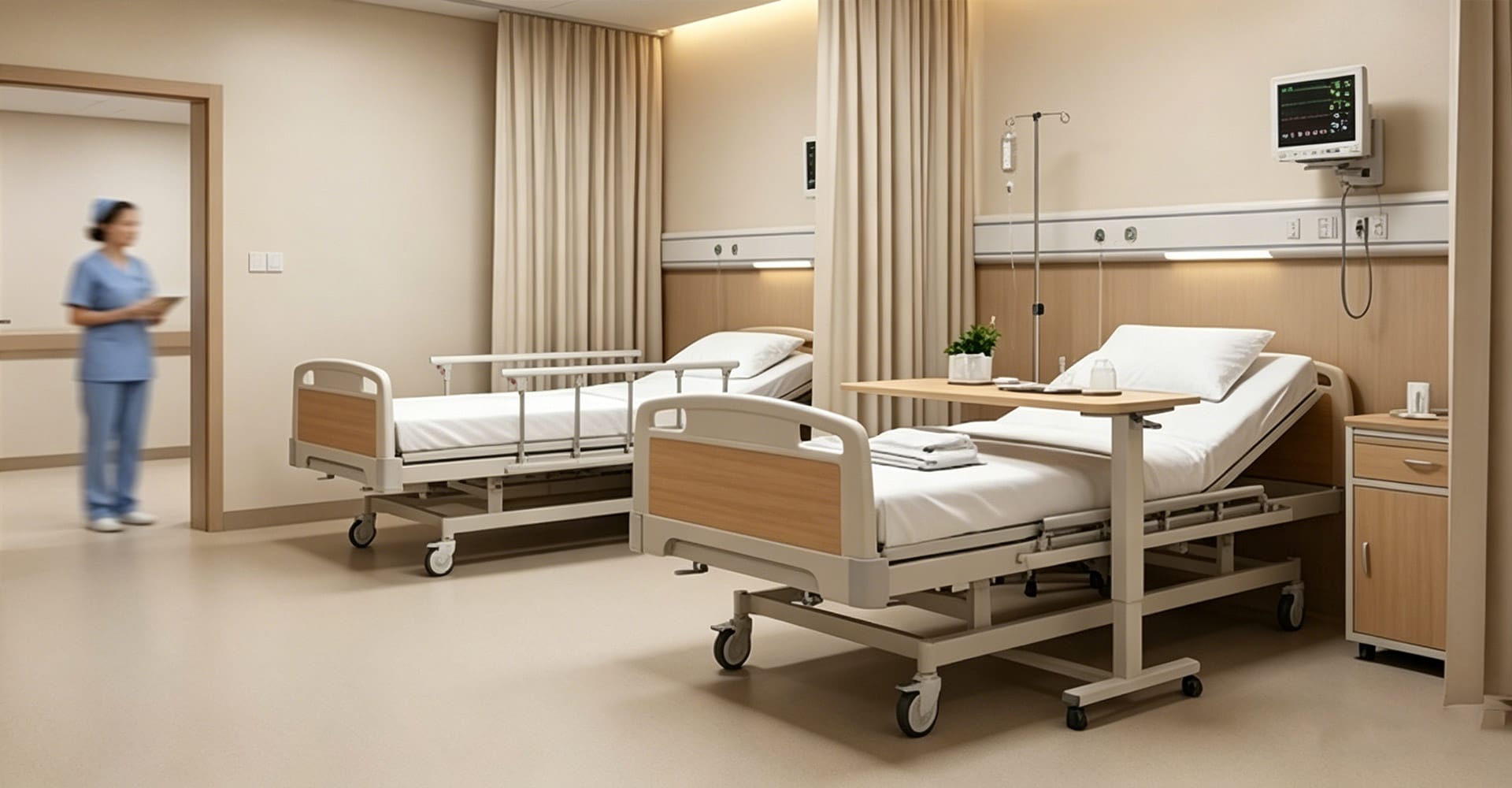
Hospitals and Clinical Wards
Hospitals usually need beds with stable structure, strong casters, reliable brakes, easy cleaning, and good safety protection. For general wards, 3-function electric hospital beds are often practical because they support daily care while keeping operation simple.
For departments with higher care demands, 5-function or ICU beds may be more suitable.
Nursing Homes and Elderly Care Centers
Nursing homes need beds that improve caregiver efficiency and patient safety. Height adjustment, stable side rails, smooth movement, and comfortable mattresses are especially important.
For elderly care centers, the electric hospital bed should support long-term use, frequent repositioning, and safer daily care.
Rehabilitation Centers
Rehabilitation centers need beds that support patient positioning, transfer, and recovery activities. Height adjustment, backrest adjustment, and leg adjustment are highly useful.
Some rehabilitation facilities may also need beds with advanced positioning functions, depending on patient conditions.
Home Care Projects
For home care, buyers usually care about comfort, safety, simple operation, and suitable size. A 3-function electric hospital bed can be a practical option because it provides essential adjustment functions without being too complex.
For long-term home nursing, side rails, mattress quality, quiet motor operation, and easy cleaning should be carefully considered.
Medical Equipment Distributors
Distributors should choose electric hospital beds that have stable quality, clear specifications, strong packaging, reliable supply capacity, and suitable certification. Product consistency is very important for wholesale and project sales.
A good supplier should provide complete product information, customization support, and export experience.

Important Questions to Ask Before Buying
Before placing an order, buyers should ask several practical questions:
What functions does the bed provide?
What is the safe working load?
What material is used for the bed frame?
Is the motor quiet and reliable?
Are the side rails stable and easy to operate?
Does the bed include a medical mattress?
What type of casters and brakes are used?
Is the bed suitable for hospitals, nursing homes, rehabilitation centers, or home care?
Does the supplier support OEM or project orders?
What certifications does the manufacturer have?
Can the supplier provide product documents, packaging information, and after-sales support?
These questions help buyers avoid choosing a bed that looks acceptable but fails in long-term use.
Why Certification and Manufacturing Experience Matter
For medical equipment buyers, certification is an important part of supplier evaluation. It helps show whether the manufacturer follows certain quality management and production standards.
When purchasing electric hospital beds for international markets, buyers should pay attention to certifications such as CE, ISO13485, and ISO9001. These certifications are especially important for distributors, healthcare projects, and institutional procurement.
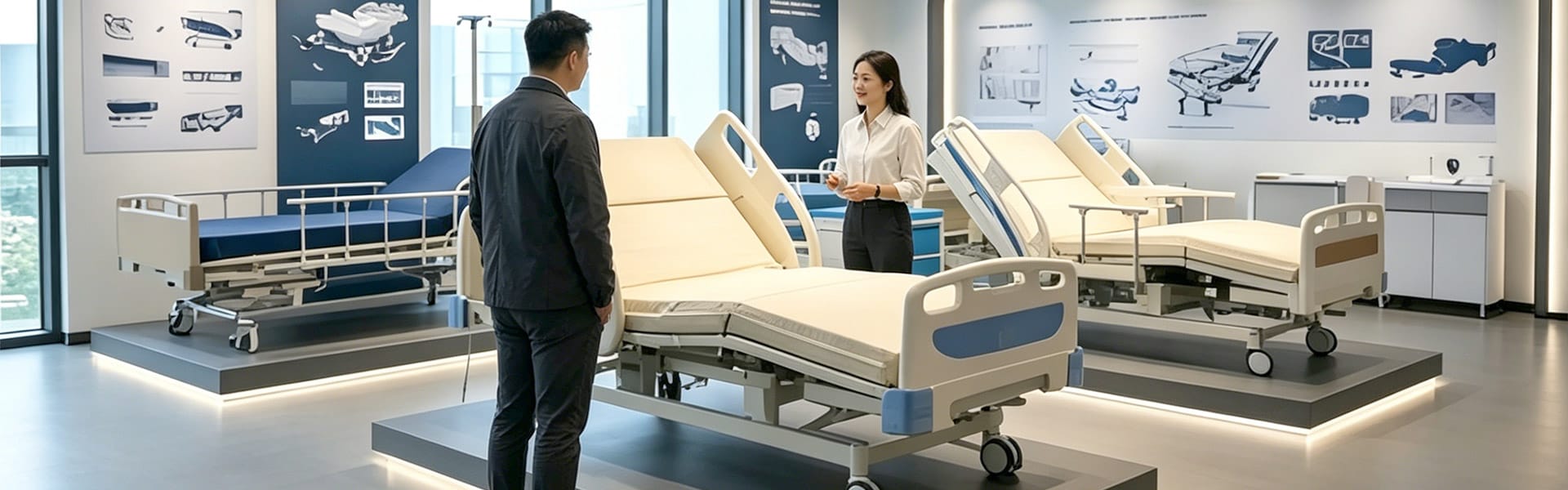
Manufacturing experience also matters. A supplier with experience in hospital beds, nursing beds, medical furniture, and elderly care equipment can better understand different market needs and project requirements.
Why Choose LOHO for Electric Hospital Beds
LOHO focuses on medical beds, nursing beds, hospital furniture, medical bed accessories, and elderly care solutions for different healthcare environments. For buyers looking for electric hospital beds for hospitals, nursing homes, rehabilitation centers, home care projects, or distribution channels, LOHO provides practical product options and manufacturing support.
Electric Hospital Bed | Adjustable Medical Bed Solutions are designed to support comfort, safety, and daily care efficiency. With product categories covering manual hospital beds, electric nursing beds, manual nursing beds, hospital furniture, medical bed accessories, and rehabilitation equipment, LOHO can help buyers build a more complete medical care product portfolio.
For healthcare institutions and distributors, working with a professional manufacturer can reduce procurement risk and improve long-term product stability.
Common Mistakes When Choosing an Electric Hospital Bed
Choosing Only by Price
Low upfront cost may seem attractive, but poor quality can lead to higher maintenance costs, shorter service life, and more after-sales problems. Buyers should evaluate total value, not only initial price.
Ignoring the Motor System
The motor is one of the most important components. If the motor is weak, noisy, or unstable, the bed may not perform well in daily use.
Overlooking the Mattress
A bed without a suitable mattress is incomplete. Mattress quality affects comfort, hygiene, and patient experience.
Not Checking the Braking System
A stable braking system is essential for safety. This is especially important in hospitals, nursing homes, and rehabilitation centers.
Buying the Wrong Function Level
Not every facility needs a 5-function bed. At the same time, basic models may not be enough for advanced care. Buyers should match the bed functions with real usage needs.
Electric Hospital Bed Selection Checklist
| Selection Point | What to Check | Why It Matters |
|---|---|---|
| Functions | Backrest, leg rest, height, advanced positioning | Matches patient care needs |
| Frame | Material, welding, coating, stability | Affects durability and safety |
| Load Capacity | Safe working load | Supports different patient types |
| Motor | Noise, smoothness, protection, reliability | Determines daily operation quality |
| Side Rails | Stability, locking, anti-fall design | Improves patient safety |
| Casters | Wheel size, brake system, movement | Supports transfer and cleaning |
| Mattress | Waterproof, breathable, easy to clean | Improves comfort and hygiene |
| Certification | CE, ISO, quality system | Supports international procurement |
| Supplier | Manufacturing ability, export experience, service | Reduces procurement risk |
FAQ
What is the best electric hospital bed for general wards?
For general hospital wards, a 3-function electric hospital bed is often a practical choice. It usually provides backrest adjustment, leg adjustment, and height adjustment, which can meet most daily nursing needs.
Is a 3-function electric hospital bed enough for nursing homes?
Yes, in many nursing homes, a 3-function electric hospital bed is suitable because it supports patient comfort, caregiver efficiency, and safer transfer. However, facilities with more complex care needs may consider 5-function models.
What is the difference between an electric hospital bed and a manual hospital bed?
An electric hospital bed uses motors to adjust bed positions through a controller, while a manual hospital bed requires hand cranks. Electric beds are easier to operate and can reduce caregiver workload.
Why is height adjustment important?
Height adjustment helps caregivers work at a safer and more comfortable level. It also helps lower the bed for patient entry and exit, reducing transfer risk.
What should distributors check before buying electric hospital beds?
Distributors should check product specifications, certifications, manufacturing ability, packaging, spare parts support, product consistency, and whether the supplier can support OEM or bulk orders.
Can electric hospital beds be used for home care?
Yes. Many electric hospital beds are suitable for home care, especially for elderly patients, long-term bedridden patients, and people recovering from surgery. Buyers should choose a model with quiet operation, safety rails, suitable mattress, and easy controls.
How do I choose between a 3-function and 5-function electric hospital bed?
Choose a 3-function electric hospital bed for general care, elderly care, rehabilitation, and home care. Choose a 5-function electric hospital bed when advanced positioning is needed for higher-level clinical or nursing care.
Conclusion
Choosing the right electric hospital bed requires more than comparing basic functions. Buyers should look at the complete care scenario, including patient safety, caregiver efficiency, motor reliability, frame strength, mattress comfort, movement control, and supplier capability.
For hospitals, nursing homes, rehabilitation centers, home care providers, and medical equipment distributors, a well-designed electric hospital bed can improve daily care quality and create long-term value. LOHO provides medical bed and nursing care solutions for different healthcare environments, helping buyers select reliable products for practical care needs.