Table of Contents
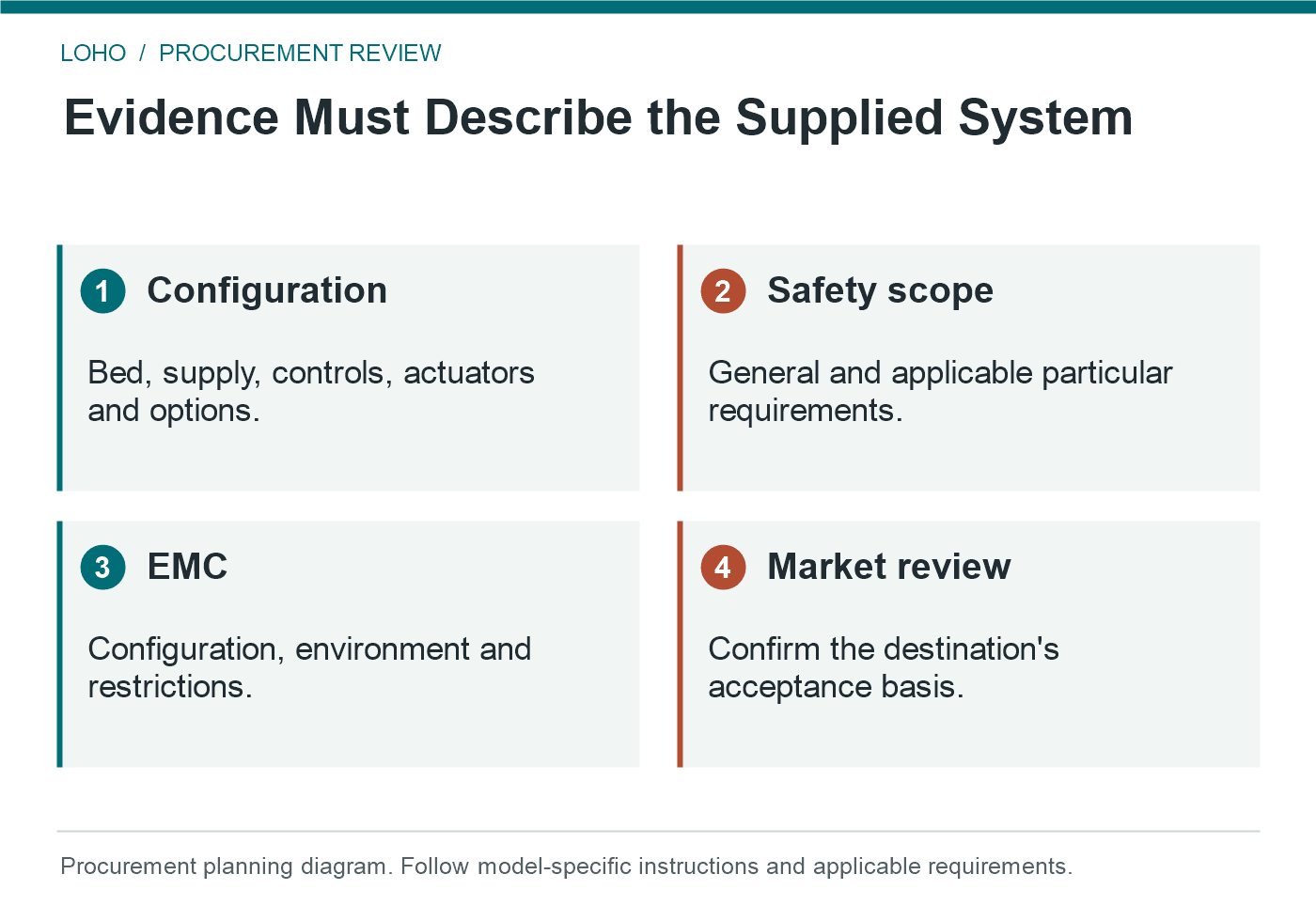
Hospital bed electrical safety documentation should identify the complete bed configuration, the requirements assessed, and the evidence that connects the two. A motor certificate or a photograph of a power label is not enough to establish the safety of an assembled electric bed. Buyers need a review that covers the supplied system and its intended environment.
This guide focuses on the technical evidence package for an electric hospital bed, not the authenticity of certificates in general. Regulatory acceptance depends on the destination and applicable requirements. A competent technical or regulatory reviewer should resolve those questions before procurement treats a document package as approved.
Define The Bed Configuration First
Begin with a controlled description of the bed: model, power supply, control unit, actuators, handset, battery if included, accessories, and software or firmware identification where relevant. The description does not need to expose every confidential design detail to every buyer, but the evidence must be traceable to the supplied configuration.
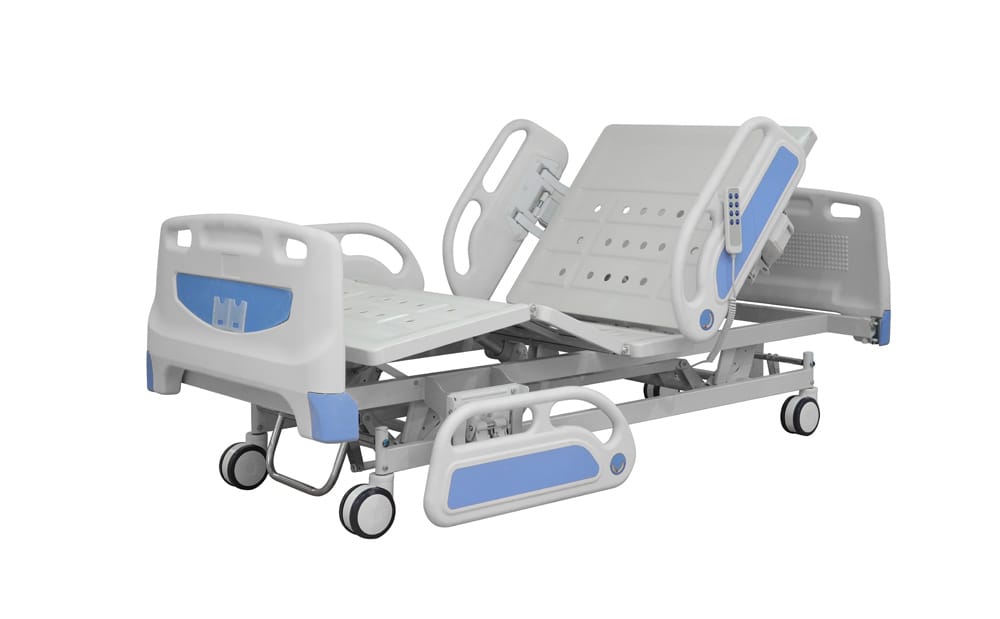
LOHO's three-function electric hospital bed publicly lists a 220 V, 50 Hz supply and backrest, leg-rest, and height adjustment. That is a useful starting point for an enquiry. It is not evidence that the same configuration is suitable for every destination's electrical supply or regulatory route.
If the order requires a different plug, supply arrangement, battery, or control option, ask whether the change is covered by the evidence. A commercial description such as the same bed with another plug may conceal a technical question that needs manufacturer confirmation.
Distinguish System Evidence From Component Documents
Component information can support a technical file, but it should not be presented as a complete-bed conclusion without explanation. Ask the supplier to identify which documents concern individual parts and which concern the assembled equipment. Keep both categories visible in the review index.
The IEC catalogue describes IEC 60601-1 as general requirements for basic safety and essential performance of medical electrical equipment. Its scope also explains the role of collateral and particular standards. Buyers should therefore ask about the applicable set of requirements rather than treating a single standard number as a complete answer.
Do not require a purchasing assistant to infer the compliance argument from disconnected certificates. Request a clear document map from the manufacturer and have the responsible reviewer assess whether it supports the intended equipment and market. Missing connections should remain recorded questions, not assumptions.
Check The Adult-Bed Standard And Its Edition
The IEC catalogue now lists IEC 80601-2-52:2026 for the basic safety and essential performance of medical beds for adults. Buyers may still encounter documents referencing the earlier IEC 60601-2-52 designation. Record the exact edition and amendments rather than copying only the standard's family number.
A newly published international standard does not, by itself, establish every destination's transition date or legal acceptance policy. Ask the reviewer to consider applicable national adoptions, recognised editions, transition provisions, and the date relevant to the purchase. An older report should neither be accepted automatically nor rejected merely because its title differs from the newest catalogue entry.
Also review scope. Adult medical-bed evidence should not be casually extended to paediatric equipment, other special populations, or a different product category. Define the intended users and environment in the enquiry so the supplier can respond against the right basis.
Ask About Electromagnetic Compatibility
Electromagnetic compatibility, or EMC, concerns equipment behaviour in an electromagnetic environment as well as emissions. A bed's intended setting and configuration are relevant to the review. Ask for the applicable EMC evidence and user information rather than assuming that a general electrical report covers every related issue.
The scope of IEC 60601-1-2 addresses electromagnetic disturbances for medical electrical equipment and systems. For procurement, identify the environment represented in the documentation and any installation or use restrictions. Do not translate a laboratory result into a promise that interference is impossible.
When accessories, cables, or controls change, ask whether the manufacturer has evaluated the effect on the documented configuration. The answer should be retained with the order. A parts substitution that appears minor to purchasing may still require technical review.
Build A Reviewable Evidence Index
| Evidence item | What the reviewer should be able to identify | Common gap to resolve |
|---|---|---|
| Configuration record | Exact bed model and electrical options | Quotation differs from tested sample |
| Safety assessment | Applicable requirements, edition, and result scope | Component document presented as system evidence |
| EMC documentation | Configuration and intended environment | Accessories or cable arrangement not identified |
| Labels and instructions | Ratings, warnings, and operating restrictions | Different values across documents |
| Change assessment | Effect of selected options or substitutions | No explanation for a revised power arrangement |
| Service information | Authorised procedures and replacement identification | Repair instructions not tied to model |
| Destination review | Applicable market requirements and acceptance basis | International standard mistaken for market approval |
The index is a navigation aid, not a substitute for evaluating the underlying documents. It should show the document number, revision, issuer, date, and the question each item addresses. Where access is restricted, agree how an appropriately qualified reviewer can inspect the necessary information.
Keep unresolved items explicit. A supplier's statement that more evidence is available can be a starting point for discussion, but it does not close a purchasing requirement until the agreed reviewer has received and assessed what is needed.
Resolve Label And Instruction Differences
Compare the supplied label artwork with the quotation, instructions, and configuration record. Pay attention to model identity, input supply, and any operating restrictions stated by the manufacturer. Do not assume that a website specification overrides a label on the delivered product, or that either can be changed informally.
Where values differ, ask for a documented correction and an explanation of which configuration is being supplied. A corrected file should have a controlled revision so receiving staff can distinguish it from the earlier version. Repeatedly forwarding an old attachment can recreate an error that the technical team already resolved.
Review the exact bed within LOHO's electric hospital bed category, but use the order-specific documentation for acceptance. A category page helps identify options; it cannot establish that evidence for one model applies to another.
Keep Maintenance Testing In Its Proper Role
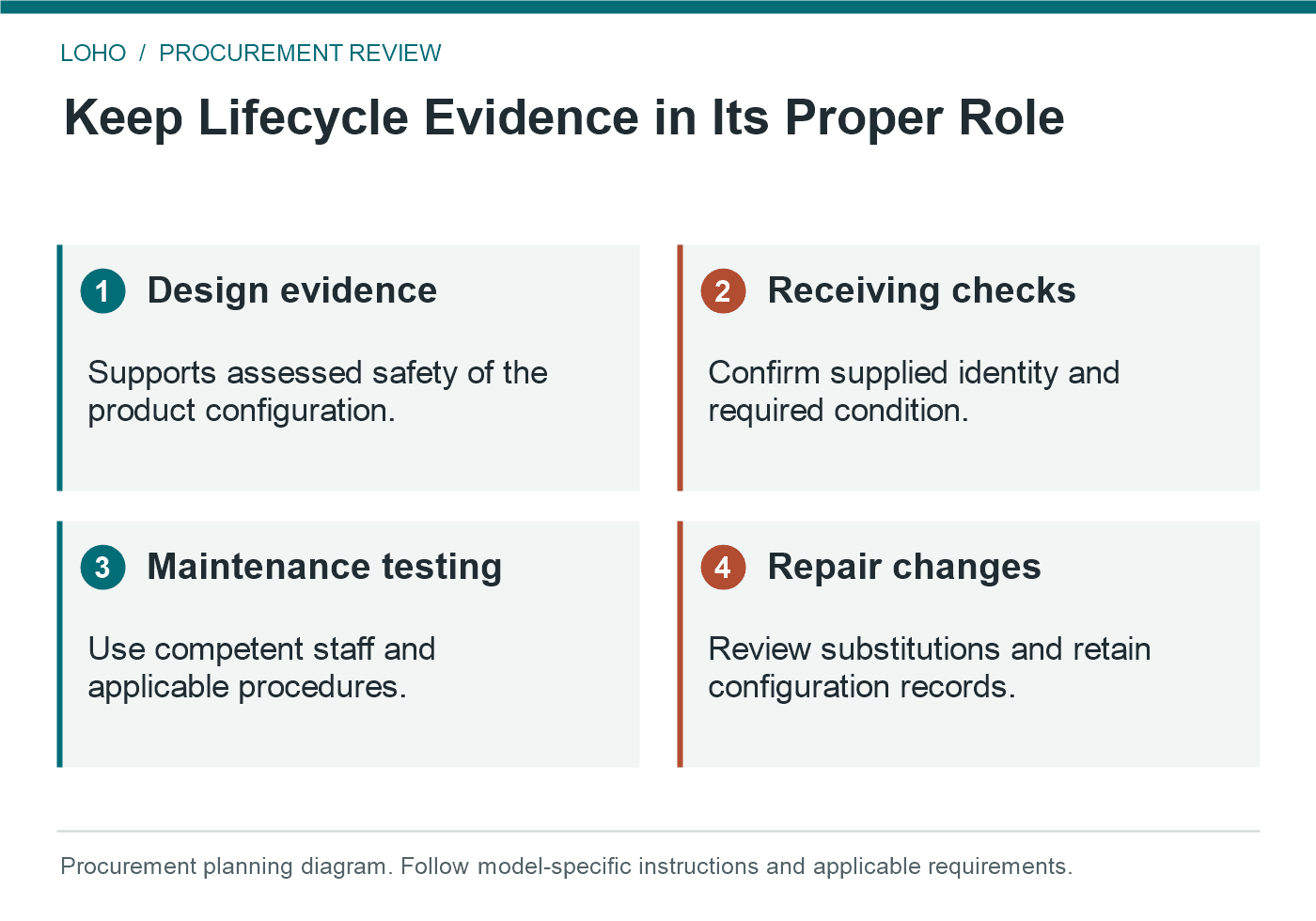
Receiving or maintenance checks do not replace the manufacturer's design and conformity evidence. They address a different stage of the equipment lifecycle. Define who performs them, which procedures apply, and how results are recorded before the bed enters service.
IEC 62353:2014 addresses recurrent and post-repair testing of medical electrical equipment within its stated scope. Its existence does not justify an unqualified person improvising electrical tests, nor does passing a local check demonstrate every aspect of product compliance. Use competent personnel and the applicable instructions.
For future repairs, ask how approved motors, controls, power components, and cables are identified. Obtain the manufacturer's process for evaluating substitutions. A repaired bed should remain connected to its configuration record rather than becoming an undocumented combination of parts.
Turn The Review Into Purchase Conditions
Agree which documents must be available before sample approval, before shipment, and at delivery. Name the person or team responsible for reviewing each stage. This prevents an unresolved technical requirement from becoming an urgent warehouse problem after the equipment arrives.
Use LOHO's service page to discuss the model-specific support and document route. Ask how revised instructions and technical changes are communicated to distributors and facilities. Do not assume a particular response time, warranty outcome, or certification status without written confirmation.
The final approval record should distinguish accepted evidence, agreed restrictions, and outstanding conditions. If a necessary issue remains unresolved, keep the affected configuration out of the approved purchase scope. Approval of one electric-bed version should not silently authorise every later option under the same product family.
Conclusion
Review electrical safety as an evidence chain linking the exact bed, applicable requirements, technical results, labels, and service arrangements. The purpose is to make an informed procurement decision, not to collect the largest possible number of certificates.
Send LOHO the destination, power requirements, and proposed bed configuration to request the relevant documentation. Have the responsible technical reviewer confirm the acceptance basis before final approval.
FAQ
Does a motor certificate prove the entire bed is compliant?
No. It concerns the component within its stated scope. The complete bed and its configuration need an appropriate evidence package and review.
Must every report use the newest IEC edition immediately?
Not necessarily. Applicable market rules, recognised editions, and transition arrangements need to be checked. Record the edition and obtain a destination-specific assessment.
Can a different plug be fitted without further review?
Do not assume so. Ask the manufacturer to confirm the approved supply configuration and whether the change affects documentation, installation, or conformity assessment.
Is a receiving electrical check a replacement for product testing?
No. Receiving checks and product design evidence have different purposes. Both should follow the relevant requirements and be handled by competent personnel.
What if the supplier restricts access to a full technical report?
Agree an appropriate review arrangement that protects legitimate confidential information while allowing the necessary evidence to be assessed. A confidentiality concern does not automatically close a technical requirement.