Table of Contents
Hospital bed rail inspection should verify the condition and operation of the identified rail assembly on its approved bed configuration. It is not enough to confirm that a rail can be raised. The inspection process needs the manufacturer's instructions, a reliable equipment identity, a clear response to defects, and a record showing what was checked and by whom.
For distributors and care facilities, inspection planning begins before the rails are purchased. Ask what checks the product requires and whether the organisation can perform them competently. The clinical decision to use rails for an individual remains separate: a mechanically serviceable rail is not automatically suitable for every person.
Start With The Assembly, Not A Generic Checklist
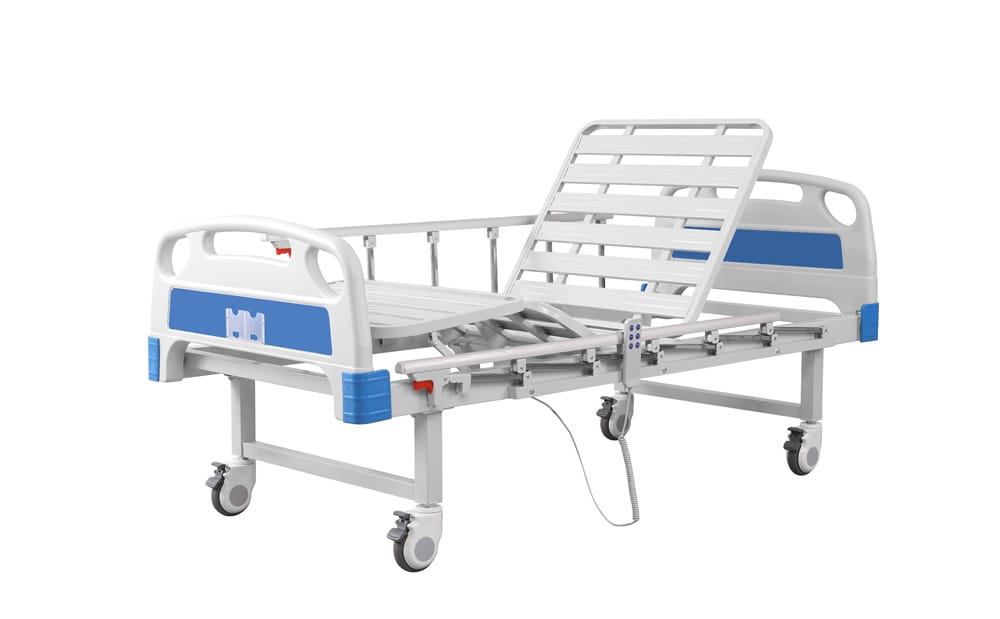
Identify the bed, left and right rail where applicable, mounting hardware, and any variant information. Record the instructions that apply to that combination. A checklist for one folding mechanism may omit a securing point on another, even when both products look similar from the corridor.
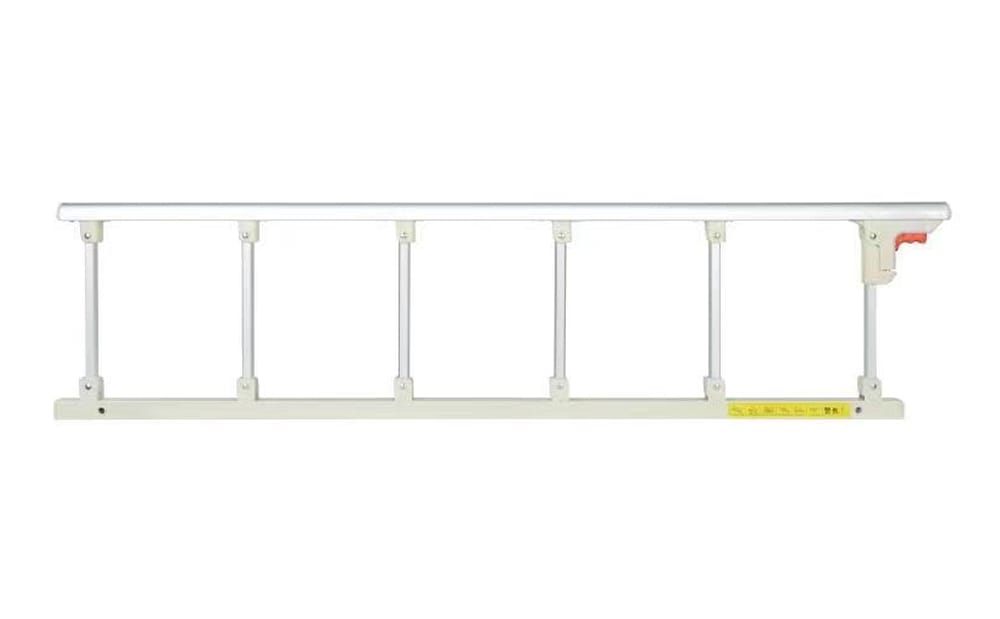
LOHO's customizable hospital bed side rails are described as aluminium-alloy rails with a double-button locking arrangement and fold-flat design. Those features make the operating sequence and securing checks relevant procurement questions. The public description is not a substitute for a model-specific inspection procedure or confirmation of compatibility with an existing bed.
Request the permitted raised and lowered positions, the method of confirming engagement, and the criteria for removing a rail from service. Do not invent a pull force, number of operating cycles, or acceptable amount of movement. Those details need an appropriate technical basis rather than a locally improvised test.
Separate Three Decisions That Are Often Confused
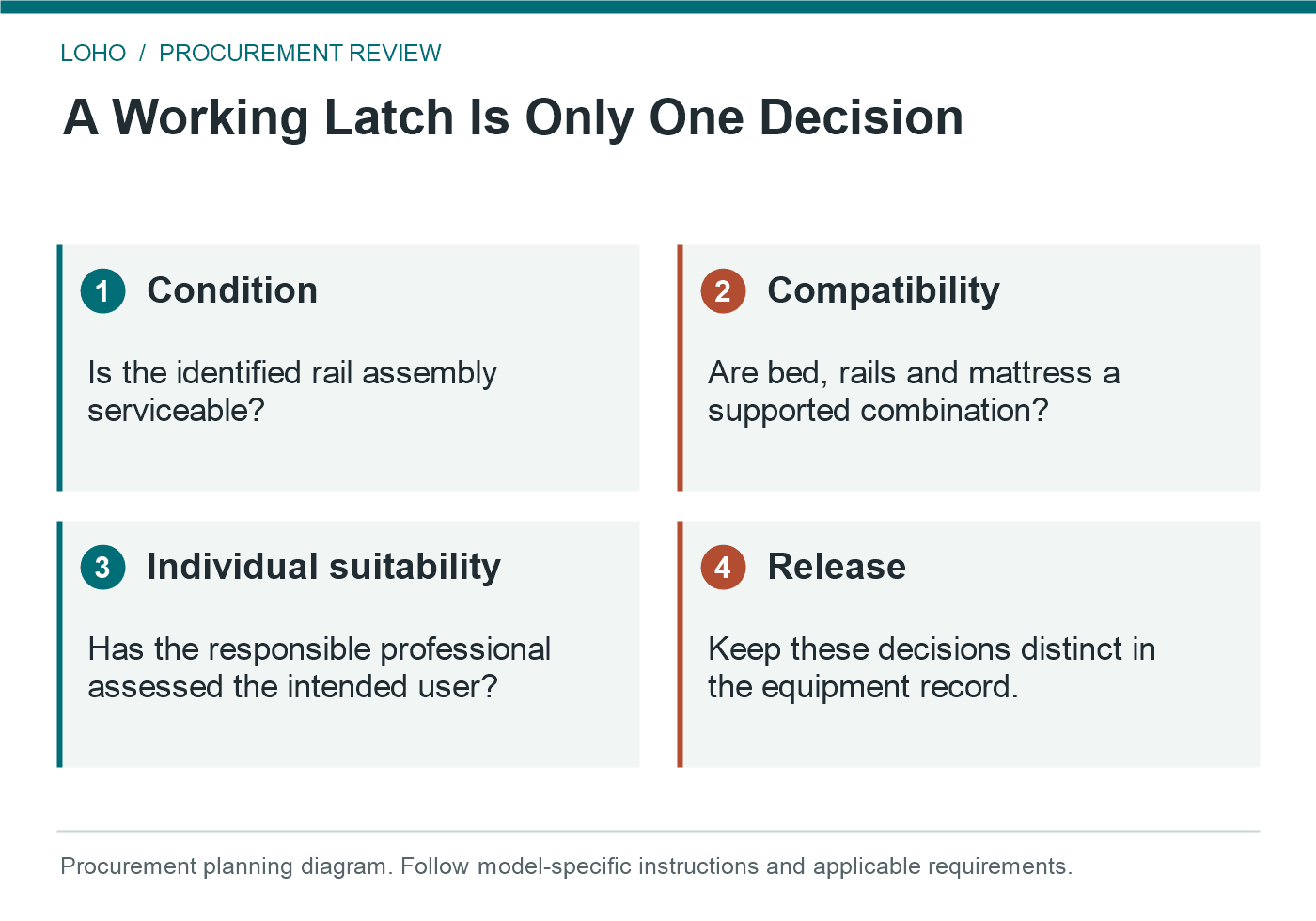
First, determine whether the rail assembly is in acceptable mechanical condition. Second, establish whether the rail, bed, mattress, and accessories form a supported configuration. Third, the responsible professional assesses whether that configuration is appropriate for the person using the bed.
Passing the first decision does not close the other two. A new latch does not establish that a replacement mattress is compatible, and an undamaged rail can still be unsuitable for a particular patient. Keep these decisions separate in forms and handover discussions so that one tick box does not imply broader approval.
The FDA's hospital-bed system and entrapment guidance addresses the relationship between components. Use appropriate system assessment rather than relying on the appearance of a raised rail. This article deliberately does not provide universal gap limits or patient-selection rules.
Give Latch Behaviour Its Own Inspection Line
Ask the manufacturer how normal engagement is recognised and what behaviour requires assessment. Depending on the design, the relevant information may include release sequence, visible position, or a prescribed confirmation check. An audible click should not be treated as sufficient evidence unless the instructions establish that meaning.
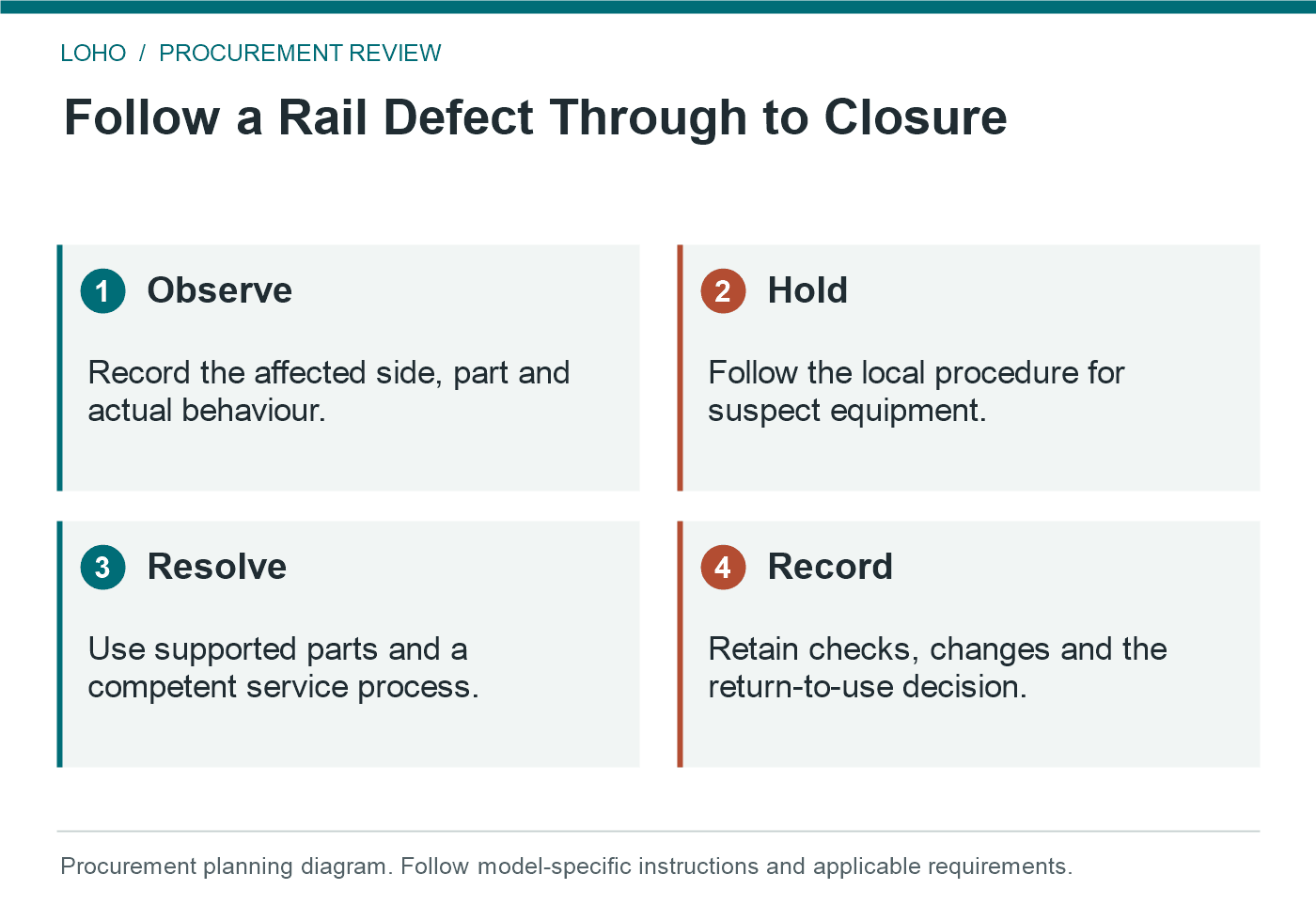
Staff reporting an issue should describe what happened without trying to diagnose the internal cause. Useful observations include difficulty reaching the intended position, unexpected movement, or a release that does not behave as described. Record which side and which part were affected, and whether the problem was repeatable without exposing a user to risk.
If the condition is uncertain, follow the facility's withdrawal and escalation procedure. Do not continue use because the mechanism works after repeated attempts, and do not add a strap, wedge, or improvised fastener. The manufacturer or a competent service provider should define the appropriate assessment and repair route.
Look Beyond The Release Button
The latch is one element in an assembly that includes mounting points, pivots, frame members, and fasteners. The inspection record should cover the manufacturer's relevant condition criteria for the complete arrangement. A sound release button cannot compensate for an unsuitable attachment to the bed.
The MHRA's bed-rail management and safe-use guidance identifies maintenance, traceability, and manufacturer-led inspection as important controls. It describes problems involving worn, damaged, loose, or missing components. Apply that guidance through the specific rail instructions rather than copying a general list and treating it as a complete service manual.
Cleaning staff and operators may notice a change before a scheduled inspection. Give them a simple reporting route that identifies the equipment and observation. They should not be expected to dismantle the assembly or decide whether a visible defect is structurally acceptable.
Use A Record That Distinguishes Observation From Release
| Record field | What to enter | Why it is useful |
|---|---|---|
| Equipment identity | Bed, rail, and relevant part references | Connects the check to the actual assembly |
| Applicable instructions | Document revision and procedure used | Prevents an obsolete or unrelated checklist |
| Reason for review | Routine check, reported issue, or post-service check | Preserves the context of the decision |
| Observed condition | Specific location and factual description | Helps service staff investigate without guessing |
| Immediate status | Available, restricted, or withdrawn under local procedure | Keeps suspect equipment from accidental reissue |
| Corrective action | Approved part or service action and reference | Records what changed |
| Release decision | Required checks, responsible person, and date | Separates completed work from authorised reuse |
Photographs can supplement the record, especially when showing a particular fixing or deformation. Avoid including patients or identifying clinical information. A photograph should clarify an observation, not replace the checks required by the instructions.
For repeated issues, retain the individual records and review their context. Several reports involving the same component may justify a broader investigation, but they do not establish a cause by themselves. Keep the distinction between a reported symptom and a confirmed finding.
Set Inspection Arrangements From Risk And Instructions
There is no single interval in this article that applies to every rail or care setting. The organisation should establish its inspection arrangements from manufacturer recommendations, conditions of use, and relevant local requirements. Include event-driven assessment when damage or abnormal operation is reported.
The HSE's work-equipment inspection guidance describes inspection as risk-based. In a procurement review, ask whether the facility has the people, documents, and access needed to carry out the applicable tasks. Buying equipment without planning those responsibilities leaves an avoidable gap after delivery.
Keep the inspection status accessible when beds move between wards or facilities. A rail should not lose its service history because the bed receives a new room assignment. When assemblies are stored separately, maintain their identity and the information required to reunite approved components.
Treat Replacement As A Controlled Configuration Change
Before ordering a replacement latch, rail, or mounting kit, confirm the supported part reference and the instructions for fitting it. A component that fits the visible opening may still differ in geometry, operation, or approved application. Similar appearance does not establish compatibility.
Use the LOHO medical bed accessories category to identify the relevant product range, then make a model-specific enquiry. Ask which checks are required after the replacement and who is authorised or competent to perform the work. Do not carry over the previous inspection result without reviewing the changed assembly.
The related hospital bed user-manual review explains document matching. For rails, retain the applicable fitting and maintenance information with the bed record, including any approved change in operating instructions after service.
Keep Safety Reporting Separate From Repair Administration
A service request arranges investigation or repair. A safety incident may also need reporting through the organisation's and destination's applicable channels. Do not assume that sending photographs to a supplier fulfils every reporting responsibility, or that an unresolved warranty decision should delay immediate safety action.
The FDA's medical-device problem reporting guidance explains US reporting routes and the distinction between different reporters. Other destinations have their own arrangements. The responsible safety officer should determine what applies rather than extending US procedures to every market.
Discuss the product-identification and support route with LOHO's service team. A useful report identifies the assembly, observed condition, and steps already taken to prevent unintended use. It should not contain an unsupported diagnosis or a claim that the product has passed a test it has not undergone.
Conclusion
An effective rail-inspection programme connects the actual assembly, current instructions, factual observations, and a clear release decision. Latch operation is important, but it belongs within a wider review of condition, compatibility, and individual suitability.
Contact LOHO with the bed and rail identification to request the applicable inspection, fitting, and replacement information. Resolve those requirements before standardising a rail across a fleet.
FAQ
Does a clicking latch prove the rail is secure?
Not by itself. Use the engagement and confirmation checks specified for the actual mechanism. Refer unexpected behaviour for assessment rather than relying on sound alone.
Can the same checklist be used for every rail in a facility?
A common record format can help, but the actual checks must match each approved configuration and its instructions. Identify model-specific differences explicitly.
Does replacing a rail require a mattress compatibility review?
Review the affected system requirements. A different rail or mounting arrangement may change the bed-and-mattress relationship, so the previous approval should not be assumed to cover the replacement.
Can cleaning staff release a rail after reporting a defect?
Only follow the organisation's assigned responsibilities and required competence. Reporting, cleaning, repairing, and authorising return to use are distinct tasks.
Should a defect be kept in the record after repair?
Yes. Preserve the observation, corrective action, and release decision as part of the equipment history. Removing the original report makes later investigation and traceability more difficult.