Table of Contents
Rollator brakes should be assessed as a complete control system: the user's hand must reach and operate the lever, the mechanism must perform its stated running and parking functions, and the supplier must provide a clear inspection and service procedure. A product photograph showing two brake levers answers none of those questions on its own.
For distributors and care facilities, the most useful evaluation happens before the first batch is issued. Establish what the model's brakes are designed to do, how their condition is checked, and what happens when a user reports poor braking. This article focuses on those procurement and handover decisions rather than giving a universal adjustment procedure.
Distinguish Running Brakes From Parking Brakes
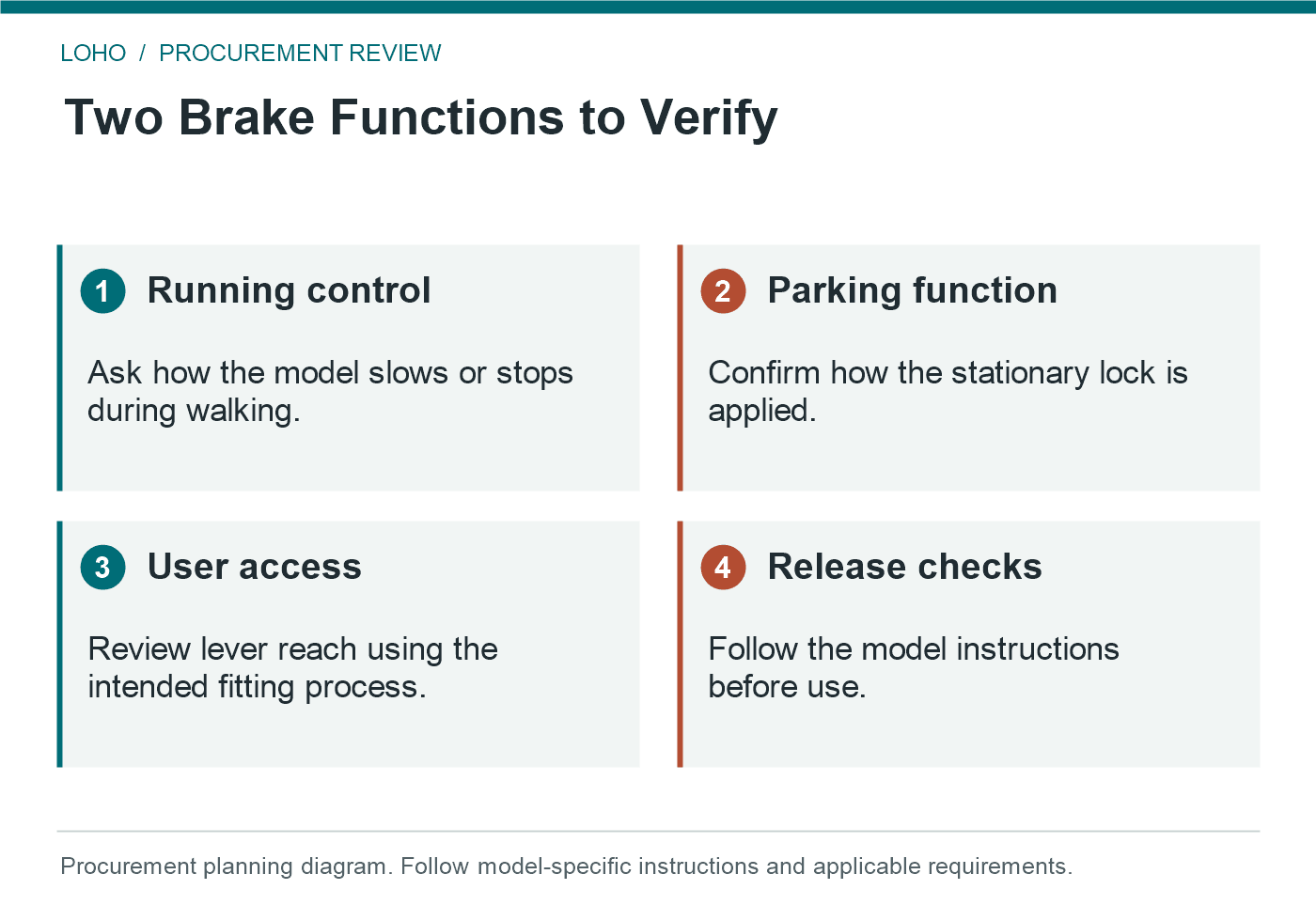
A running brake controls movement while the rollator is being used as intended. A parking brake holds the device stationary under the conditions specified by its manufacturer. A lever may provide both functions, but the operating sequence and mechanism are model-specific. Buyers should request a demonstration of each function rather than treating the word brake as a complete specification.
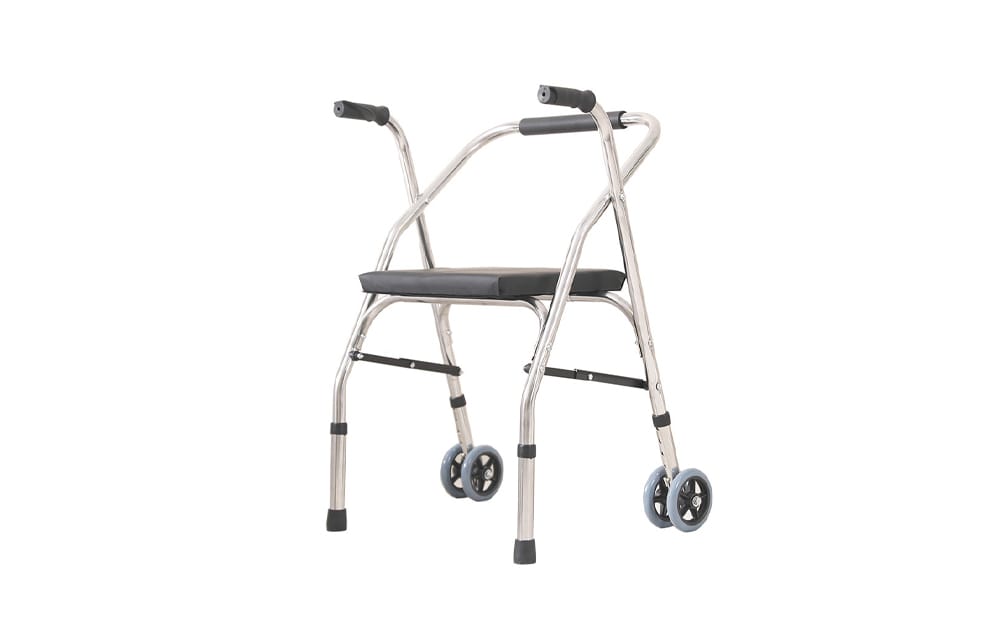
LOHO's foldable rollator walker is described as having a hand-brake system, adjustable handles, a seat, and a folding frame. The public page does not supply detailed brake-test criteria or an adjustment procedure. Ask for the relevant model instructions before planning a receiving test or training session.
The Memorial Sloan Kettering rollator guide explains brake locking and unlocking while noting that rollator instructions can differ. These are useful issues to address during handover, while the exact operating and inspection method must come from the supplied model's instructions and the appropriate care professional.
Include Lever Reach In The Selection Decision
A brake can work mechanically yet be difficult for a particular user to operate. The person assessing suitability should consider reach, grip, coordination, and the ability to engage and release the required controls. Procurement can support that assessment by obtaining a sample and accurate information about available handle settings.
Do not equate an adjustable handle height with an adjustable brake-lever reach. They are different features. Ask which adjustments the manufacturer permits, whether any affect cable routing, and whether the delivered configuration differs from the demonstration unit. A supplier should identify these differences in writing before the sample is approved.
Where a facility serves different users, avoid advertising one control arrangement as universally suitable. Establish an assessment route for people who cannot comfortably use the demonstrated system. A procurement comparison can describe the available controls; it should not override the decision of a qualified professional assessing an individual's walking aid.
Check The Complete Path From Lever To Wheel
During an unloaded inspection, follow the visible brake system from the lever through the cable or other linkage to the braking components. Look for shipping damage, loose attachments, and routing that conflicts with moving parts. Record anything inconsistent with the assembly instructions for the supplier to resolve.
Height adjustment and folding can change the position of cables and controls. Check the permitted configurations using the manufacturer's procedure, including whether the controls return normally after the frame is unfolded. A brake that appears satisfactory in one showroom position still needs review in the intended operating configuration.
Do not replace this inspection with an improvised hill test involving a person. Functional acceptance should use the supplier's criteria and an appropriately controlled procedure. If the manufacturer has not supplied a method, ask for it. An apparent absence of movement during a casual check is not evidence that all relevant performance requirements have been met.
Request Test Evidence With A Defined Scope
ISO 11199-2:2021 addresses requirements and test methods for rollators. Its official listing also identifies an amendment published in 2024. Ask the supplier which edition and amendments its evidence uses and whether that evidence covers the offered model and intended configuration.
Do not infer conformity from the presence of brakes or from a statement that a product is tested. The report or relevant summary should identify the product, the test basis, the issuing laboratory, and the scope of the results. Your technical reviewer should determine whether the documentation is appropriate for the destination and application.
Keep type-test evidence separate from receiving checks. A laboratory report concerns the tested design and conditions. A receiving inspection determines whether delivered units match the approved specification and arrive without identified defects. Neither document should be presented as a substitute for the other.
Use A Brake-Focused Acceptance Record
| Review point | Evidence to request | Decision supported |
|---|---|---|
| Operating modes | Model instructions for running and parking functions | Staff can explain the correct controls |
| User access | Permitted handle settings and sample evaluation | Assessor can judge control accessibility |
| Cable or linkage routing | Assembly diagrams and inspection instructions | Delivered assembly matches the approved setup |
| Functional check | Manufacturer's procedure and acceptance criteria | Receiving team has a repeatable check |
| Testing basis | Model-specific report scope and standard edition | Technical review can assess supporting evidence |
| Service | Approved parts and authorised adjustment process | Faults follow a defined support route |
Include a place to record unresolved findings and the person responsible for closing them. A signature without the underlying configuration and check results is difficult to interpret later. If a brake component changes between sample approval and shipment, ask the supplier to explain which checks and documents need review.
One practical approach is to photograph the sample's approved routing and labels for the purchasing record. These photographs document the evaluated configuration; they do not become independent installation instructions or justify modifications to another version of the product.
Define The Response To A Brake Complaint
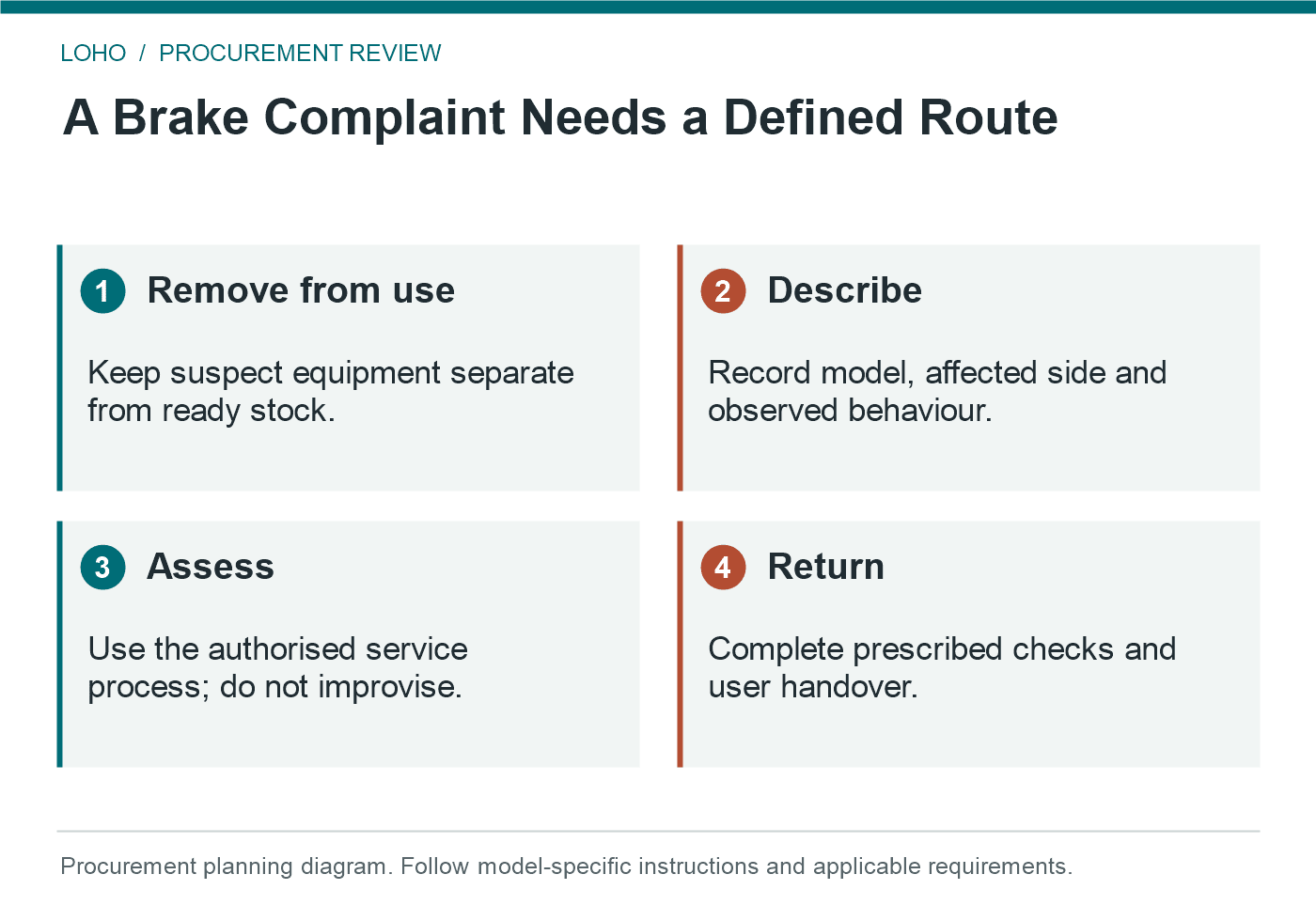
A report that the rollator moves when it should be held, brakes unevenly, or has a damaged control should trigger the organisation's equipment fault procedure. Do not ask the user to keep using the device while purchasing staff diagnose it remotely. Arrange an appropriate alternative through the responsible care service where needed.
A useful fault report identifies the product, serial or batch details, the observed symptom, and the configuration in which it occurred. Include clear photographs of relevant components without unnecessary patient information. Avoid changing several settings before the original condition has been documented, because that can make the report harder to interpret.
The MHRA's Managing Medical Devices guidance covers maintenance and repair as part of device management. Apply that principle by agreeing who may adjust or replace brake components, what instructions they must use, and what checks are required before the rollator returns to service. Do not copy a repair procedure from another manufacturer's model.
Include Cleaning In The Service Discussion
Brakes and wheels operate close to the floor, while levers are frequently handled. Ask for approved cleaning instructions for both areas and for any restrictions on liquids, lubricants, or cleaning tools. A cleaning method used on the frame may not be appropriate for every part of the brake assembly.
The CDC's environmental cleaning guidance for noncritical patient-care equipment emphasises written manufacturer instructions and assigned cleaning responsibilities. For shared rollators, clarify the handoff between staff who clean the device and staff who inspect and release it. Cleaning status and mechanical readiness are related but separate records.
Ask whether a post-cleaning functional check is required by the manufacturer and how the device should be dried and stored. Do not set a universal lubricant, inspection interval, or adjustment clearance from a generic article. These details should be taken from the approved service information for the specific rollator.
Put Brake Support In The Distributor Enquiry
When requesting a rollator quotation, ask for operating instructions, assembly details, the relevant test-document scope, and the service-part references for the brake system. Clarify whether replacement is handled as a complete assembly or through individual approved components. Record any information that remains unavailable before committing to a support promise to your customers.
LOHO's rehabilitation equipment range can be reviewed alongside the specific product page, but do not transfer a feature or load rating from another walking aid. Each offered configuration needs its own confirmed description. This is particularly important where a distributor uses similar names for several variants.
Use the LOHO service page to discuss documentation and after-sales arrangements. For repeat orders, compare the brake system and instructions with the approved sample. A change in lever, cable, wheel, or frame arrangement may require review even when the catalogue name remains the same.
Conclusion
Reliable procurement of a rollator depends on understanding its controls, obtaining model-specific checks, and defining how faults are handled. Brake appearance is only the starting point. Evaluate the complete system and preserve the evidence behind the acceptance decision.
Contact LOHO with your intended care setting and support requirements to request the rollator's current brake instructions, configuration details, and sample information before ordering.
FAQ
Does a seat prove that a rollator has a parking brake?
No. Ask the manufacturer to identify the parking function and the conditions for seat use. A seat in a photograph is not a complete operating specification.
Can a distributor adjust every model in the same way?
No. Adjustment mechanisms and acceptance criteria can differ. Use the correct manufacturer's procedure and personnel authorised to perform the work.
Should brakes be checked after shipping damage is reported?
Yes, through the defined receiving or service procedure. Document the damage and obtain a disposition before issuing the affected unit, including checks of connected components where relevant.
Is a standard reference on a quotation sufficient evidence?
Not by itself. Request the report scope, model identification, applicable edition, and a clear explanation of what the evidence covers.
What information should a buyer send with a brake fault report?
Provide product identification, the symptom, relevant operating conditions, and clear component photographs. Include the document revision and any recent approved repair so the support team can assess the correct configuration.