Table of Contents
An electric bath bed should be selected around three connected requirements: the person’s assessed bathing and transfer needs, the space available for staff and equipment, and the manufacturer’s instructions for wet-area use. Powered height adjustment is useful only when the bed also fits the transfer method, allows practical washing access, and can be cleaned and maintained within the facility’s routine.
For nursing homes, hospitals, and distributors specifying assisted-bathing equipment, the purchasing question is therefore specific: will this configuration work with the room, handling equipment, and care procedures already in place? The following guide explains how to turn that question into a specification that suppliers can answer and a sample evaluation that staff can use.
Define the Bathing Task Before Comparing Models
Start by agreeing what the equipment must do during a complete bathing session. Is the person transferred onto the bathing surface inside the bathroom, or is movement between rooms part of the intended process? Is the main requirement supported washing in a lying position, access for personal care, or a combination of activities? Record these separately rather than treating every mobile bathing product as interchangeable.
An elderly bathing bed is not automatically the right choice because a facility serves older people. The care team’s assessment must establish the person’s support needs, tolerance of positioning, and transfer requirements. A purchaser can then evaluate equipment against that assessment instead of making a clinical decision from a catalogue photograph.
The UK Health and Safety Executive’s guidance on moving and handling equipment states that equipment should be introduced after assessment and used according to the care plan and manufacturer’s instructions. It also explains that staffing for hoisting depends on the person, environment, transfer, equipment, and carers involved. Electric adjustment alone does not determine how many staff a bathing task requires.
Give suppliers a short description of the intended workflow. This makes differences in positioning, access, and permitted movement more meaningful than a simple count of adjustment functions.
Compare Functions Against the Actual Workflow
The most useful comparison separates a feature from the task it supports. A height adjustable bath bed may offer a suitable working range yet still interfere with a mobile hoist. A reclining backrest may suit one assessed bathing position while adding little to another. The evaluation should establish what changes for staff and the person receiving care when each function is used.
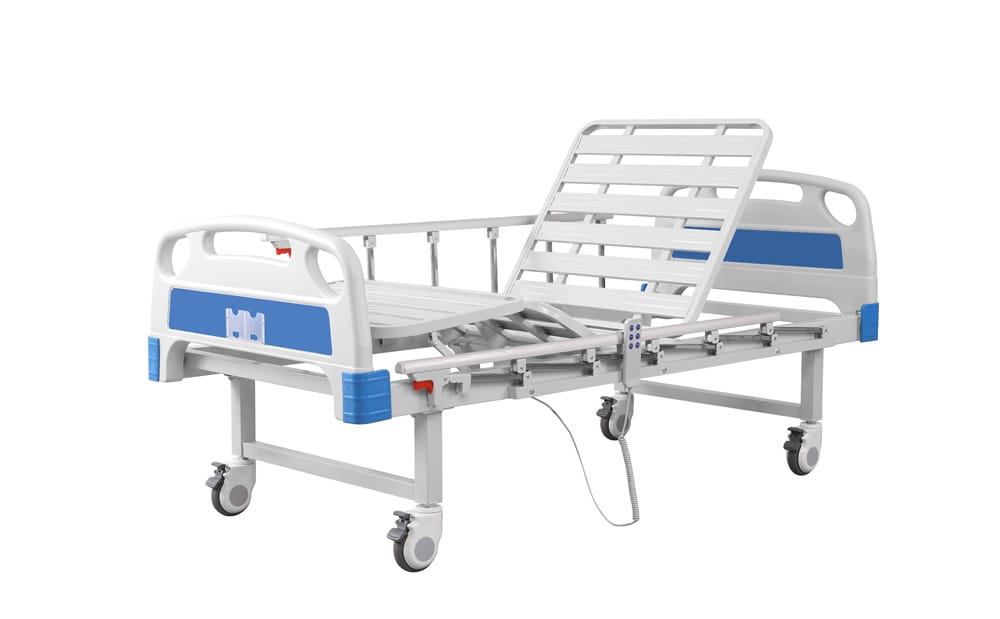
LOHO’s Electric Height Adjustable Bath Bed provides a concrete starting point. Its published specification lists overall dimensions of 1950 x 530 x 440-700 mm, with a stated tolerance of +/-10 mm, a 15-degree backrest adjustment, and forward tilt. The page identifies a stainless steel bed surface, a cold-rolled steel frame, and a removable ethylene-vinyl acetate (EVA) mattress described as waterproof. These are published product details, not confirmation of suitability for every installation.
| Decision area | What the buyer should establish | Evidence or practical check |
|---|---|---|
| Height adjustment | Whether the usable surface reaches the required transfer and working positions | Dimensioned drawing showing the measurement reference, including mattress thickness |
| Bathing position | Whether the available backrest and tilt movements match the assessed task | Instructions stating permitted positions and operating limits |
| Room access | Whether the configured bed can enter, turn, park, and leave the room | Overall envelope with rails and accessories fitted, checked against the route |
| Transfer compatibility | Whether the selected hoist or transfer aid can approach without interference | Equipment dimensions and an assessment of the complete combination |
| Water management | How water leaves the surface and reaches the bathroom drainage point | Drainage arrangement, supplied components, and permitted-use instructions |
| Cleaning | Whether accessible surfaces and removable parts suit local procedures | Manufacturer-approved agents, methods, and drying instructions |
| Service support | Whether faults can be identified and resolved for the exact configuration | Parts identification, maintenance instructions, and agreed support arrangements |
Use this table to identify unanswered questions before requesting a demonstration. It is more informative to resolve three important compatibility gaps than to collect a longer list of optional features.
Confirm Bath Bed Dimensions Across the Whole Route
Bath bed dimensions should cover the operating envelope, not simply the mattress or platform. Ask the supplier to identify maximum width with rails raised, the space required to lower them, total length including projections, and the locations of controls and braking pedals. Confirm which dimensions change during adjustment.
Measure the route from delivery access to storage and the bathing room. Door leaves, handles, wall protection, floor thresholds, and corners can reduce usable space. A bed that passes through a doorway in a straight line may still be difficult to turn into that doorway from a narrow corridor. Draw the approach as well as the opening.
Inside the bathroom, place the bed, hoist, drain, shower controls, and staff positions on the same plan. Then consider movement during the task. A rail may open into the space needed by a carer; a hoist base may occupy the route to a brake pedal. These conflicts can remain invisible when each item is reviewed on a separate specification sheet.
For example, in an illustrative refurbishment project, a facility might find that its proposed bed fits the room but leaves insufficient space for the existing mobile hoist to approach. The appropriate next step is to reassess the layout or equipment combination with the handling team, rather than assuming staff can compensate during use. Confirm usable clearance with the actual configuration before approving an order.
Check Transfer Compatibility as a System
Matching platform heights is only one part of transfer compatibility. Procurement teams also need the hoist base height, leg spacing, approach direction, lifting range, and available space around the bathing surface. For a ceiling-mounted system, the relevant questions include track coverage and whether the planned transfer location lies within that coverage.
Ask for a drawing of the space beneath the bed at the intended transfer height. Wheels, lifting mechanisms, cross-members, and cables may occupy the area a mobile hoist needs. Do not assume that a clear-looking frame in a photograph provides clearance throughout the adjustment range.
Rails and other attachments should be considered in the same review. Establish how they move, where the locking controls sit, and whether staff can operate them from the planned position. A folding rail does not establish compatibility with a particular transfer aid, and it should not be used as a lifting point unless the manufacturer expressly permits that use.
Have the responsible care and handling personnel evaluate the proposed combination against its instructions. A supplier video can help clarify movement and access, but it cannot reproduce the room, the person’s needs, or the facility’s handling procedure. Record the approved equipment combination so that a later substitution does not bypass the original assessment.
Verify Water Protection and Drainage Separately
A waterproof mattress does not establish that an entire electric bath bed can be exposed to water in any manner. Buyers need separate information about the mattress, actuators, hand control, connectors, power supply, and any charging equipment. Ask what water exposure is permitted during bathing and what cleaning methods are permitted afterward.
The International Electrotechnical Commission’s IEC 60529, consolidated edition 2.2, classifies protection provided by electrical enclosures through the IP Code. A supplier’s stated ingress-protection rating should be tied to the identified component or assembly and its supporting documentation. It should not be treated as permission for an unlisted washing procedure or as evidence of the complete product’s suitability for every wet room.
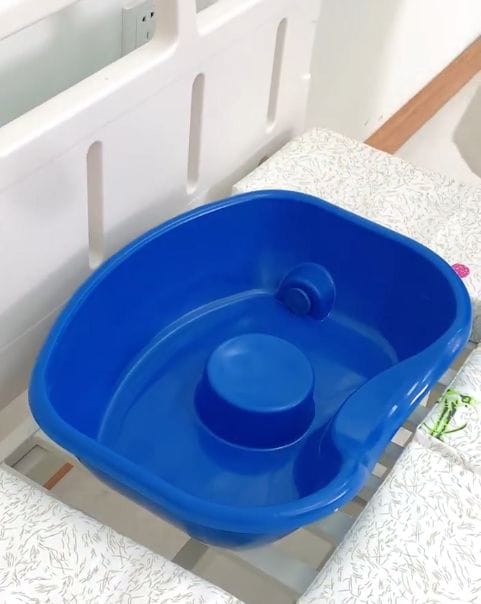
Drainage needs an equally specific explanation. Confirm whether the design uses an outlet and hose, another drainage arrangement, or a facility-dependent method. Ask which components are supplied, how they connect, how they are cleaned, and where water is intended to discharge. Do not infer an included drainage kit from a photograph or a statement about tilt.
Review power arrangements before installation. The supplier should explain the approved operating and charging conditions, cable routing, and response to loss of power. The facility’s responsible personnel should check that the proposed arrangement suits the intended wet-area installation. An improvised extension cable or an assumed charging location is not an acceptable substitute for that review.

Match Materials to Cleaning and Daily Use
Material descriptions should identify the component they apply to. A stainless steel bathing surface does not mean the frame, fasteners, actuators, and all other parts are stainless steel. Ask the manufacturer to explain the construction of exposed areas and the maintenance required where different materials meet.
Cleaning access matters as much as material selection. Inspect rail hinges, mattress supports, underside surfaces, controls, and any drainage components. Determine which parts staff must remove, whether tools are needed, and how parts are dried and reassembled. If routine cleaning requires access that the room cannot provide, the equipment and layout need to be reconsidered together.
The CDC’s environmental cleaning procedures for healthcare facilities recommend detailed manufacturer instructions for cleaning and disinfection of noncritical patient-care equipment, with pictorial instructions when disassembly is required. The guidance also calls for staff training and clearly assigned cleaning responsibilities. Use those principles when reviewing the supplier’s documentation with the facility’s infection-prevention team.
For a bath bed waterproof mattress, request the approved cleaning agents, concentrations, contact times, and drying method. Check these against the products the facility actually uses. General descriptions such as “easy to disinfect” do not resolve chemical compatibility. Establish how staff should identify damage and when the mattress or another component must be removed from use under the manufacturer’s instructions.
Request Clear Load and Safety Documentation
Do not approve a bathing bed from an unexplained capacity figure. Ask the manufacturer to distinguish maximum user weight from safe working load (SWL), identify what each rating includes, and state any limits associated with accessories, movement, or positioning. Require the rating and instructions for the exact configuration under consideration.
LOHO’s product page expresses capacity differently in its specification and FAQ. Obtain a single confirmed rating and its definition before using the figure in an order specification. A purchasing document should not resolve an inconsistency by selecting the more favourable interpretation.
Ask what test evidence supports the declared limits and whether it applies to the offered assembly. Documents should identify the manufacturer, product or model, applicable test method, and configuration. General company certificates cannot answer every question about a specific bathing device.
For overseas orders, have the appropriate person verify the documentation required for the destination market. UK buyers can consult the MHRA’s current guidance on regulating medical devices in the UK, which distinguishes the rules for Great Britain and Northern Ireland. Keep that regulatory review separate from a feature comparison: a product description does not establish market access or replace model-specific documents.
Evaluate the Sample Through a Complete Session
A useful sample evaluation follows the planned sequence: preparation, equipment positioning, transfer setup, bathing-position adjustment, return transfer, cleaning, drying, and storage. Begin with document review and an appropriate unloaded assessment. Any evaluation involving a person should be arranged by the responsible care team under its assessment and the manufacturer’s instructions.
Ask staff to demonstrate access to controls and brakes from the positions they expect to use. Observe whether lowered rails obstruct movement, whether cables have an identified storage route, and whether cleaning staff can reach the required surfaces. Include the accessories proposed for the order; evaluating an incomplete sample can hide later interference.
Agree acceptance criteria before the demonstration. A criterion such as “the configured bed must pass through the surveyed route without removing parts needed for normal operation” can be checked. “Easy to move” is much less useful unless the facility defines the route, conditions, and people carrying out the assessment.
Record unanswered questions and required changes against the sample’s identifying details. If the supplier changes an accessory or configuration afterward, review the affected criteria again. Approval should refer to the evaluated configuration rather than a broad product family.
Define What the Supplier Must Support After Delivery
An electric bath bed supplier should be able to connect the delivered unit with the documentation and parts needed to support it. Ask how the product and its components are identified, what information a fault report should contain, and who is responsible for inspection, diagnosis, and authorised repairs.
The MHRA’s Managing Medical Devices guidance, updated in February 2021, addresses purchasing, use, maintenance, repair, and disposal of reusable medical devices. Its scope supports reviewing service arrangements during selection rather than leaving them until a failure occurs.
For this type of purchase, clarify access to replacement mattresses, rail components, castors, controls, and other model-specific parts as applicable. Establish which maintenance tasks local personnel may perform and which require authorised service. Ask how changes to parts or instructions will be communicated, especially when a distributor supports units at several facilities.
LOHO describes installation guidance and after-sales assistance on its customer service page. Discuss the scope for the bath-bed configuration being ordered and record the agreed responsibilities. Do not assume a general service description establishes response times, local coverage, or the availability of every component.
Build an Enquiry That Resolves the Remaining Gaps
Send the supplier enough context to assess the proposed configuration: facility type, destination market, intended bathing workflow, room and route drawings, transfer-equipment details, and required documentation. Include the anticipated user requirements established by the care team without disclosing unnecessary personal information.
An electric bath bed quotation should identify the offered model or configuration, included mattress and accessories, electrical arrangements, applicable instructions, and any exclusions. Ask it to reference an agreed specification or drawing revision. This helps prevent a photograph, an older datasheet, and a current offer from describing different assemblies.
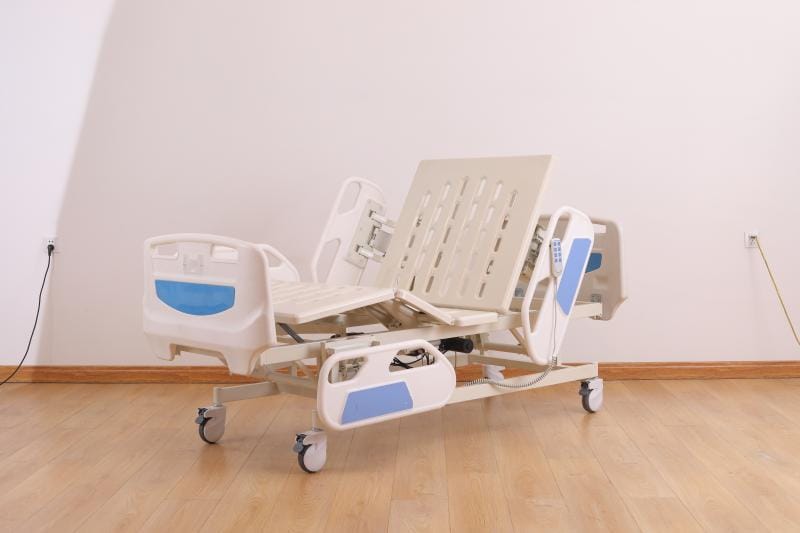
For projects also specifying ward equipment, LOHO’s electric hospital bed range provides a separate starting point for patient-room selection. Keep the bathing specification distinct: a ward bed and a medical bathing bed perform different tasks, even when both have electric adjustment.
Conclusion
The strongest selection is the configuration that fits the assessed care task and the facility’s actual operating conditions. Confirm space, transfer compatibility, wet-area instructions, cleaning access, and documented limits before approving the sample. Those checks turn a feature list into a workable purchasing decision.
To discuss a LOHO bath-bed configuration, send the team your bathroom layout, transfer-equipment details, and required specification. Request confirmation of the remaining technical details before finalising the order.
FAQ
Is an electric bath bed the same as a shower trolley?
The terms can overlap in commercial descriptions, but they do not guarantee identical functions. Compare intended use, bathing surface, drainage, adjustment, and permitted movement. Select from the manufacturer's instructions and the assessed task rather than the product name alone.
Does electric height adjustment also mean an electrically powered backrest?
No. Electric adjustment may apply to only certain movements. Ask the supplier to identify how each function is operated and which movements remain available if power is lost. Avoid inferring actuator functions from the total motor count.
What should distributors ask before ordering for several facilities?
Request each site's room constraints, transfer equipment, cleaning procedures, and intended workflow. A common model may simplify documentation, but a configuration that works at one location does not establish compatibility at another. Review differences before standardising the order.
Can a replacement mattress change the original assessment?
Yes. A change in dimensions, thickness, attachment, or material can affect the evaluated arrangement and cleaning method. Obtain the manufacturer's approved replacement reference and review any differences before introducing a substitute into service.