Table of Contents
A hospital bed user manual should describe the exact bed configuration being supplied, in language its intended operators can understand. Before accepting it, compare the controls, rails, mattress requirements, electrical arrangements, and maintenance boundaries with the offered product. A polished booklet is not useful if its diagrams and operating instructions belong to another version.
This review is different from staff training. Training helps people use approved information; document acceptance establishes whether that information is correct, complete, and controlled in the first place. For an overseas distributor or facility buyer, completing the review before shipment prevents avoidable uncertainty at installation.
Establish Which Configuration The Manual Covers
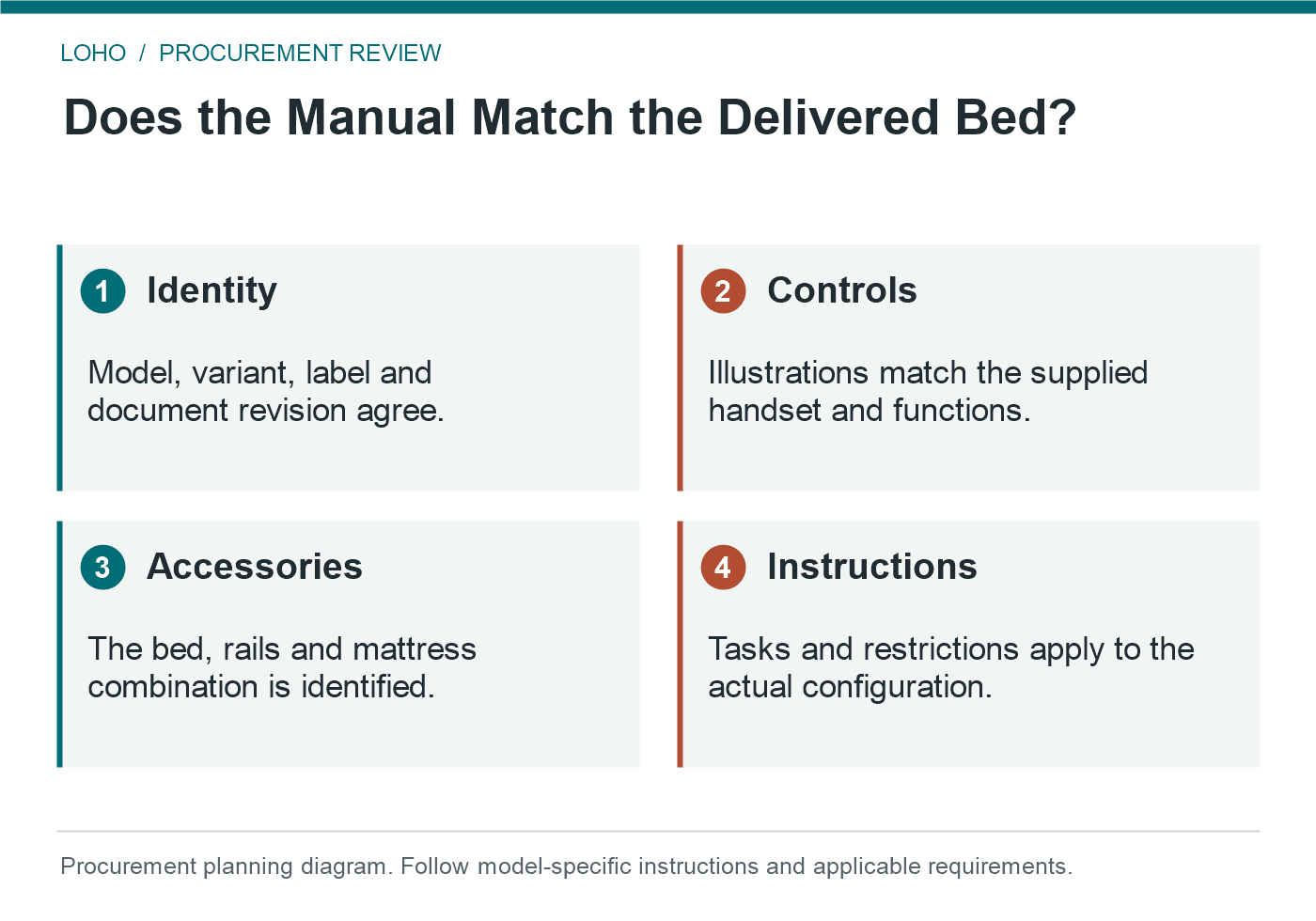
Start with the document's manufacturer name, product references, revision, and date. If it covers a family of beds, it should explain which sections apply to which variants. A phrase such as "all electric beds" is not enough when the control layout or accessory arrangement varies.
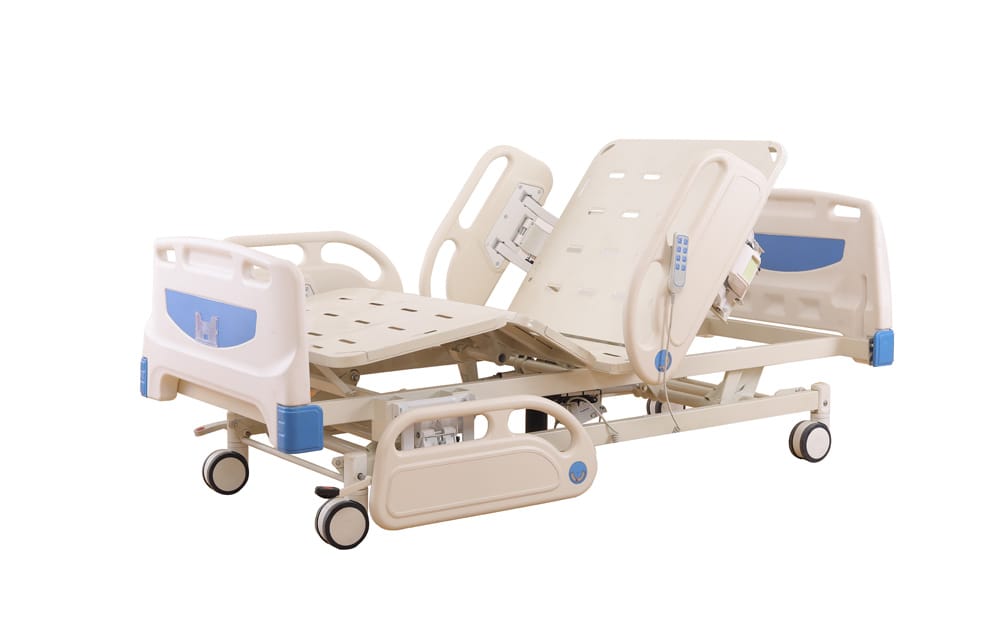
LOHO's three-function electric hospital bed has published backrest, leg-rest, and height adjustment functions. Its page also lists a 220 V / 50 Hz supply. The supplied instructions must correspond to the actual configuration ordered; those published details should not be copied into a manual for a different destination or modified power system without confirmation.
Ask the supplier to link the document revision to the quotation or approved specification. Where a feature is optional, the manual should make that distinction visible to the operator. A warning about an absent accessory or an instruction for an unavailable control can be as confusing as missing information.
Compare Illustrations With The Actual Controls
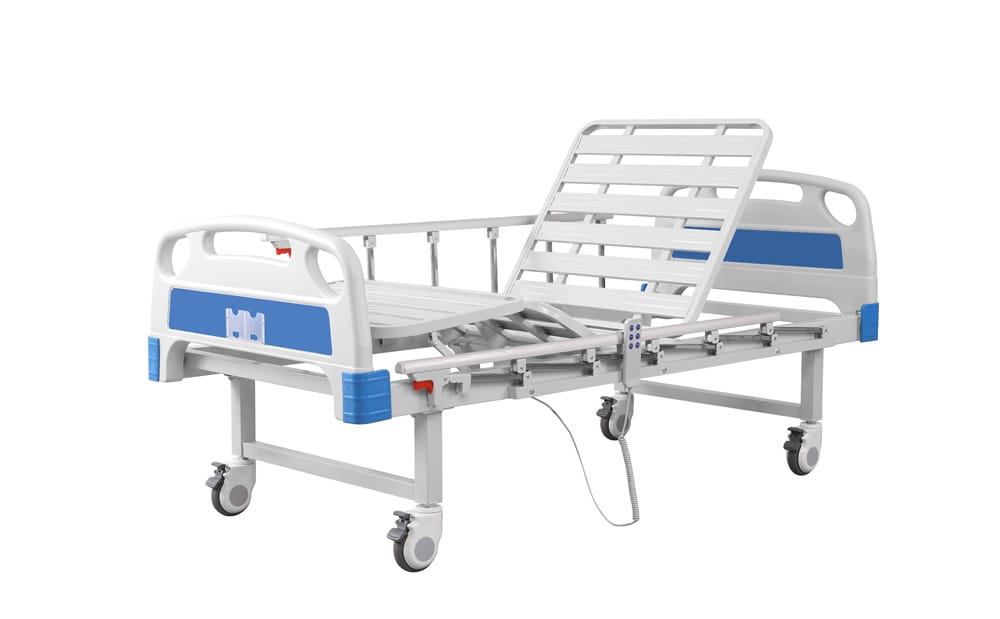
Use a sample, current photographs, or a live demonstration to compare the diagrams with the offered bed. Check button symbols, control labels, rail mechanisms, brake locations, and removable components. Record mismatches instead of assuming staff will work them out during use.
The FDA's guidance on medical device patient labeling addresses information intended for patients and lay carers. It cautions against changing the meaning of professional labeling when adapting it for that audience. This is especially relevant where a distributor creates a simplified home-care leaflet from a supplier's technical manual.
A quick-reference card can be useful, but it should retain the correct operating limits and refer to the current full instructions. It should not add unsupported clinical claims or remove a warning because it takes up space. Have the manufacturer and appropriate reviewer resolve inconsistencies before distributing local versions.
Review The Tasks Operators Actually Need To Find
Ask a representative operator to locate information for ordinary tasks using the manual alone. The goal is to assess navigation and clarity, not to test clinical performance or authorise untrained use. Choose tasks such as identifying controls, finding cleaning instructions, locating a load definition, or determining whom to contact after a fault.
If finding an answer requires guessing the meaning of a symbol or searching several unrelated sections, record the problem. A table of contents is useful only when the headings reflect the operator's questions. Warnings should appear where the relevant task is described, with clear references to any necessary detail elsewhere.
The FDA's human-factors and usability-engineering guidance considers intended users, uses, and environments. A buyer's document walkthrough is not formal usability validation, but it can identify practical questions that the manufacturer should address before handover.
Use A Document-Acceptance Table
| Manual section | Buyer review question | Useful evidence of closure |
|---|---|---|
| Identification | Does the document cover the supplied variant? | Model and revision mapping |
| Controls | Do symbols and diagrams match the actual handset? | Approved photographs or sample comparison |
| Assembly | Are supplied parts and attachment points identifiable? | Complete illustrated instructions |
| Operating limits | Are load terms and intended use explained? | Consistent label and instruction wording |
| Accessories | Are mattress, rails, and other interfaces specified? | Approved compatibility references |
| Cleaning | Are methods and material restrictions clear? | Manufacturer-approved procedure |
| Fault response | Can operators distinguish stop-use and support actions? | Defined escalation instructions |
| Maintenance | Are operator and service tasks separated? | Role-specific instructions and support contact |
Keep the review table outside the published manual. It is the buyer's record of questions and closure, not a substitute for manufacturer-controlled instructions. Where a clarification affects safe operation, request an updated document rather than leaving the answer only in the purchasing correspondence.
Check The Bed, Mattress, And Rails Together
A bed manual should not discuss the frame as though accessories have no effect on the system. Ask how the approved mattress is identified, what limits apply to its dimensions or configuration, and how compatible rails and other attachments are specified. Do not fill gaps using another model's instructions.
The FDA's hospital bed system entrapment guidance addresses beds and accessories as a system. For a document review, the relevant question is whether the manufacturer's information allows the responsible team to identify the intended combination and assess it appropriately.
LOHO's mattress compatibility article can help organise the purchasing questions, but it does not replace the manual. A blog is general guidance; the supplied instructions should identify the specific product combination and the actions users must follow. Keep that distinction clear in distributor handover packs.
Separate Cleaning Instructions From General Claims
Descriptions such as easy-clean or waterproof are not cleaning procedures. The manual should state the approved methods, relevant restrictions, and the handling of removable parts. Ask whether the instructions cover every supplied surface and component, including controls and electrical connections where applicable.
The CDC's environmental cleaning procedures call for manufacturer instructions for noncritical equipment. When reviewing a bed manual, compare those instructions with the facility's actual cleaning products and practices. Refer conflicts to the manufacturer and infection-prevention team rather than substituting a stronger chemical or an unlisted process.
If the same manual covers both institutional and home-care use, ask how those environments are distinguished. A procedure that assumes trained service personnel, particular equipment, or a controlled cleaning area may need a different explanation for a lay carer. The manufacturer should define the permitted process; the distributor should not improvise it.
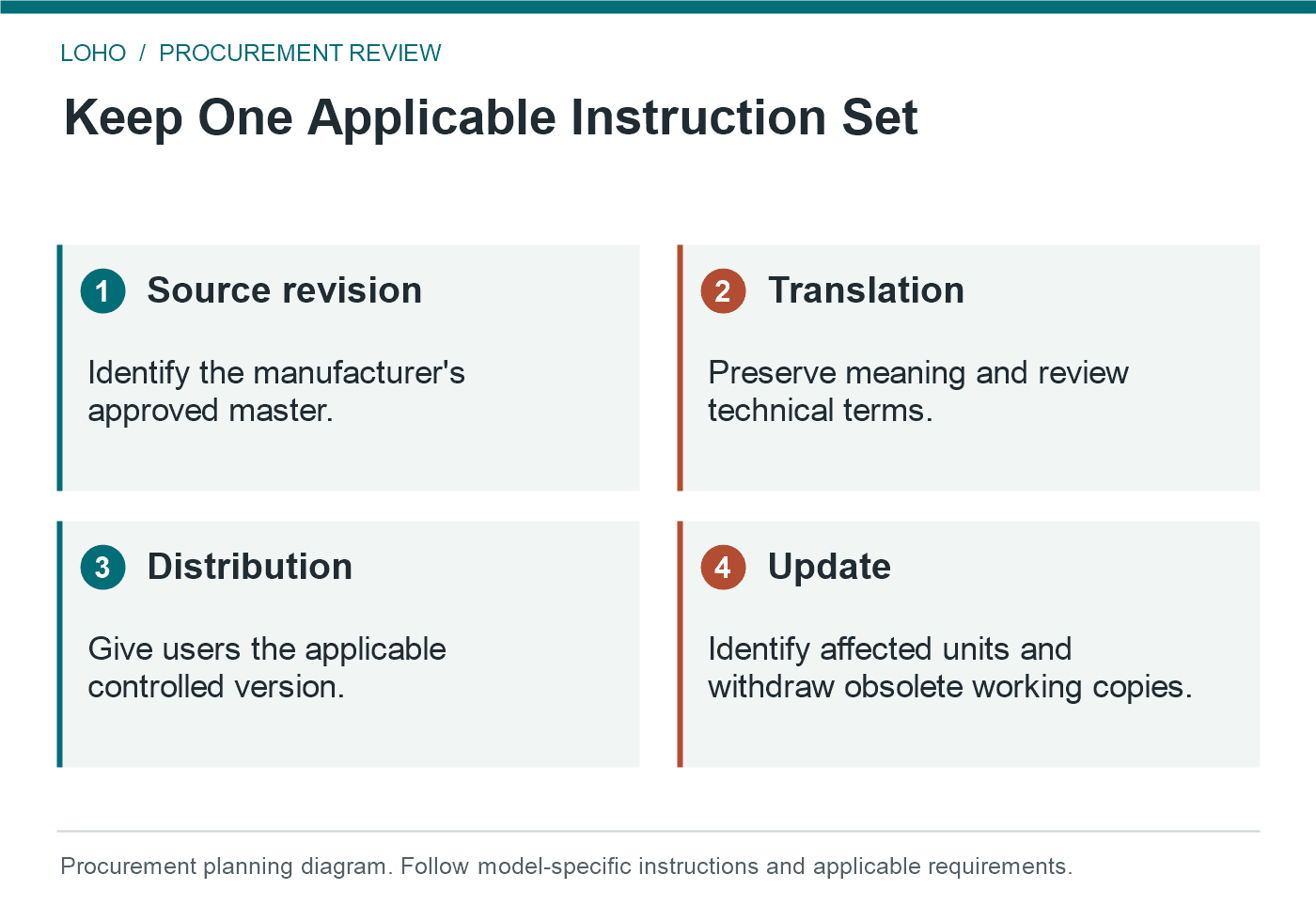
Control Translation And Revision Distribution
For multilingual orders, specify the required languages early and identify who approves the translations. Preserve model names, warnings, units, symbols, and document references. A translation should communicate the approved meaning, not introduce additional functions or turn a conditional statement into an assurance.
Record the source-language revision used for each translation. If the manufacturer later changes an instruction, determine which translated versions and quick-reference materials are affected. Keeping an old leaflet in the carton while emailing a newer manual to the purchaser creates two competing sources of information.
Agree the delivery format as well. Printed instructions, a controlled electronic copy, and accessible service information may serve different needs. A web link alone can become unavailable or point to a later model. Retain the version supplied with each order while establishing how safety-related updates will reach current users.
Make Documentation Part Of The Release Decision
Before shipment, close material discrepancies between the sample, label, specification, and manual. If a control layout changes, ask which diagrams and operating sections have been revised. Do not approve the hardware and documentation on separate tracks without a final cross-check.
The MHRA's Managing Medical Devices guidance covers safe device management across acquisition and use. Apply that principle by assigning an owner for the accepted document pack and its updates. Purchasing, training, and service teams should know where the controlled information is held.
Discuss the document scope with LOHO's service team before confirming the order. For preparation of operator sessions, the related staff-training handover guide is a separate planning resource. Training should begin from accepted model-specific information rather than being used to compensate for an inaccurate manual.
One useful document trial is to give an unfamiliar but appropriately trained staff member a specific information request, such as finding the permitted cleaning method or identifying the supplied handset. Record where they looked and whether the applicable answer was unambiguous. This is an information-access check, not permission to operate unfamiliar equipment without training. It can reveal misplaced warnings, unclear variant tables, or missing cross-references before those problems reach the ward.
Conclusion
Accept a manual when it matches the supplied bed, explains the relevant tasks and limits, and has a workable revision process. The result should be one reliable source of operating information that the facility and distributor can maintain together.
Send LOHO the selected bed configuration, destination, and language requirements to request the appropriate manual and document pack for review before shipment.
FAQ
Can one manual cover several hospital bed models?
Yes, if the applicable variants and differences are clearly identified. The reader should not have to guess which instructions apply to the supplied bed.
Is a quick-start sheet enough for acceptance?
Not when essential information is missing. Treat it as a supplement to the complete approved instructions and check that both documents use the same configuration and revision basis.
Should a distributor rewrite emergency instructions?
Do not independently change their meaning. Obtain manufacturer-approved wording and have the appropriate reviewers check translations and local presentation.
What if a handset differs from the manual illustration?
Request clarification and a corrected document or confirmed variant mapping before handover. Similar-looking symbols do not justify assuming identical functions.
How should old manuals be handled after an update?
Retain them in the historical equipment record but control their use. Distribute the current applicable instructions and identify any units or users affected by the change.