Table of Contents
Hospital bed certificate verification begins by identifying what a document actually proves. A quality-management certificate concerns a defined organisation and scope; a product test report concerns identified specimens and requirements; a declaration states conformity within its stated scope; and a regulatory database entry has its own legal meaning. None should be accepted as a universal substitute for the others.
For an importer, the goal is a traceable evidence chain between the legal manufacturer, the offered model, its intended use, and the destination market. This guide explains how to organise that check without treating every document labelled certificate as product approval.
Identify The Legal Manufacturer And Product First
Record the manufacturer's legal name and address, the commercial product name, model reference, and intended use. Then compare those details across the quotation, label, declaration, and supporting documents. Differences may have a legitimate explanation, but the supplier should provide it before the evidence is accepted.
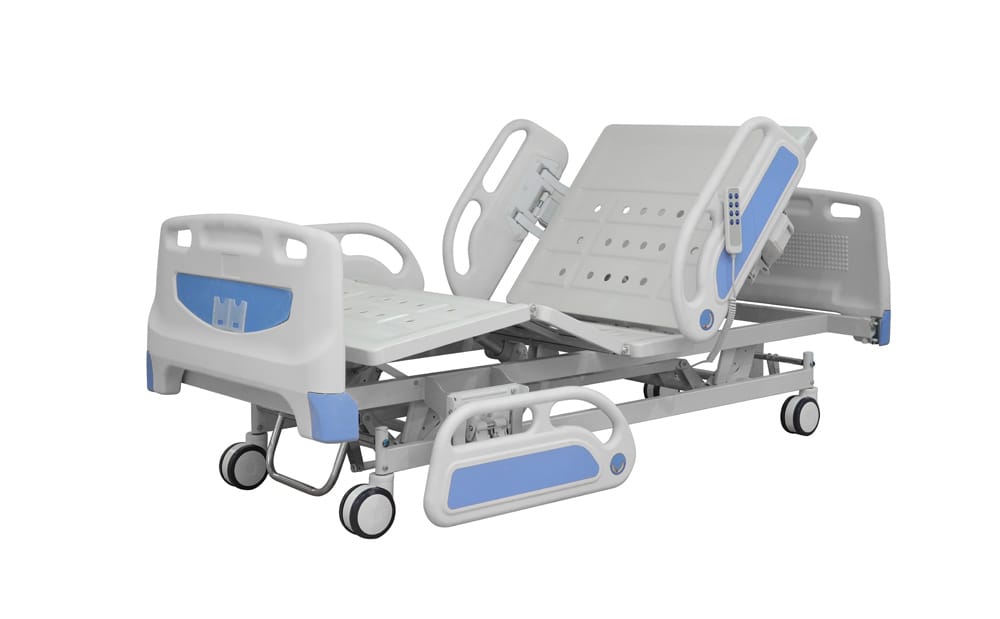
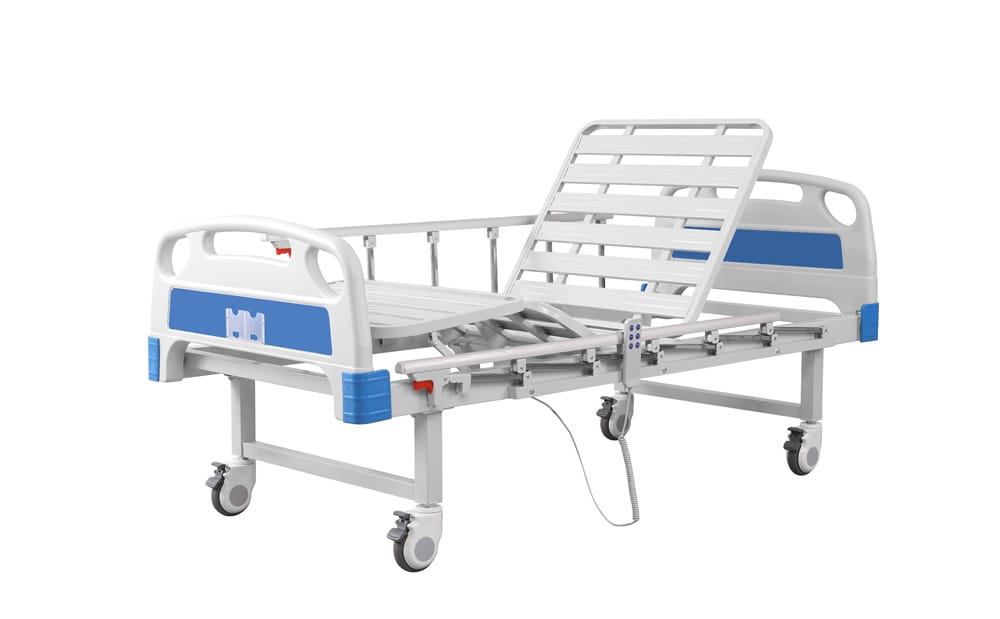
LOHO sells several distinct products in its electric hospital bed category. Its 3-function electric hospital bed page identifies the model EHB-3F-260. If that is the offered product, use the confirmed model and configuration as the basis of the request rather than asking for certificates for all LOHO beds.
A distributor's own stock code can be added to the record, but it should not replace manufacturer identification. Where private labeling or another commercial name is involved, obtain a documented mapping. Otherwise a valid document can become impossible to connect with the actual unit at receiving inspection.
Understand What ISO 13485 Does And Does Not Say
ISO 13485:2016 is a quality-management-system standard for organisations involved in medical devices. ISO explains that it does not perform certification. Consequently, a buyer should identify the external certification body, the certified organisation, the activities and sites within scope, and the document's current status.
Do not describe a management-system certificate as proof that every bed model has passed every relevant product test. The two questions require different evidence. A factory may have a defined quality-system scope while a particular configuration still needs separate technical and market-access review.
Check authenticity through the issuing body's appropriate verification channel, using contact details obtained independently where practical. Preserve the verification date and result. A screenshot forwarded by a supplier can help locate a record, but it is weaker evidence than a current result tied to the certificate identifier and certified entity.
Distinguish Registration From Market Authorisation
The FDA's important reminders about registration and listing state that an entry in its registration and listing database does not denote approval, clearance, or authorisation of the establishment or device. Do not convert a registration number into an "FDA approved" claim in an importer catalogue.
For a US order, the responsible regulatory reviewer should establish the classification and applicable requirements for the specific product and intended use. Depending on the device, the relevant evidence may differ. This article does not assign a regulatory pathway to a particular LOHO model or confirm its US market status.
Use the FDA's registration and listing search resource for the question it is designed to answer. Check names, roles, and device details carefully. A similar company name or a record for a different product is not a successful match.

Ask The Destination Reviewer To Define The Required Pack
Before requesting documents, specify the destination and intended customer setting. Regulatory requirements, conformity routes, labeling responsibilities, and the role of an importer or representative vary between jurisdictions. A document accepted in one market should not be presumed sufficient in another.
For UK projects, the MHRA's guidance on regulating medical devices in the UK distinguishes Great Britain and Northern Ireland. Use the current official guidance and a competent review of the intended supply route. A procurement checklist should record the applicable basis rather than reducing the decision to a familiar marking on a brochure.
Ask the reviewer which documents must be available before ordering, before import, and before the product is placed into service. This separates genuine release requirements from information that can be supplied later. It also prevents a commercial team from making compliance assurances while the essential product identity is still unresolved.
Compare The Scope Of Each Document
| Evidence item | Identity and scope to check | Common mismatch |
|---|---|---|
| Quality-system certificate | Legal entity, sites, activities, issuer, status | Trading company shown instead of the relevant manufacturer |
| Declaration | Product identification, applicable basis, responsible signatory | Model family named without a clear variant mapping |
| Test report | Specimen, configuration, method, edition, results | Different motor, rail, or electrical arrangement |
| Database record | Entity role, product entry, current relevant details | Similar name or unrelated device category |
| Product label | Manufacturer, model, ratings, required identifiers | Label differs from accepted technical information |
| Supporting clarification | Document reference, reason, authorised explanation | Informal assurance without a traceable decision |
Use a status such as accepted, clarification required, or not applicable, with the reason recorded. Avoid a simple pass/fail column that conceals why a document was judged relevant. An importer should be able to explain the relationship between the evidence and the offered product later, when the original purchasing staff may no longer be involved.
Review Test Reports Without Expanding Their Claims
A test report should be read with its specimen description, method, edition, and any limitations. Check whether the configuration includes the supplied power system, controls, accessories, and other relevant options. A report for a component may support one part of a technical assessment without establishing performance of the complete bed.
ISO's explanation of conformity assessment distinguishes activities such as testing and certification. Preserve those distinctions in your records. A test result, a supplier declaration, and a third-party certificate may all be useful, but their authorship and scope are different.
If a supplier provides only a summary, ask whether it contains enough information for the intended review and whether the full report can be examined under suitable confidentiality arrangements. Do not treat commercial confidentiality as automatic proof of a problem, but do not approve an unsupported claim because a document is unavailable either.
Resolve Inconsistencies Before Advertising The Product
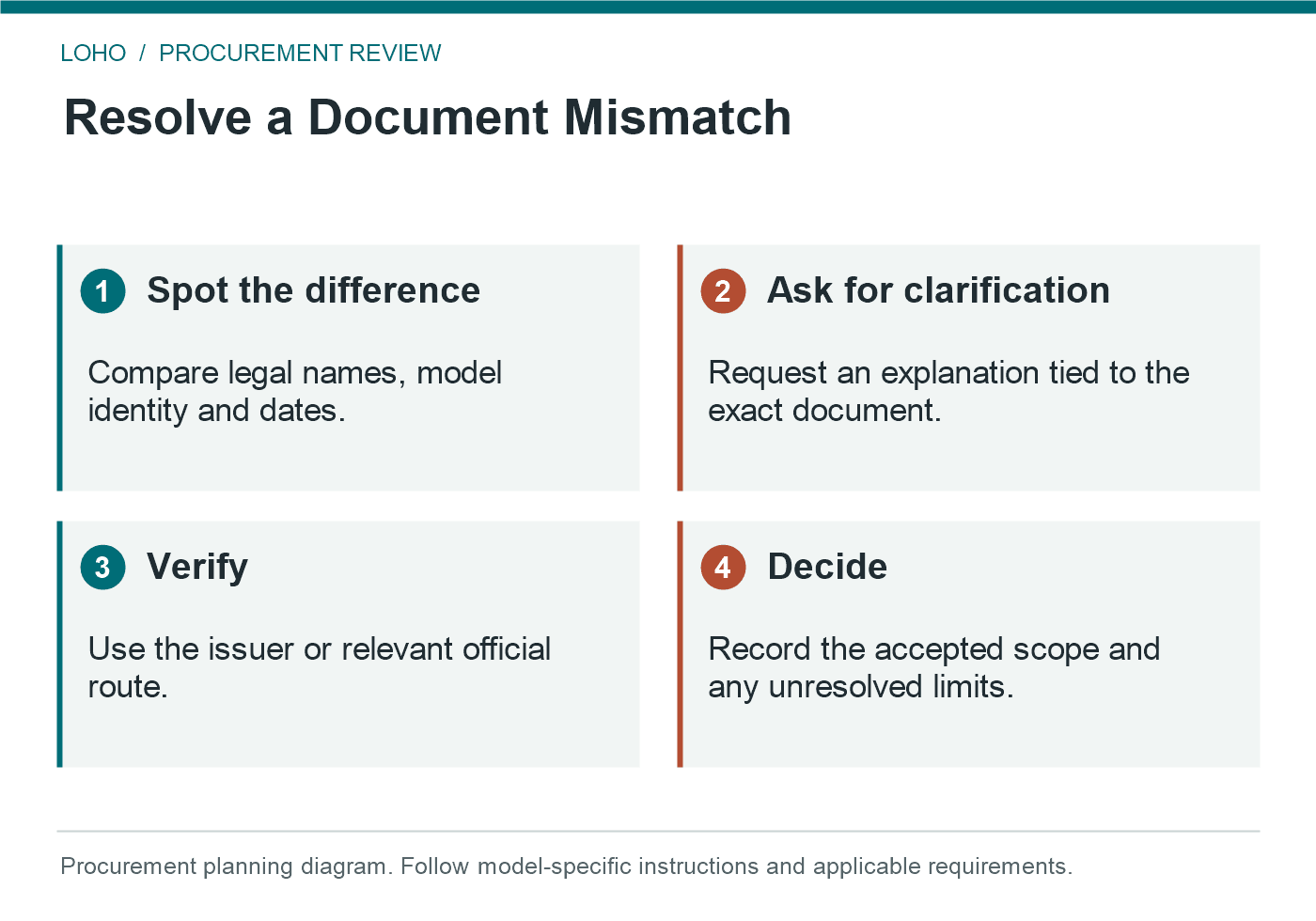
When names, models, or ratings disagree, open a specific clarification request. State the documents involved and the difference observed. Ask which record is correct, why the discrepancy exists, and which corrected or supplementary document closes it. A vague assurance that everything is compliant does not resolve a model mismatch.
Keep the commercial description aligned with the accepted evidence. If a report concerns electrical safety, do not use it to claim pressure-injury prevention or suitability for every patient group. If a certificate covers a manufacturing site, do not present its logo as approval of all accessories supplied by a separate business.
LOHO's service page provides a route for discussing project documentation. The wider export-documentation guide concerns shipment planning; certificate verification is the narrower task of checking identity, authenticity, and scope. Keep the two records connected without assuming that a complete shipping pack proves product conformity.
Keep The Evidence Current For Repeat Orders
Create a record of the accepted product revision, documents, verification dates, and responsible reviewers. Before a repeat order, ask whether the manufacturer, production site, configuration, or supporting evidence has changed. A previous successful delivery is useful commercial experience, but it does not make every future configuration identical.
Establish how the supplier will notify you of changes relevant to the evidence. A new controller or different rail arrangement may require technical review even when the bed's commercial name is retained. The appropriate response depends on the change and applicable requirements; it should not be decided solely by purchasing staff comparing photographs.
Keep archived versions so you can identify what supported an earlier shipment. Mark superseded documents clearly and control access to the current pack used for new orders. This is particularly useful when the same distributor supplies several destination markets with different documentation requirements.
Conclusion
Verification is complete when the evidence can be traced to the offered model and interpreted correctly for its destination. Check document authenticity, product scope, and the meaning of each claim before using it in a purchasing or sales decision.
Send LOHO the exact model, intended use, and destination market to request the relevant documentation for your qualified review. Identify the specific evidence needed instead of requesting a generic certificate bundle.
FAQ
Does ISO issue an ISO 13485 certificate to manufacturers?
No. ISO develops the standard; external certification bodies perform certification. Check the issuing body and certified scope shown on the document.
Does an FDA listing mean the bed is FDA approved?
No. Registration and listing do not denote approval, clearance, or authorisation. The applicable requirements depend on the device and intended use.
Can a certificate for a similar model be used?
Only if an appropriate, documented scope or model-family assessment covers the offered configuration. Similar appearance is not enough.
Should importers retain verification results?
Yes. Keep the checked identifiers, verification date, supporting documents, and review decision so the evidence can be connected to the order and delivered product.
What is the best response to an unexplained mismatch?
Hold the relevant approval decision and ask for a specific correction or documented explanation. Do not make a broader compliance claim while the discrepancy remains unresolved.