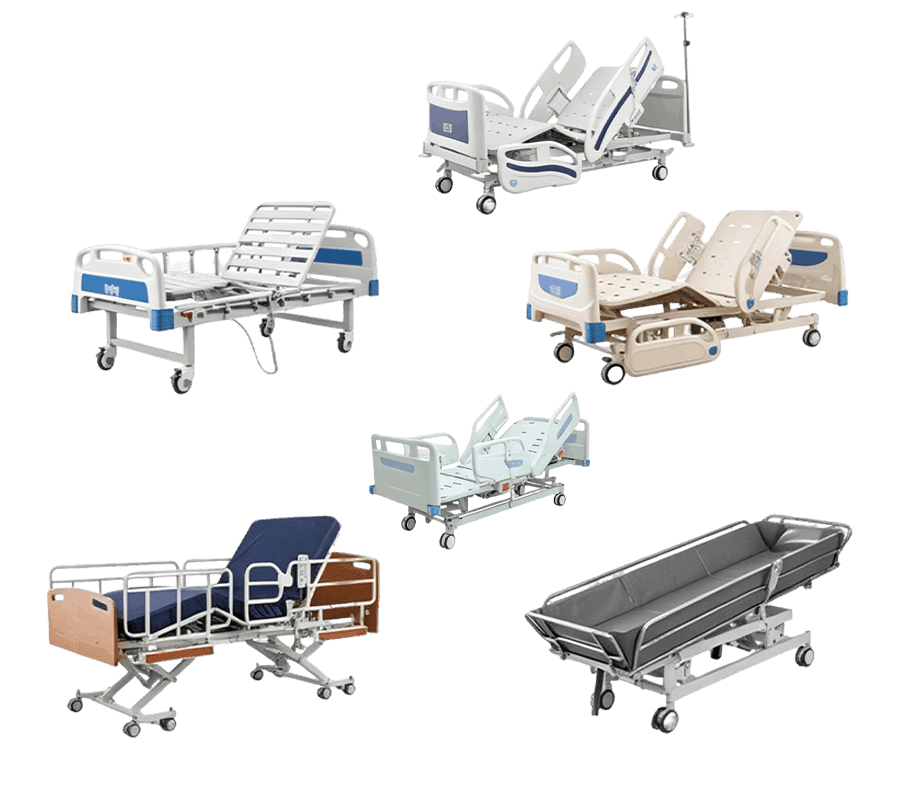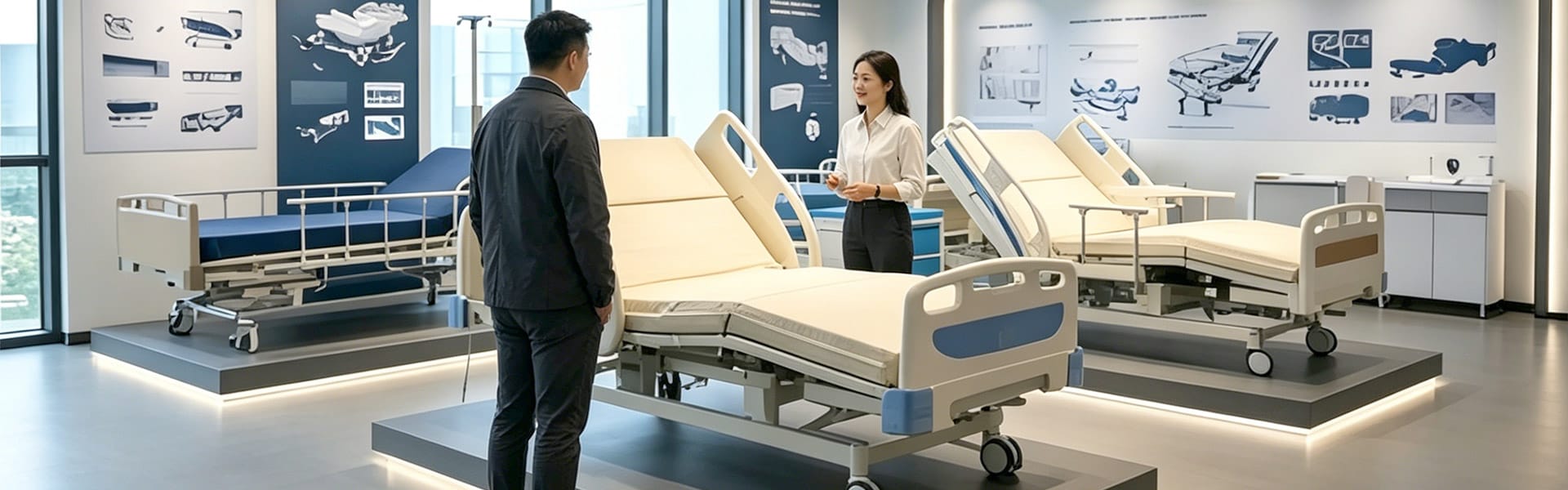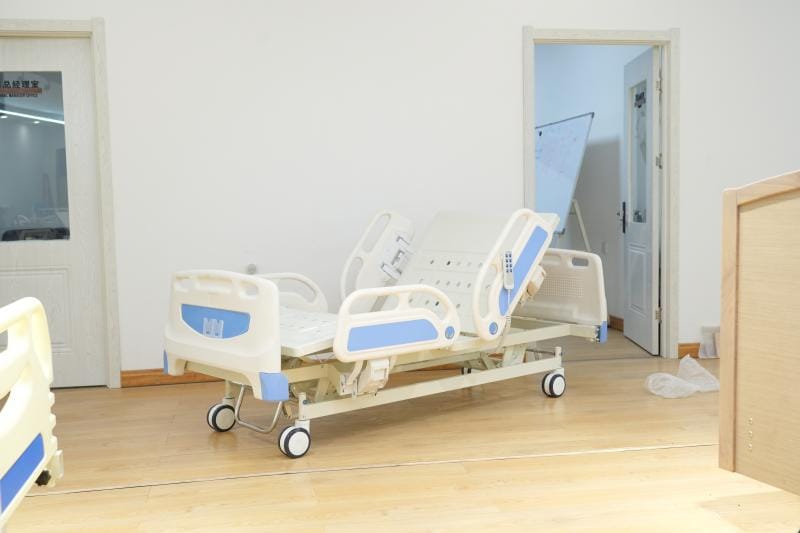
If you are procuring medical beds for a hospital ward, nursing home, or home care setup, you have probably encountered conflicting terminology. Some suppliers use “hospital bed” and “nursing bed” interchangeably. Others treat them as completely separate product categories. The reality is more nuanced — and getting it wrong can mean overspending on features you do not need, or underspending and ending up with equipment that fails to meet your patients’ actual care requirements.
This guide breaks down the real differences between electric nursing beds and hospital beds across function design, target users, care scenarios, and total cost of ownership. By the end, you will know exactly which type fits your facility — and why.
Table of Contents
Why the Confusion Exists: Electric Nursing Bed vs Hospital Bed
The overlap in terminology comes from the fact that both nursing beds and hospital beds share a common ancestor: the standard medical patient bed. Over time, manufacturers have specialized designs for different care environments, creating distinct product categories that serve different primary functions.
Think of it this way: all nursing beds are a type of medical bed, and all hospital beds are a type of medical bed — but a nursing bed and a hospital bed are optimized for different care priorities. The distinction matters most when you are making purchasing decisions for large-scale deployments, where even small per-unit cost differences multiply across dozens or hundreds of beds.
Quick Definition:
Hospital Bed — A medical bed designed primarily for acute clinical care in hospital wards, ICU units, and treatment environments. Focuses on clinical functionality, staff efficiency, and integration with medical equipment.
Nursing Bed — A medical bed designed primarily for long-term patient care in nursing homes, rehabilitation centers, and home care settings. Focuses on patient comfort, caregiver ergonomics, and daily living support.
What Is a Hospital Bed?
A hospital bed is engineered for clinical environments where medical intervention is the primary activity. These beds serve as the patient’s base during diagnosis, treatment, surgery recovery, and acute care.
Core Design Priorities
- Clinical positioning: Precise angle adjustments for surgical recovery, Trendelenburg positioning, and CPR emergency response
- Equipment integration: IV stand sockets, oxygen tank holders, monitoring device mounts, and drainage bag hooks
- Staff efficiency: Quick-adjust controls that allow nurses to reposition patients rapidly during rounds
- Infection control: Smooth, non-porous surfaces that withstand frequent chemical disinfection
- High load capacity: Designed to support patients with complex medical needs, often 260 kg or more
Typical Function Count
Hospital beds commonly come in 2-function, 3-function, and 5-function configurations:
- 2-Function: Backrest and leg adjustment. Suitable for general wards and short-stay patients. The Loho 2-Function Electric Hospital Bed represents this category, offering reliable backrest and leg positioning with silent motor operation.
- 3-Function: Adds height adjustment to backrest and leg control. Essential for wards where patient transfer (bed to wheelchair, bed to stretcher) happens frequently. The Loho Three-Function Electric Hospital Bed includes dual IV stand sockets and medical-grade castors.
- 5-Function: Full clinical adjustment including Trendelenburg tilt, reverse Trendelenburg, height, backrest, and leg positioning. Designed for ICU and critical care. The Loho 5-Function Electric Medical Bed features one-touch CPR release and ICU-grade 260 kg capacity.
Where Hospital Beds Excel
- Emergency departments and acute care wards
- Intensive care units (ICU)
- Surgical recovery rooms
- Short-stay observation wards
- Clinical settings where patients are monitored continuously
What Is an Electric Nursing Bed?
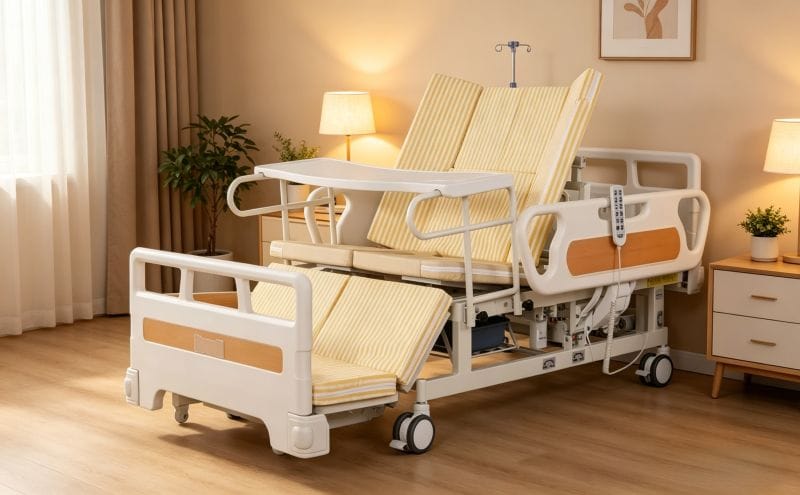
An electric nursing bed is engineered for environments where patients stay for extended periods — days, weeks, months, or even permanently. The design philosophy shifts from clinical efficiency to long-term comfort, caregiver support, and activities of daily living (ADL).
Core Design Priorities
- Patient comfort: Higher-quality mattresses, home-style aesthetics, wooden or warm-toned headboards and footboards
- Turning and repositioning: Built-in left/right turning functions (0–45°) to prevent pressure ulcers during long-term bed rest
- Toilet and hygiene integration: Hidden toilet hole systems, bath-compatible designs, and easy-clean surfaces
- Caregiver ergonomics: Height adjustment optimized for nurse and family caregiver back safety
- Wheelchair conversion: Some models can transform into a seated position that facilitates wheelchair transfer
- Low noise operation: Motors rated below 40–45 dB for undisturbed rest in shared rooms
Key Features Unique to Nursing Beds
Automatic Turning System: The most distinguishing feature. Electric nursing beds like the Loho Electric 4-Motor Nursing Bed include left and right turning functions (0–45°) that automatically reposition the patient at set intervals. This is critical for preventing pressure ulcers (bedsores) in patients who cannot move independently — a scenario far more common in nursing homes than in acute hospital wards.
Toilet Hole System: Many nursing beds incorporate a quick-open toilet hole in the bed surface, allowing patients to use a bedpan or commode without being physically lifted. This preserves patient dignity and significantly reduces caregiver strain.
Wheelchair Mode: Some advanced nursing beds can recline and elevate into a chair-like position, effectively serving as a wheelchair alternative for patients who need to sit upright for meals, socialization, or therapy sessions.
Where Nursing Beds Excel
- Nursing homes and aged care facilities
- Rehabilitation centers (extended stays)
- Home care for elderly or disabled patients
- Palliative and hospice care
- Long-term care wards in hospitals
Key Differences: Nursing Bed vs Hospital Bed
Let us break down the real differences across the dimensions that matter most for purchasing decisions.
1. Primary Purpose
Hospital Bed: Designed for acute medical care. The bed serves as a clinical tool that supports diagnosis, treatment, and recovery. Staff efficiency and equipment integration are prioritized.
Nursing Bed: Designed for long-term daily living support. The bed serves as the patient’s primary living space. Comfort, dignity, and caregiver support are prioritized.
2. Adjustment Functions
Hospital Bed: Focuses on clinical positioning angles — Trendelenburg, reverse Trendelenburg, CPR flat position, and cardiac chair position. These are essential for hemodynamic management and emergency response.
Nursing Bed: Focuses on turning functions and daily living positions — left/right rotation for pressure ulcer prevention, sitting position for meals, and toilet hole access. Clinical tilt functions are typically absent.
3. Mattress and Comfort
Hospital Bed: Uses firm, medical-grade mattresses optimized for clinical access and infection control. Comfort is secondary to functionality.
Nursing Bed: Often paired with higher-density comfort mattresses, anti-bedsore breathable mattresses, or specialized pressure-relief systems. Since patients spend months or years on these beds, comfort directly impacts quality of life.
4. Aesthetics
Hospital Bed: Clinical appearance — metal frames, white or blue color scheme, industrial design. Functionality drives the look.
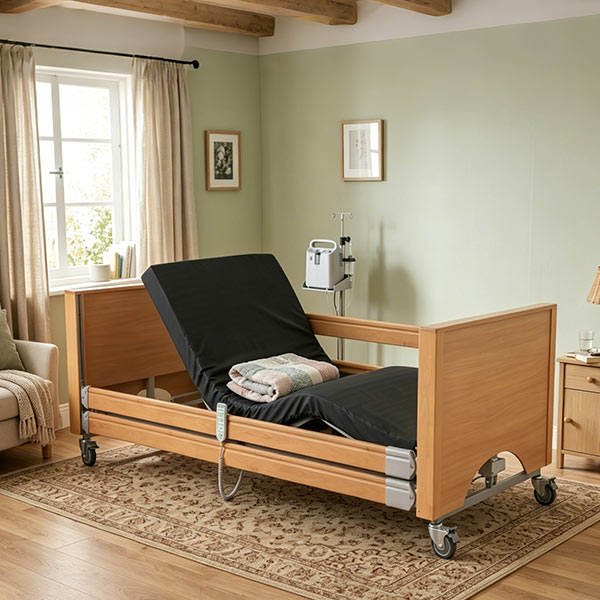
Nursing Bed: Home-style appearance — wooden headboards, warm-toned finishes, furniture-like design. The goal is to make the patient’s environment feel less institutional.
5. Hygiene and Toilet Integration
Hospital Bed: Typically does not include built-in toilet features. Patients are assisted to bedside commodes or bathroom facilities by nursing staff.
Nursing Bed: Often includes a hidden toilet hole with quick-open mechanism. Some models, like bath beds, are designed specifically for safe patient washing. This is essential for patients with severely limited mobility in home or nursing home settings where dedicated nursing staff may not be available 24/7.
6. Noise Level
Hospital Bed: Motors are designed for reliability and load capacity. Noise levels of 45–55 dB are acceptable in busy hospital wards.
Nursing Bed: Motors are optimized for quiet operation, often below 40 dB, to avoid disturbing roommates in shared nursing home rooms or family members in home care settings.
7. Price Range
Hospital Bed: Generally less expensive for equivalent function counts. A 3-function hospital bed typically costs less than a 4-motor nursing bed with turning and toilet features.
Nursing Bed: Commands a premium due to additional motors (turning function), toilet mechanisms, upgraded mattresses, and home-style finishes.
Feature-by-Feature Comparison: Electric Nursing Bed vs Hospital Bed
| Feature | Hospital Bed | Nursing Bed |
|---|---|---|
| Primary Setting | Hospital wards, ICU, emergency | Nursing homes, home care, rehabilitation |
| Care Duration | Short to medium (hours to weeks) | Long-term (weeks to years) |
| Turning Function | Rarely included | Standard (0–45° left/right) |
| Toilet Hole | Not included | Often built-in |
| Trendelenburg Tilt | Standard (3 and 5-function) | Not included |
| CPR Release | Standard | Optional |
| Wheelchair Mode | Not available | Available on select models |
| Headboard Style | Medical ABS (clinical look) | Wood or wood-grain (home look) |
| Mattress Type | Firm medical-grade | High-density comfort / anti-bedsore |
| Motor Noise | 45–55 dB | Below 40–45 dB |
| Load Capacity | 220–260 kg | 200–260 kg |
| IV Stand Sockets | Standard | Optional |
| Typical Functions | 2, 3, or 5 clinical functions | 3–4 motors (turning, backrest, leg, height) |
| Relative Cost | Lower | Higher (additional features) |
When to Choose a Hospital Bed
A hospital bed is the right choice when:
- Your setting is a hospital ward or clinic where patients receive active medical treatment and are monitored by clinical staff
- Patients have short stays (typically under 2 weeks) and do not require long-term repositioning or toilet integration
- Clinical positioning is critical — Trendelenburg tilt, CPR flat position, or cardiac chair position are regularly needed
- Equipment integration matters — IV poles, oxygen outlets, patient monitors, and drainage systems need to mount directly to the bed
- Budget is a primary constraint — hospital beds offer essential clinical functions at a lower cost per unit
- You are outfitting a large facility where per-unit savings multiply across dozens or hundreds of beds
For facilities that need both manual and electric options, our detailed comparison of manual vs electric hospital beds covers another important dimension of the decision.
When to Choose a Nursing Bed
A nursing bed is the right choice when:
- Your setting is a nursing home, elderly care center, or home care environment where patients stay for extended periods
- Pressure ulcer prevention is a priority — automatic turning functions reduce the need for manual repositioning every 2 hours
- Patient dignity matters — built-in toilet systems and wheelchair conversion support independent living
- Caregiver support is essential — home care settings where family members (not trained nurses) provide daily care
- Noise sensitivity is high — shared rooms, home bedrooms, or quiet care environments require low-decibel motors
- Home-style aesthetics are preferred — nursing homes and home care settings benefit from furniture-like designs that reduce the institutional feel
- Your patients have limited mobility long-term — paralysis, advanced age, neurological conditions, or post-surgical rehabilitation requiring months of bed rest
Critical Buying Considerations
Regardless of which type you choose, verify these factors before placing an order:
1. Certification Compliance
Ensure the bed holds certifications required in your target market. At minimum, look for CE marking (Europe), FDA registration (United States), and ISO 13485 quality management certification. Loho Medical holds ISO 13485, ISO 9001, CE, and FSC certifications across its full product range.
2. Motor Quality and Warranty
The motor is the most expensive component to replace. Ask about the motor brand, rated lifespan, and warranty terms. Premium brands like MOTECK or LINAK offer 10,000+ cycle lifespans. Verify whether the supplier stocks replacement motors for post-warranty service.
3. Load Capacity vs. Patient Population
Standard beds are rated for 220–260 kg. If your patient population includes bariatric patients, you may need specialized heavy-duty frames rated for 300 kg or more.
4. Mattress Compatibility
The bed frame and mattress must work as a system. A hospital bed with a firm clinical mattress will not provide the same pressure relief as a nursing bed paired with an anti-bedsore breathable mattress. Factor mattress cost into your total budget.
5. Spare Parts Availability
For international buyers, confirm that the manufacturer provides global spare parts shipping. Key wear items include motors, castors, remote controls, and side rail mechanisms. A bed that cannot be repaired locally becomes a liability within 2–3 years.
6. OEM and Customization Options
If you are a distributor or procurement agent outfitting multiple facilities, check whether the manufacturer supports OEM branding, custom colors, and configuration modifications. Loho Medical provides customized development and global delivery services for institutional buyers.
Conclusion
The choice between a nursing bed and a hospital bed is not about which is “better” — it is about which is designed for your specific care environment.
Hospital beds are clinical tools built for acute care efficiency, equipment integration, and short-to-medium patient stays. They are cost-effective, functionally precise, and designed for high-turnover ward environments.
Nursing beds are daily living platforms built for long-term comfort, caregiver support, and patient dignity. They feature turning systems, toilet integration, quiet motors, and home-style designs that make extended bed care more sustainable for both patients and caregivers.
Many large healthcare groups purchase both: hospital beds for acute wards and nursing beds for rehabilitation, elderly care, and home care programs. Understanding the distinction ensures you allocate your budget correctly and equip every patient with the bed that genuinely meets their needs.