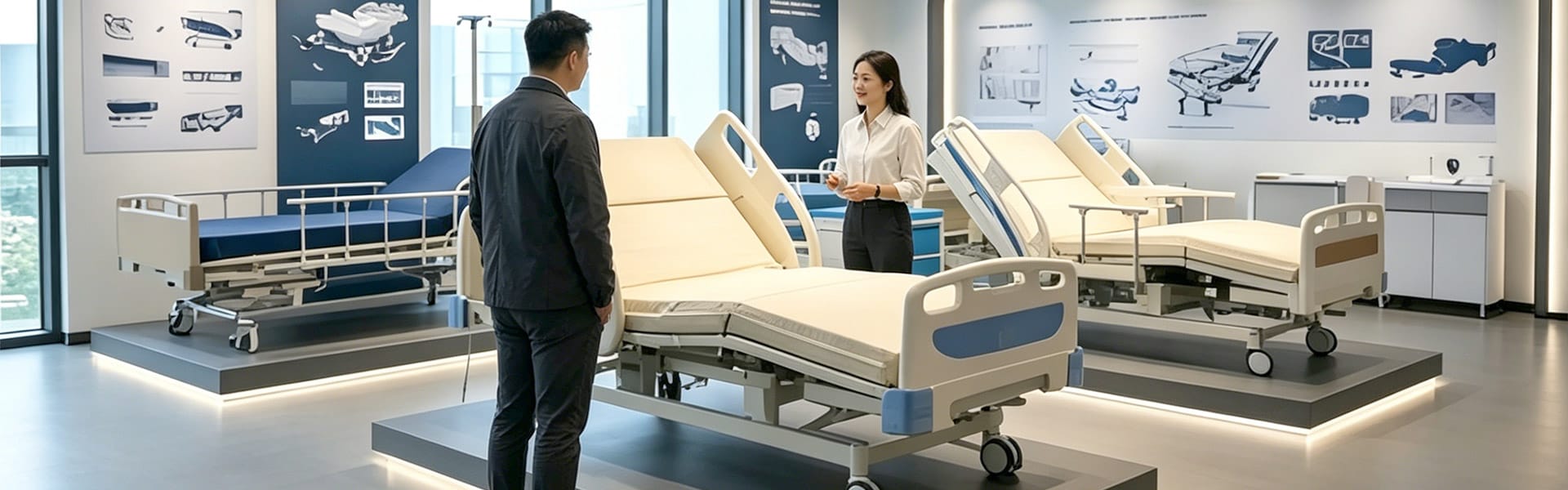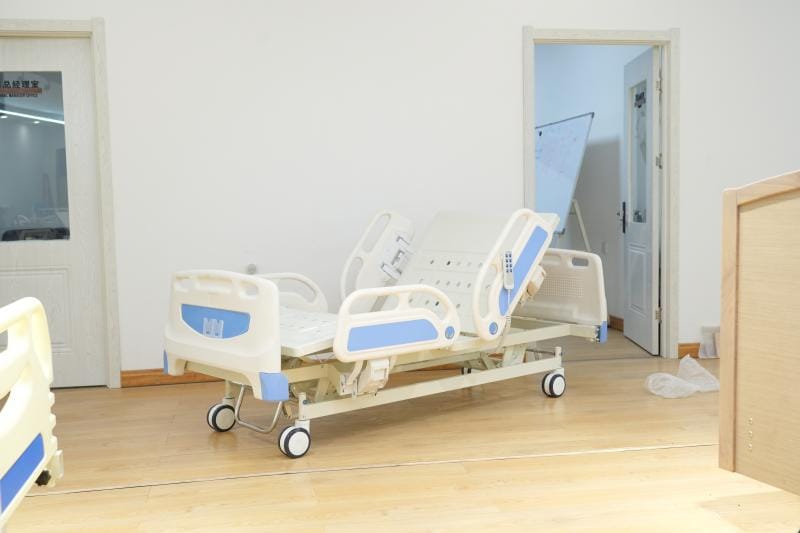
A hospital bed may be adjusted only a few times a day in one facility and several times during a single care routine in another.
That difference matters.
A manually operated backrest may be perfectly practical in a clinic where positioning changes are occasional. In a nursing home or rehabilitation setting, caregivers may need to raise the backrest, adjust the legs and change the bed height repeatedly for meals, transfers, personal care and rest.
This is why a manual vs electric hospital bed decision should begin with daily use rather than the number of cranks or motors.
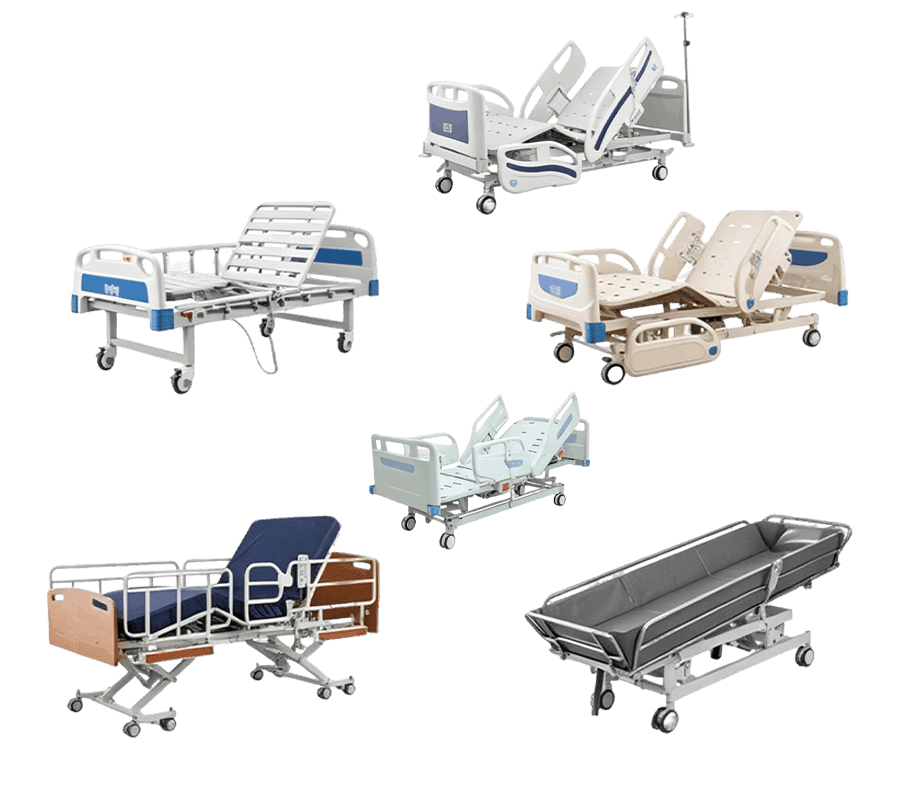
LOHO Medical’s current range includes a Manual Backrest Hospital Bed, a Single-Crank Hospital Bed, two-function and three-function electric hospital beds, five-function hospital and ICU beds, electric home-care beds and dedicated nursing-bed models.
They do not all solve the same problem.
The right choice depends on how often the bed will move, who will operate it, whether powered height adjustment is needed, how the bed will fit the room and what kind of maintenance support will be available after delivery.
Table of Contents
How Often Will the Bed Need to Be Adjusted During a Normal Day?
Adjustment frequency is one of the clearest differences between a manual and electric hospital bed.
A manual bed uses a crank or another mechanical control. Each change requires someone to stand beside the bed and operate the mechanism.
That may work well when the position is set at the start of care and changed only occasionally. It becomes less convenient when caregivers need to make several adjustments throughout the day.
Consider how often the bed will be repositioned for:
- Meals
- Rest
- Personal care
- Linen changes
- Patient transfers
- Rehabilitation exercises
- Clinical examinations
- Night-time positioning
A caregiver making one or two adjustments has a different workload from someone changing the bed position before and after every care task.
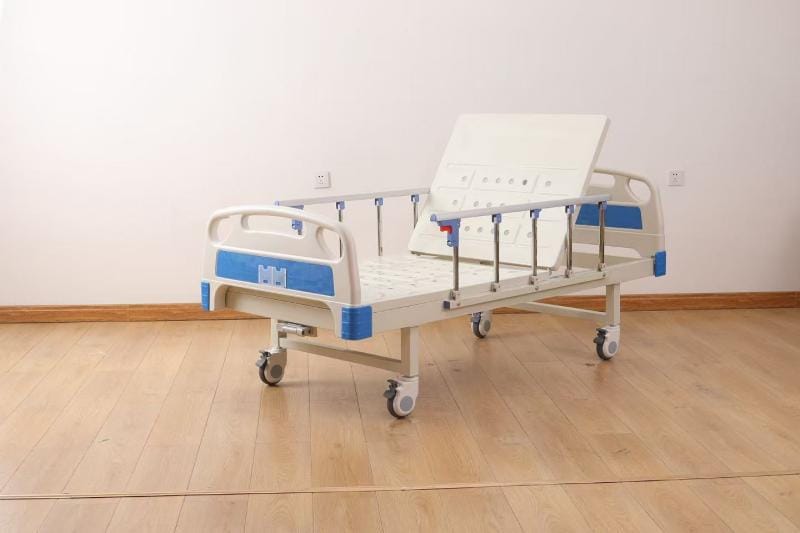
LOHO’s current manual range includes a Manual Backrest Hospital Bed and a Single-Crank Hospital Bed. These models may be considered when the required manual movement is straightforward and a caregiver will normally be available to operate it.
When adjustments are frequent, an electric model avoids repeated manual cranking. The operator can use the powered control provided with the selected model, although the exact control layout should still be confirmed before ordering.
During a sample review, do not test the crank or handset only once. Use it as it would be used during a normal shift. This gives caregivers a much better sense of whether the operating method fits their routine.
Is Powered Height Adjustment Important for Transfers and Bedside Care?
Many buyers initially focus on the backrest and leg section. In practice, the difference between a fixed-height bed and a height-adjustable bed can be just as important.
LOHO’s 2 Functions Electric Hospital Bed provides powered backrest and leg adjustment. The published overall size is 2060 × 900 × 500 mm, which means the model is listed with a fixed overall height of 500 mm.
The Three-Function Electric Hospital Bed adds powered height adjustment. LOHO publishes the following adjustment ranges for this model:
- Backrest adjustment: 0–75°
- Leg-rest adjustment: 0–40°
- Height adjustment: 415–710 mm
That added height function may be relevant when the bed needs to move between different working or transfer positions.
Before selecting it, ask how the facility will use the height adjustment.
Will caregivers raise the platform during routine care? Does the bed need to align with a wheelchair or transfer device? Is a lower position needed at other times? Will the height remain almost unchanged once the bed is installed?
When the bed height rarely changes, powered backrest and leg adjustment may cover the main requirement. When height changes are part of the daily workflow, the three-function configuration deserves closer attention.
Remember that the published platform or frame height is not necessarily the final patient-surface height. The mattress adds to that measurement, so the mattress specification should be included when planning transfers and room use.
Will the Patient Need to Control the Bed Without Waiting for a Caregiver?
The person using the controls can change the choice between a manual and electric hospital bed.
A manual model normally depends on someone being present to operate the crank. That may be acceptable in a setting where caregivers are always available and adjustments are limited.
An electric bed may allow the patient or caregiver to make selected adjustments through a handset or another control system, depending on the model and care plan.
This can be useful when the person in bed is expected to change the backrest for reading, meals or rest. It may be less appropriate when controls need to remain under caregiver supervision.
Before approving an electric model, check:
- Who can reach the control
- Which functions the control operates
- Whether the icons are easy to understand
- Whether individual movements can be locked
- Where the handset is stored
- How the cable is routed
- Whether the control remains accessible with the side rails raised
LOHO’s published 5 Function Electric Hospital Bed includes a large-icon remote. That may be useful for some care settings, but the sample should still be tested by the people who will operate it.
More buttons are not automatically better. A control should match the functions the facility actually needs and remain clear during day-to-day use.
What Happens When the Power Supply Is Interrupted?
Manual bed movements do not depend on electricity. Electric movements do.
That does not make an electric hospital bed unsuitable, but it does mean the power arrangement needs to be discussed before shipment.
The current LOHO Three-Function Electric Hospital Bed page lists a 220V, 50Hz power supply. International buyers should confirm the voltage, frequency, plug and final electrical configuration for the destination market in the quotation and approved technical sheet.
Do not assume that every electric bed includes battery operation or that a battery powers every function.
Ask the medical bed supplier:
- Is a battery included in the quoted configuration?
- Which movements can it support?
- Is it intended for emergency operation or routine unplugged use?
- How is the battery charged and tested?
- How often does it need to be replaced?
- Is there an emergency lowering or release method?
- What should staff do if the handset or power system fails?
The facility should also consider where the outlet is located and how the cable will be managed.
A power cord should not run beneath the casters or pass through a moving part of the frame. When the bed is transported between rooms, staff need a secure place to store the cable.
For distributors, the final electrical specification should appear consistently on the quotation, product label, user manual and sample. It should not be confirmed only after production has started.
Which LOHO Model Fits a General Ward or Clinic?
A general ward does not automatically need the hospital bed with the largest number of functions.
The right starting point is the care routine.
A manual model may suit a clinic or ward where positioning changes are limited and caregivers can operate the crank comfortably.
The LOHO two-function electric model may be considered when powered backrest and leg adjustment are required but powered height adjustment is not central to the workflow.
The three-function model adds electric height adjustment, which may be useful when caregivers regularly change the working level of the bed.
| LOHO model type | Published main movements | A practical reason to consider it |
|---|---|---|
| Manual Backrest Hospital Bed | Manual backrest positioning | The project needs a focused manual adjustment |
| Single-Crank Hospital Bed | Single-crank manual operation | Care routines require a straightforward mechanical bed |
| 2 Functions Electric Hospital Bed | Powered backrest and leg adjustment | These two positions are used regularly, while bed height can remain fixed |
| Three-Function Electric Hospital Bed | Powered backrest, leg and height adjustment | Staff need to change both patient positioning and working height |
| Five-Function Electric Bed | Backrest, leg, height and whole-bed tilt functions | The care setting has a defined use for the additional positioning functions |
This comparison should be followed by a review of dimensions, mattress, side rails, casters, braking and electrical requirements.
Two beds with the same number of functions may still have different frames and standard components. The model name alone is not enough for a purchasing decision.
When Is a Five-Function Electric Bed Worth Specifying?
A five-function bed becomes relevant when the additional movements have a clear purpose in the intended care setting.
LOHO’s published five-function configuration includes:
- Backrest adjustment
- Leg adjustment
- Height adjustment
- Forward whole-bed tilt
- Reverse whole-bed tilt
LOHO currently lists more than one five-function model.
The 5-Function Electric Medical Bed is presented for hospital and ICU care. Its published features include multi-position adjustment, a one-touch CPR emergency release and central-locking medical casters.
The 5 Function Electric Hospital Bed is listed with a MOTECK motor system, a large-icon remote, forward and reverse tilt of 0–14°, wooden headboard and footboard panels and overall dimensions of 2080 × 980 × 280–580 mm.
This shows why “five-function” is not a complete product description.
One model may be configured around a more clinical hospital or ICU environment. Another may combine the same broad movement categories with a lower height range and furniture-style panels.
Before specifying a five-function bed, ask:
- Which care task requires whole-bed tilt?
- Who will be permitted to operate it?
- Is the control layout suitable for the intended users?
- Does the room allow the bed to move through its full range?
- Are the mattress and rails compatible with every position?
- Does the facility need the emergency features listed for that model?
Additional functions are valuable when they support a defined workflow. They should not be added simply because a larger function number appears more advanced.
Which Bed Works Better for Nursing Homes and Home Care?
A standard hospital bed may not cover every need in long-term care.
Nursing homes and home-care projects often involve repeated positioning over a longer period. Caregivers may need to support meals, personal care, transfers, rest, repositioning and other daily routines.
A two- or three-function electric hospital bed may be enough when the main requirements are backrest, leg and height adjustment.
When the project also needs turning, lifting or other nursing-specific functions, it may be more useful to review LOHO’s electric nursing bed range rather than continue adding requirements to a standard ward bed.
LOHO currently lists:
- Electric 4 Motor Nursing Bed
- 4 Motor Electric Nursing Bed
- Electric Nursing Bed with Lifting Function
The published Electric 4 Motor Nursing Bed information includes left and right turning, backrest and leg adjustment, a quick-open toilet system, manual and electric dual operation and a wheelchair-conversion function.
These are nursing-bed-specific features. They should not be assumed to be standard on LOHO’s ordinary electric hospital beds.
For residential use, the building is part of the specification.
Measure the entrance, hallway, doorway, elevator and tightest corner. Ask whether the bed arrives assembled or in separate packages, and find out who is expected to complete the installation.
The best home-care bed is not necessarily the one with the most functions. It is the one that fits the user, caregiver, room, delivery route and available service support.
Manual vs Electric Hospital Bed: How Much Maintenance Can Your Team Realistically Support?
Manual and electric hospital beds have different service needs.
A manual model may include:
- Cranks
- Lead screws
- Mechanical linkages
- Hinges
- Side-rail mechanisms
- Casters and brakes
An electric bed adds:
- Motors or actuators
- Handsets
- Control boxes
- Power cables
- Connectors
- Batteries, when included
It is not accurate to call a manual bed maintenance-free. Mechanical parts can loosen, wear or become difficult to operate.
It is also not helpful to describe every electric bed as difficult to maintain. What matters is whether the components are identifiable, accessible and available when replacement is needed.
Before approving a model, ask LOHO for the documents available for that specific bed, including:
- Preventive-maintenance instructions
- Illustrated parts list
- Model and serial identification
- Wiring information where applicable
- Handset and actuator references
- Crank and linkage references
- Cleaning instructions
- Troubleshooting guidance
- Replacement procedures
LOHO’s electric hospital bed category states that its modular designs support component replacement and that user and maintenance guidance is available. Buyers should still confirm which documents and spare parts are included with the selected model.
For distributors, accurate part numbers are especially important. A replacement control, rail or caster should never be selected only because it looks similar.
Will the Bed Fit the Room, Doorway and Elevator?
A bed can be suitable for the care routine and still be unsuitable for the building.
LOHO’s current electric hospital beds do not all share the same dimensions:
| LOHO model | Published overall dimensions |
| 2 Functions Electric Hospital Bed | 2060 × 900 × 500 mm |
| Three-Function Electric Hospital Bed | 2150 × 1120 × 415–710 mm |
| 5 Function Electric Hospital Bed | 2080 × 980 × 280–580 mm |
These figures show why buyers should not assume that a model with more functions will simply replace another bed within the same footprint.
Measure the full route from the unloading point to the final room:
- Building entrance
- Corridor width
- Doorway clear opening
- Elevator door
- Elevator interior
- Tight corners
- Thresholds
- Final room entrance
Use the actual clear opening rather than the nominal door size. Hinges, handles, stops and wall protection can reduce the usable width.
Also request the packaged dimensions.
The assembled bed may be too large for the route but easy to deliver in separate approved sections. The opposite can also happen: the assembled frame may fit the room, while one rigid package cannot turn through the corridor.
Ask which components can be removed for delivery and whether reassembly requires trained personnel, electrical testing or adjustment.
Are the Mattress, Side Rails and Casters Part of the Same System?
The adjustment method is only one part of the bed.
The FDA describes a hospital bed system as the frame, mattress, bed rails and other compatible accessories. This is important because replacing or mixing components can change the spaces and relationships within the system.
The LOHO two-function and three-function models illustrate how standard configurations can differ.
The two-function model is published with:
- Full aluminum-alloy safety rails
- ABS headboard and footboard
- Central-locking casters
- An included mattress
The three-function model is published with:
- Four-section ABS guardrails
- A slow-down lowering structure
- 125 mm double casters with a central brake
- A 6 cm coconut-fiber and sponge mattress
- Removable ABS headboard and footboard
Neither configuration should be described only as “standard rails and mattress.”
Before placing an order, confirm:
- Exact mattress dimensions
- Mattress thickness and construction
- Mattress-retention method
- Side-rail type
- Rail operation in raised and lowered positions
- Caster diameter
- Brake configuration
- Headboard and footboard material
- Included and optional accessories
A mattress from another supplier should not be assumed to fit simply because its nominal length and width appear similar.
The frame, mattress and rails should be reviewed together, particularly when the bed articulates or uses a mattress overlay.
What Should You Test Before Approving a Sample?
A sample is most useful when it becomes the reference for bulk production.
Ask the people who will use, clean and maintain the bed to take part in the review.
Operate every movement several times. Raise and lower the rails. Apply and release the brakes. Move the bed around a corner. Check the control layout with the mattress and accessories fitted.
The sample review should cover:
- Model name and configuration
- Overall dimensions
- Adjustment ranges
- Crank or handset operation
- Minimum and maximum height
- Side-rail latching
- Caster and brake operation
- Mattress fit
- Headboard and footboard removal
- Cable routing
- Labels and instructions
- Included accessories
- Cleaning access
- Package contents
- Assembly method
Record any agreed changes in writing.
If the mattress, rails, motor system, dimensions or controls change after sample approval, the revised configuration should be reviewed before full production.
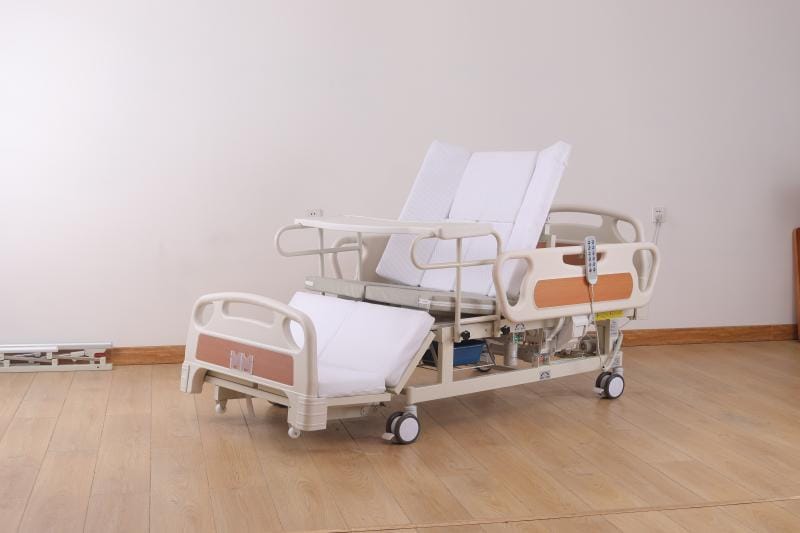
A photograph of the sample is useful, but it is not enough. The purchase order should refer to the approved technical specification, model and component list.
What Information Should You Send LOHO for a Useful Recommendation?
A request that says only “We need electric hospital beds” leaves too many questions unanswered.
A more useful inquiry explains the care setting and the functions that matter.
Send LOHO Medical:
- Intended care setting
- Patient group
- Required movements
- Expected adjustment frequency
- Whether powered height is required
- Whether the patient needs access to controls
- Room and doorway limits
- Mattress requirements
- Preferred side-rail design
- Caster and brake requirements
- Local voltage and frequency
- Destination country
- Order quantity
- Required technical documents
- Packaging or assembly preferences
- OEM or appearance requirements, where applicable
Separate mandatory requirements from preferences.
For example:
We require powered backrest and leg adjustment for a general ward project. Powered height is preferred but not mandatory. The clear doorway is 1050 mm. Please recommend the closest current LOHO model and identify any differences from these requirements.
That gives the hospital bed manufacturer enough context to make a relevant recommendation rather than simply send the full catalogue.
Project details can be submitted through the LOHO contact page.
FAQ: What Do Buyers Usually Ask Before Choosing?
Is an Electric Hospital Bed Always Better Than a Manual Bed?
No.
An electric model may be more practical when adjustments are frequent or powered height is required. A manual model may suit a setting where movements are simple, changes are occasional and a caregiver can operate the crank comfortably.
The care routine should determine the operating method.
What Is the Difference Between the LOHO Two-Function and Three-Function Beds?
The two-function model provides powered backrest and leg adjustment.
The three-function model adds powered height adjustment. LOHO publishes a height range of 415–710 mm for the Three-Function Electric Hospital Bed.
Does Every LOHO Electric Bed Use the Same Controls?
No.
Control layouts and motor systems vary by model. For example, the published 5 Function Electric Hospital Bed includes a large-icon remote and a MOTECK motor system.
The final control configuration should be confirmed in the quotation and sample.
Can a Manual Bed Be Used in a Hospital or Clinic?
Yes, when its intended use and specifications match the facility’s requirements.
Manual operation may be suitable where adjustment is limited and caregivers can operate the bed safely and comfortably. The complete frame, mattress, rails, casters and documentation still need to meet the project specification.
Which LOHO Bed Is Suitable for Home Care?
LOHO lists standard electric hospital beds, nursing beds and a dedicated Electric 5-Function Home Care Hospital Bed.
The suitable option depends on the required movements, caregiver, room, delivery route, electrical supply and maintenance plan. There is no single home-care model that fits every situation.
Does Every Electric Hospital Bed Include Battery Backup?
Battery availability and function are model-specific.
Do not assume it is included. Ask which movements the battery supports, how it is charged and what staff should do during a power interruption.
Which LOHO Hospital Bed Fits Your Project?
The most practical way to compare a manual vs electric hospital bed is to work from the care routine outward.
A LOHO manual backrest or single-crank bed may fit a project where positioning needs are focused and adjustments are occasional.
The LOHO two-function electric bed may suit a setting that needs powered backrest and leg adjustment while keeping a fixed bed height.
The three-function electric bed adds powered height adjustment for projects where the working or transfer level changes during the day.
A five-function model becomes relevant when forward and reverse whole-bed tilt or other model-specific hospital and ICU features are part of the requirement.
For long-term care involving turning, lifting, toileting or other nursing-specific routines, LOHO’s electric nursing-bed range may be more appropriate than a standard hospital bed.
The final decision should cover the complete system:
- Adjustment functions
- Bed dimensions
- Mattress
- Side rails
- Casters and brakes
- Controls
- Electrical supply
- Room and delivery route
- Maintenance documents
- Spare parts
- Packaging and assembly
A clear description of the project will help LOHO Medical identify the closest current model and explain which details still need to be confirmed before sample approval or production.