Table of Contents
Hospital cabinet cleaning depends on access, material compatibility, and a clear division of responsibilities. A smooth outer surface is helpful, but staff also need to reach drawers, shelf supports, pull-out trays, handles, and areas exposed when the cabinet is moved. Procurement should assess those tasks before approving the furniture.
This article focuses on cleaning access and operational planning for bedside cabinets. The facility's infection-prevention team determines the cleaning and disinfection procedure; the manufacturer supplies the product-specific material and maintenance instructions. The buyer's role is to make sure those requirements can work together in the proposed room and daily routine.
Map The Cabinet'S Touch Points
Start with the parts used during a normal day: the top, drawer handle, door edge, tray, side hooks, and any towel support. Then identify internal surfaces that become exposed during patient turnover or spill cleanup. Different tasks may require different access, even when the same cabinet is involved.
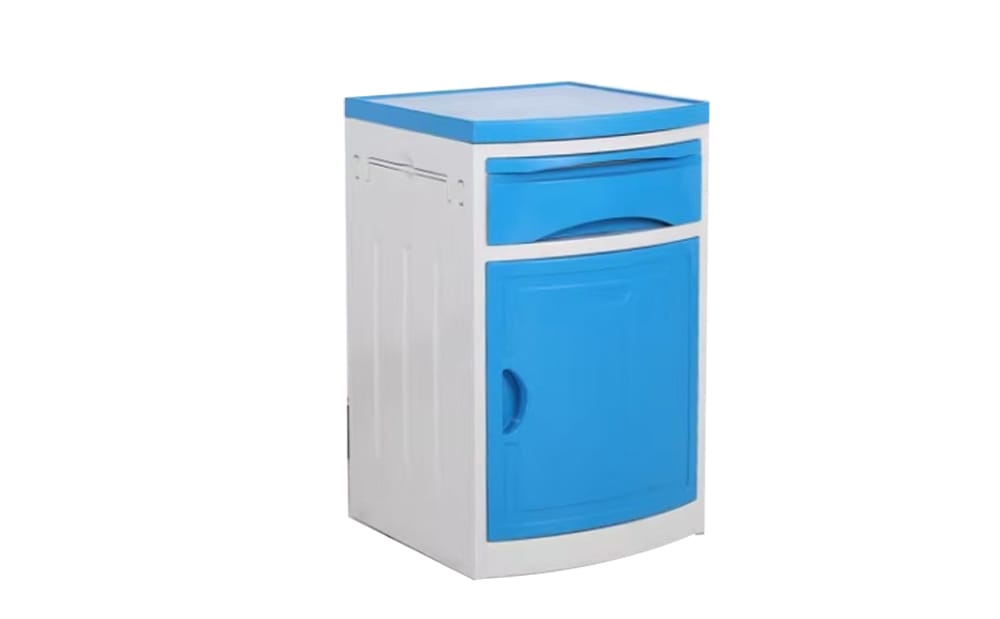
LOHO's hospital bedside cabinet is described as injection-moulded plastic with a drawer, adjustable internal shelf, retractable dining tray, and foldable towel rack. Those features create useful storage, but they also define specific surfaces and joints that should be included in a cleaning-access review.
Ask the supplier for photographs with the drawer, door, shelf, and tray in the positions used for cleaning. A closed product photograph cannot show whether staff can reach the back of a shelf or the underside of a tray. Do not assume a part is removable unless the instructions confirm it.
Match Chemicals To The Actual Materials
A description such as plastic, waterproof, or rust-free does not identify which disinfectants can be used repeatedly. Request the approved products or chemical classes, concentrations, contact times, application methods, and restrictions. The answer should concern the supplied cabinet and its components, not merely the main moulded body.
The CDC's recommendations for disinfection and sterilisation emphasise appropriate product use for environmental surfaces. The purchasing decision should therefore include a compatibility review of the facility's procedure and the manufacturer's instructions. Do not assume that a more concentrated solution is a better or acceptable substitute.
If the cabinet has labels, hinges, drawer guides, or attachments made from other materials, include them in the question. A compatible outer shell does not establish compatibility of every component. Ask how the supplier handles proposed changes to cleaning products after the cabinet is already in service.
Evaluate Access With The Cabinet In Position
An empty room can make any cabinet look easy to clean. Evaluate the actual arrangement beside the bed, with the planned table, wall, and other equipment in place. Check whether the door and tray can open far enough and whether staff can reach the side facing the bed.
If moving the cabinet is part of the cleaning procedure, establish who moves it and how its contents are managed. Do not assume an unverified caster arrangement or use a towel rack as a handling point. Obtain the manufacturer's permitted moving method and assess it against the local task.
The HSE's moving and handling guidance for health and social care includes the movement of equipment and other loads. For a bedside cabinet, this supports reviewing the cleaning task with the people who carry it out. Furniture access should not depend on an awkward manoeuvre that was never considered during room planning.

Separate Routine Cleaning From Patient Turnover
Routine cleaning may occur while personal belongings remain in the cabinet. Patient turnover can involve emptying storage, inspecting internal surfaces, and preparing the cabinet for another user. Define those workflows separately so that responsibilities and access requirements are clear.
The CDC's environmental cleaning procedures describe coordination between cleaning and clinical staff, including responsibility for equipment and surfaces. Apply that principle locally by specifying who removes personal items, who cleans the cabinet, and who confirms it is ready for reuse. Avoid relying on an assumption that another team will deal with the drawer.
Agree how staff report contamination or damage discovered during cleaning. A cracked surface, loose attachment, or damaged guide may need maintenance review rather than another wipe. Do not let a cleaned-status label conceal a functional defect that has not been resolved.
Compare Cabinets Through A Practical Trial
| Review area | Practical question | Information to record |
|---|---|---|
| Drawer access | Can approved cleaning reach the full internal surface? | Opening range and permitted removal method |
| Shelf arrangement | Can the shelf and supports be accessed? | Removal, drying, and reassembly instructions |
| Dining tray | Are the upper and lower surfaces reachable? | Retraction gaps and approved cleaning method |
| Side attachments | Do hooks or racks obstruct access? | Folded and open positions |
| Room placement | Can staff reach all required surfaces? | Clearance and movement arrangements |
| Materials | Does the local procedure match supplier instructions? | Approved chemical and method references |
| Damage response | Who decides whether the cabinet can remain in use? | Reporting and repair route |
Run the trial with the intended cleaning staff and an unloaded sample. Record the procedure used and any steps that were difficult to perform. The purpose is to reveal practical barriers, not to conduct an improvised microbiological validation or make an unsupported claim about infection reduction.
If two cabinets have similar storage capacity, the one with accessible surfaces and a workable maintenance process may be the better fit for the facility. That conclusion depends on the observed task and documentation; it should not be generalised to every room or product made from the same material.
Keep Storage Use Consistent With The Cleaning Plan
A bedside cabinet used for personal belongings should not silently become a mixed store for clean clinical supplies, waste, and cleaning chemicals. Define the intended contents and the boundaries of use with the responsible team. The cabinet's location beside a patient does not make it a sterile storage system.
Consider the pull-out tray separately from the main storage compartment. Ask how the facility manages meals, personal items, and cleaning access around that surface. Grooves or recesses may be convenient, but their practical cleaning should be included in the sample review rather than judged from appearance alone.
The LOHO hospital furniture category includes cabinets and overbed tables. Choose their roles together so that staff and patients understand which surface is intended for which task. Clear use reduces the need to improvise storage arrangements that make cleaning more difficult.

Plan Inspection And Repair Alongside Cleaning
Ask the manufacturer what damage requires withdrawal, repair, or replacement, and which parts can be serviced. Keep that guidance accessible to staff who are most likely to notice defects during cleaning. A report should identify the cabinet and the affected part, rather than describing every issue as a broken cupboard.
The HSE's work-equipment inspection guidance explains that inspection needs and frequency should reflect risk. It does not establish a universal bedside-cabinet inspection interval. The organisation should determine the appropriate checks using the product information and its own conditions of use.
For a repeated issue, retain enough detail to distinguish a material problem, an unsuitable cleaning method, or damage caused during handling. That does not mean assigning fault before investigation. It means giving the supplier and facility team a usable description of the condition and context.
Specify The Cleaning Information In The Order
Include the cabinet configuration, required cleaning documentation, local chemical list, and room-access constraints in the enquiry. Ask for confirmation of any permitted component removal and the method for reassembly. If the supplier cannot confirm compatibility with a proposed procedure, resolve the gap before making it the facility's routine.
The existing bedside cabinet selection guide addresses broader furniture selection. Keep this cleaning review as a separate acceptance item so that storage capacity and appearance do not dominate the decision. A cabinet can satisfy the space plan while still requiring changes to the cleaning workflow.
Use LOHO's service contact route to discuss replacement components and maintenance instructions. Record the agreed scope for the particular cabinet. Do not assume that all accessories, repair options, or instructions are identical across future orders carrying a similar product name.
Conclusion
Choose a bedside cabinet that staff can clean using approved methods in its real location. Assess access, material compatibility, storage use, and defect reporting together before approving the sample.
Send LOHO your cabinet requirements and cleaning-procedure questions to discuss the available configuration and manufacturer instructions. Involve cleaning and infection-prevention staff in the final review.
FAQ
Does a waterproof cabinet allow any cleaning method?
No. The manufacturer should specify permitted methods and chemical compatibility for the complete product. A general waterproof description is not permission for unrestricted washing or immersion.
Should the cabinet be empty for every routine clean?
Follow the facility's approved procedure for the task. Routine cleaning and turnover cleaning may have different requirements, including how personal belongings are handled.
Can a drawer be removed if it seems to pull out?
Confirm the permitted removal and reassembly method first. Forcing a drawer beyond its intended travel can damage the mechanism or create a later functional problem.
Does plastic construction eliminate inspection needs?
No. Surfaces, attachments, hinges, and other parts can still become damaged. Define checks and reporting based on the product instructions and local risk assessment.
Who should approve a new cleaning chemical?
The responsible facility team should review the proposed method with the manufacturer for material compatibility and with infection-prevention personnel for the intended cleaning task.