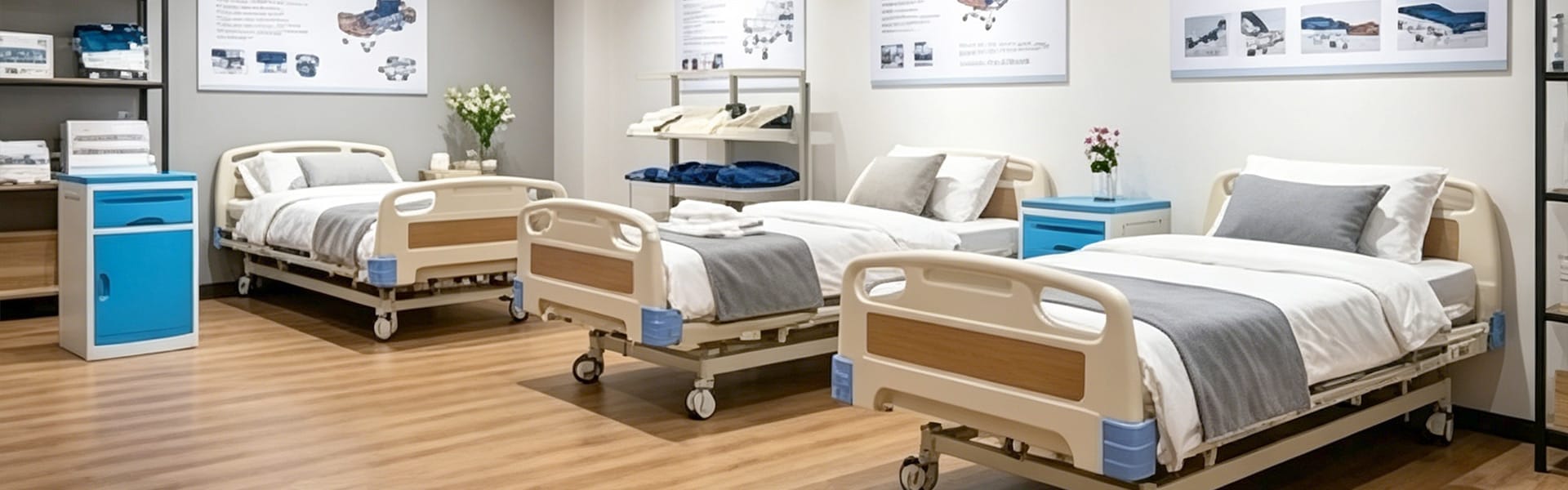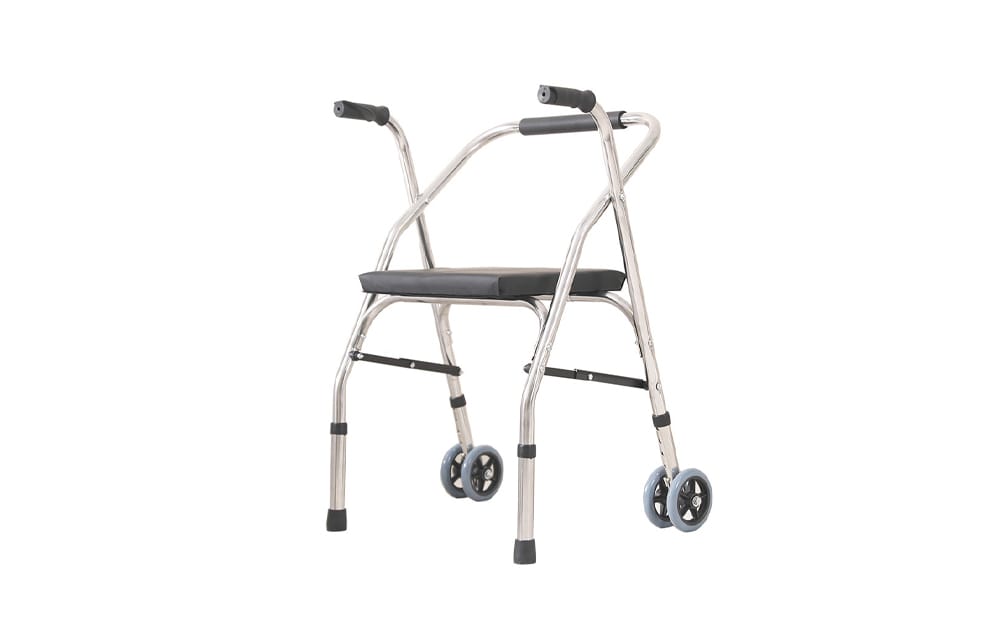
China is one of the world’s major manufacturing bases for hospital beds, nursing beds and related medical furniture. International buyers can find a wide range of products, from basic manual ward beds to multifunctional electric ICU beds and specialized nursing beds for long-term care.
However, choosing the right hospital bed manufacturer in China requires more than comparing product photos and unit prices. Hospital beds are used in demanding environments where structural stability, electrical reliability, patient safety and ease of maintenance all matter. A product that appears affordable at the quotation stage may create higher costs later if replacement parts are difficult to obtain or if the configuration does not match the intended application.
Medical equipment distributors, hospital project contractors, importers and healthcare institutions should therefore evaluate the supplier’s manufacturing capability, technical documentation, quality-control process and after-sales support before placing a bulk order.
This guide explains the main factors buyers should consider when selecting a hospital bed supplier in China.
Table of Contents
Start with a Clear Application Requirement
The first step is to define where the beds will be used.
A hospital bed designed for a general ward does not need the same configuration as an ICU bed. Similarly, a nursing bed for a long-term care facility may require functions that are unnecessary in a short-stay hospital department.
For a general ward, buyers may focus on backrest adjustment, leg positioning, stable side rails and easy movement between rooms. An intensive-care unit may require height adjustment, Trendelenburg and reverse Trendelenburg positioning, emergency CPR functions and a central braking system.
Long-term care facilities often place greater importance on low bed height, simple controls, turning functions and features that reduce caregiver workload. Rehabilitation centers may require beds that support frequent patient transfer and different treatment positions.
Before contacting a manufacturer, prepare a short project brief explaining the intended application, estimated quantity, required functions, destination country and certification needs. This allows the supplier to recommend a suitable model rather than simply offering the cheapest product available.
Confirm That the Supplier Has Real Manufacturing Capability
Many companies can provide hospital bed quotations, but not all of them control the manufacturing process directly.
A genuine hospital bed factory should be able to explain how its products are made, tested and assembled. Buyers should look for evidence of production processes such as frame fabrication, welding, surface treatment, assembly and final inspection.
Factory photos are useful, but recent production videos or a live video tour usually provide a clearer picture. For larger orders, buyers may also arrange an onsite audit or use an independent inspection company.
During the review, pay attention to whether the supplier can answer technical questions clearly. A reliable manufacturer should understand the relationship between frame structure, safe working load, lifting systems and daily clinical use.
The manufacturer should also be able to explain which processes are completed internally and which components are purchased from external suppliers. Outsourcing individual components is common, but the factory should still have a system for evaluating incoming materials and maintaining consistent product quality.
Evaluate the Product Range
A supplier with a broad product catalogue is not automatically better. The more important question is whether the manufacturer has experience with the type of bed required for the project.
Buyers sourcing products for different departments may need a combination of manual hospital beds, electric ward beds, ICU beds, examination couches and bedside furniture. A distributor may also need several models at different price levels to serve hospitals, nursing homes and home-care markets.
LOHO’s current electric hospital bed range includes configurations for general wards, intensive care and other medical applications. Comparing models within the same product category can help buyers identify which functions are necessary for their target customers.
When reviewing a product range, look beyond the number of models shown on the website. Ask whether the supplier can provide complete technical specifications, consistent spare parts and long-term support for each model.
Compare Functions, Not Only Model Names
Hospital beds are often described as two-function, three-function or five-function models. However, different suppliers may define these functions in slightly different ways.
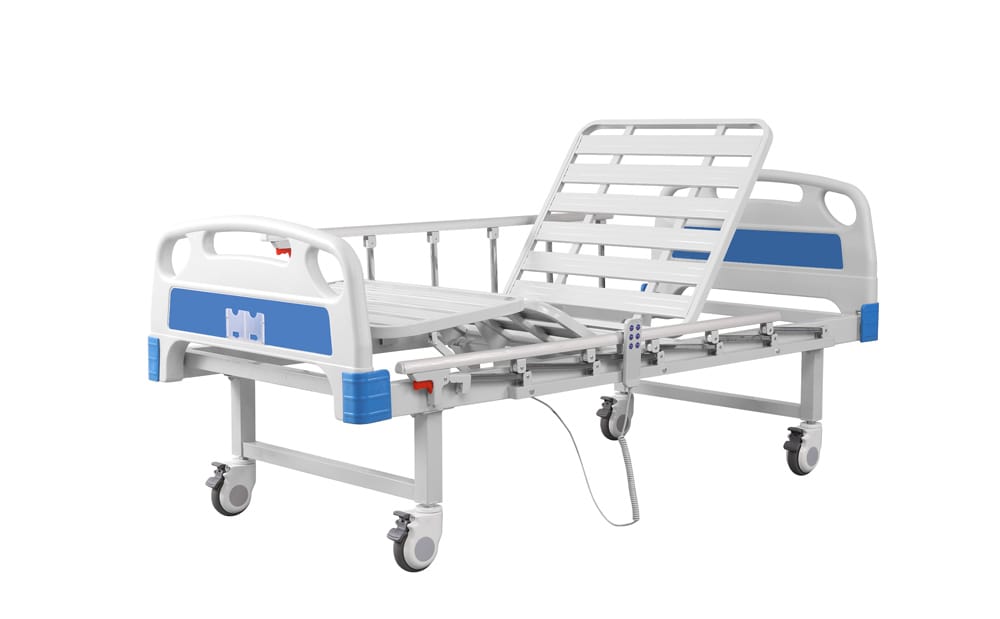
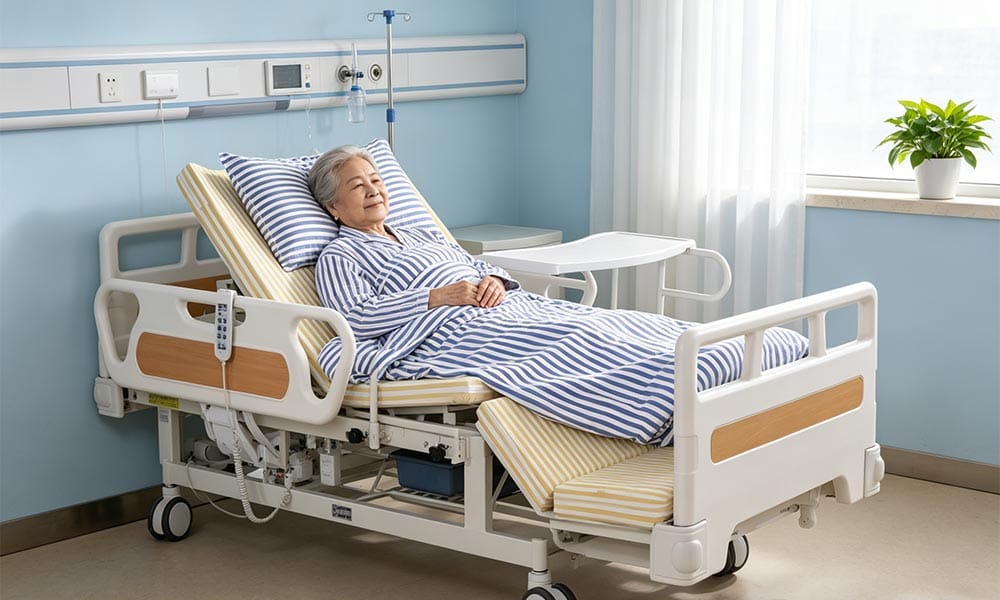
A two-function bed usually includes backrest and leg-rest adjustment. A three-function bed commonly adds height adjustment. A five-function model may also provide Trendelenburg and reverse Trendelenburg positioning.
These descriptions are useful, but buyers should request the actual adjustment range for every function. The maximum backrest angle, minimum bed height and Trendelenburg range can affect usability in clinical environments.
A simple comparison table can help clarify the differences:
| Bed Type | Typical Functions | Common Application |
|---|---|---|
| Two-function hospital bed | Backrest and leg-rest adjustment | General wards and basic care |
| Three-function hospital bed | Backrest, leg rest and height adjustment | Hospitals and rehabilitation facilities |
| Five-function hospital bed | Backrest, leg rest, height and tilt functions | ICUs and higher-level patient care |
| Turning nursing bed | Position adjustment with assisted turning functions | Elderly care and long-term nursing |
| Manual hospital bed | Crank-operated position adjustment | Facilities requiring simple maintenance |
Buyers should also confirm how each movement is controlled. For electric models, the number of motors does not always indicate the number of usable functions. The supplier should explain how the motor system is configured and whether the functions can be operated independently.
Check Frame Strength and Construction Quality
The frame is the foundation of the hospital bed.
A strong frame should remain stable during repeated position adjustments, patient transfers and movement between rooms. Buyers should ask about the type of steel used, the dimensions of the main structural sections and the surface-treatment process.
Welding quality is another important factor. Poorly finished or inconsistent welds may weaken the structure and make cleaning more difficult. Product photos should show smooth joints, even surfaces and carefully finished edges.
The surface coating should resist routine cleaning and normal wear. Powder coating is commonly used for hospital bed frames, but the final performance depends on the preparation process and coating consistency.
The stated load capacity should refer to the complete bed under normal operating conditions. Buyers should distinguish between the maximum static load and the safe working load recommended for regular use.
For projects involving heavier patients, the manufacturer should provide a model designed specifically for higher load requirements rather than simply claiming that a standard bed can support more weight.
Review the Motor and Control System
For an electric hospital bed, the motor and control system directly affect adjustment stability, operating noise and future maintenance.
Buyers should confirm whether the motor system can support the stated safe working load during repeated use. Testing should be carried out under realistic conditions rather than with an empty bed.
The backrest, leg section and height adjustment should move smoothly without sudden stops, excessive vibration or abnormal noise. The control handset should be clearly marked and easy for caregivers to operate.
In some environments, a control-lock function may be necessary to prevent patients from changing certain positions without supervision. ICU beds may also require nurse controls, emergency CPR positioning or battery backup.
Electrical compatibility is another practical issue. The manufacturer should configure the correct voltage and plug type for the destination market. Buyers should also ask how the system is protected against overload and liquid exposure.
Long-term serviceability is just as important as initial performance. Replacement motors, control boxes and handsets should remain available after delivery. Before ordering, ask whether the supplier can provide part numbers, warranty conditions and troubleshooting support.
A low purchase price may offer little value if the electrical components cannot be replaced when maintenance is required.
Inspect Side Rails, Casters and Braking Systems
Side rails and casters are among the most frequently used parts of a hospital bed.
Side rails should operate smoothly and lock securely. They should be easy for caregivers to lower, but difficult for patients to release accidentally. The design should also minimize gaps or sharp contact points that could create safety concerns.
Hospital bed casters should roll smoothly on the intended floor surface. A central braking system is often preferred for ICU beds and other environments where staff need to lock all wheels quickly.
For basic ward beds, individual caster brakes may be sufficient, but buyers should test how firmly the bed remains in place after the brakes are applied.
Caster diameter also affects movement. Larger casters may make the bed easier to move across thresholds and uneven surfaces, while smaller casters may be suitable for beds that are moved less frequently.
Verify Certifications and Technical Documentation
Medical device certification should be reviewed carefully.
Buyers should not accept a simple statement that the factory is certified. They should ask to see the actual documents and confirm that the company name, product scope, issue date and expiry date are consistent.
ISO 13485 is commonly used as a quality-management standard for organizations involved in medical-device manufacturing. Buyers can review the official ISO 13485 overview to understand the purpose and scope of the standard.
However, an ISO certificate does not automatically prove that every hospital bed model meets the regulatory requirements of every market.
The buyer should also check whether the selected model is covered by relevant product testing and technical documentation. Depending on the destination country, additional registration, labeling or importer responsibilities may apply.
The World Health Organization’s medical device guidance provides broader information about medical-device regulation and healthcare technology management.
Before production begins, confirm which documents must be supplied with the shipment and which documents are required for customs clearance or local registration.
Assess OEM and Customization Capabilities
Many distributors and healthcare projects need more than a standard factory model.
Common customization requests include frame colors, headboard designs, side rail styles, mattress specifications, caster sizes, control systems, labels, packaging and user manuals.
Logo printing and carton customization are relatively simple. Structural modifications are more complex and may affect tooling, testing, lead time and certification.
A professional OEM hospital bed manufacturer should explain which changes are practical and which changes may create additional risks or costs.
Before approving a custom configuration, confirm the final specification in writing. Drawings, photos or signed technical sheets can reduce misunderstandings between the buyer and manufacturer.
The final document should clearly show the dimensions, adjustment functions, accessories, electrical configuration and branding requirements.
Request a Complete Quotation
A hospital bed quotation should provide enough information for a fair comparison.
The quotation should identify the exact model and describe the complete configuration. It should explain whether the mattress, IV pole, dining table, battery or other accessories are included.
Buyers should also confirm the product dimensions, packing size, gross weight, minimum order quantity, production lead time and warranty conditions.
Two suppliers may offer beds that appear similar but use different frame structures, motor systems, casters or accessories. Comparing only the unit price can therefore lead to the wrong purchasing decision.
The Incoterm should also be stated clearly. An EXW price does not include the same services as an FOB or CIF quotation.
For bulk orders, buyers should calculate the landed cost rather than focusing only on the factory price.
Order and Test a Sample
A sample order is one of the most practical ways to evaluate a new supplier.
The sample should match the proposed bulk-order configuration. During testing, inspect the frame, surface finish, side rails, casters, brake system, mattress platform and electrical controls.
Operate every adjustment repeatedly. Test the bed with a realistic load and check whether the movement remains smooth.
The packaging should also be evaluated. Hospital beds are large products, and poor packaging can result in scratches, bent parts or damaged electrical components during international transportation.
If the bed is shipped partially disassembled, the supplier should provide clear assembly instructions or installation videos.
Any problems found during sample testing should be corrected before bulk production begins.
Review the Quality-Control Process
Reliable hospital bed manufacturers usually inspect products at several stages of production.
Incoming steel, plastic parts, motors and accessories should be checked before assembly. Welded frames should be inspected before coating, while finished beds should undergo functional and appearance checks before packaging.
For electric beds, the factory should test the movement of every motorized function. Brakes, side rails and emergency mechanisms should also be checked.
Large orders may justify a third-party pre-shipment inspection. The inspection can confirm model numbers, quantities, functions, labels, packaging and general workmanship.
An inspection standard should be agreed upon in advance. Without a clear standard, buyers and suppliers may have different expectations about acceptable quality.
Confirm Packaging and Container Loading
Packaging has a major effect on transportation cost and product condition.
Ask the manufacturer how many cartons are used for each bed and whether the frame, headboard, side rails and accessories are packed separately. The supplier should provide packing dimensions and estimated container-loading quantities.
The packaging should protect coated surfaces, plastic components, motors and control handsets from impact.
Buyers should also confirm whether moisture protection is used for long-distance sea transportation.
For distributor orders, clear carton labels can make warehouse handling easier. Model numbers, quantities and package contents should be visible on the outer packaging.
Evaluate Warranty and After-Sales Support
Hospital bed maintenance continues long after the shipment arrives.
A reliable supplier should clearly explain the warranty period for the complete bed and major electrical components. The warranty should state what is covered, what is excluded and how replacement parts are supplied.
Buyers should ask whether technical support is available by email, video call or written troubleshooting guide.
For larger projects, it may be useful to order common spare parts together with the beds. Handsets, controllers, casters and mechanical components are easier to replace when the correct parts are already available.
The supplier should also be able to maintain spare-parts compatibility. Frequent changes to motors or control systems can make future maintenance more difficult.
Common Warning Signs When Choosing a Supplier
Price is important, but several warning signs may indicate future problems.
Be cautious when a supplier provides an unusually low price without explaining the product configuration. A professional quotation should clearly identify materials, functions, accessories and electrical components.
Inconsistent company names across certificates, invoices and websites should also be investigated. The same applies when the supplier refuses to show the factory or cannot explain basic technical details.
Vague warranty terms and unclear spare-parts support are additional risks, especially for electric hospital beds.
A reliable manufacturer should answer questions clearly and document important agreements in writing.
Hospital Bed Manufacturer Evaluation Checklist
| Evaluation Area | What the Buyer Should Confirm |
|---|---|
| Manufacturing capability | The supplier controls production, assembly and inspection |
| Product suitability | The model matches the intended hospital or care application |
| Structural quality | The frame, welds, coating and load capacity are appropriate |
| Electrical system | Motors and controls are stable, compatible and replaceable |
| Safety features | Side rails, brakes and emergency functions operate reliably |
| Documentation | Certificates and technical files cover the selected model |
| Customization | OEM requirements are confirmed in drawings or specifications |
| Quality control | Inspection is completed during and after production |
| Packaging | The bed is protected for international transportation |
| After-sales service | Warranty, spare parts and technical support are available |
Why Consider LOHO Medical?
LOHO Medical supplies hospital beds, nursing beds and related medical equipment for hospitals, rehabilitation facilities, elderly-care institutions and distributors.
The company’s product range includes electric hospital beds, manual hospital beds, nursing beds, medical furniture and bed accessories. Different configurations are available for general wards, intensive-care applications and long-term care environments.
Buyers planning a hospital project, distribution order or customized product line can contact LOHO Medical to discuss the required functions, quantity, destination country and technical documentation.
Frequently Asked Questions
How can I verify that a Chinese hospital bed supplier is a real manufacturer?
Ask for recent factory videos, business registration details, production-process information and quality-control documents. For larger orders, arrange a factory audit or independent inspection.
Should I buy a sample before placing a bulk order?
Yes. A sample allows you to evaluate the structure, functions, motor system, side rails, casters and packaging before approving mass production.
What certifications should a hospital bed manufacturer provide?
The required documents depend on the destination market. Buyers commonly review quality-management certification, product test reports, technical files and market-specific compliance documents.
Can a hospital bed be customized for my brand?
Many manufacturers offer logo, color, packaging, mattress and accessory customization. Structural or electrical changes may require additional engineering, testing and lead time.
How should I compare prices from different manufacturers?
Compare the complete configuration rather than the unit price alone. Check the functions, frame structure, motor system, accessories, mattress, packaging, warranty and shipping terms.
What should I ask about spare parts?
Confirm whether replacement motors, controllers, handsets, casters and mechanical components will remain available after delivery. Ask for part numbers and warranty conditions before ordering.
Conclusion
Choosing a hospital bed manufacturer in China requires a structured evaluation process.
The best supplier is not necessarily the company offering the lowest price or the largest catalogue. A reliable manufacturer should understand the intended application, provide clear technical documentation and support consistent product quality.
Before placing a bulk order, define the required functions, verify the factory, review the certifications, test a sample and confirm the final specification in writing.
Buyers should also consider long-term issues such as spare-parts availability, electrical compatibility, packaging and warranty support.
A careful supplier-selection process helps reduce procurement risks and creates a stronger foundation for long-term cooperation.