Table of Contents
A hospital bed bulk order needs an allocation plan that connects each approved configuration to its destination, accessories, documents, and release status. The total quantity is only the starting point. Without that connection, a delivery can contain the correct number of beds while still leaving individual wards with the wrong combinations or incomplete handover information.
This guide focuses on managing a mixed order across wards or sites. It assumes that the clinical requirements and supplier evaluation are being handled by the responsible teams. Its purpose is to help procurement turn those decisions into an order that receiving staff can identify and distribute without guessing.
Start With Configuration Groups, Not Room Numbers
Create a configuration group for each materially different approved bed package. A group should identify the bed model, electrical arrangement where applicable, mattress, rails, accessories, and required documentation. Do not use a room number as the only product specification; room allocations can change while equipment requirements remain the same.
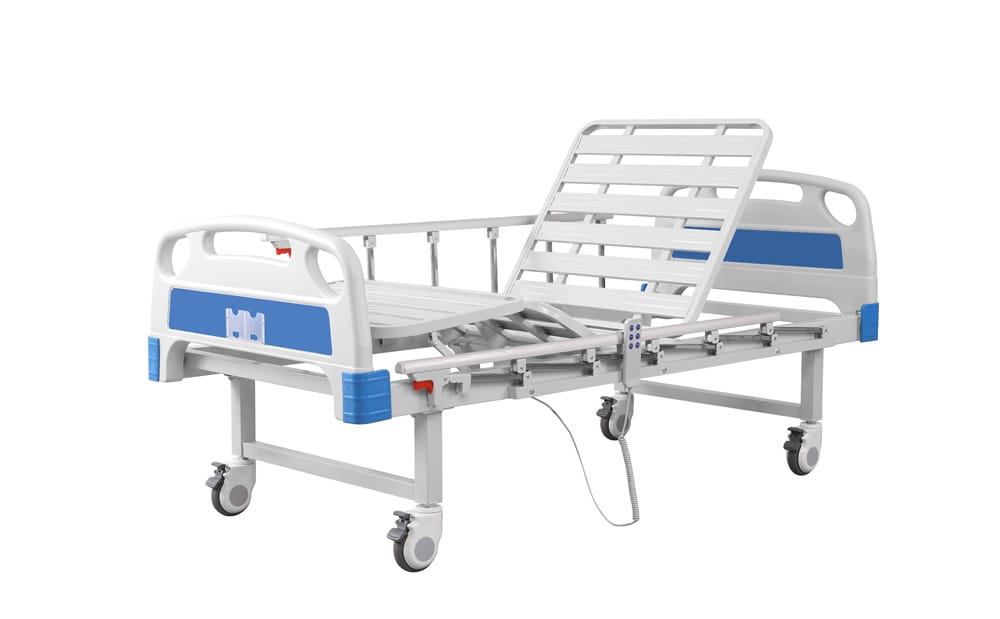
LOHO's two-function electric hospital bed lists electric backrest and leg-rest adjustment. The three-function electric bed adds height adjustment. That verified difference can help define groups, but function count alone is not a complete clinical or technical requirement.
Ask the responsible care and technical teams to approve the configuration description. A label such as standard ward bed is too broad if different staff interpret it differently. Preserve the exact product references and agreed options so future allocation decisions can be checked against something stable.
Decide What Should Be Standardised And What Should Not
Standardising an appropriate configuration can simplify identification, training, and supported parts management. However, uniformity should not override a genuine difference in clinical needs, room constraints, or intended use. Separate justified variation from optional preferences before the purchase schedule is finalised.
The WHO's procurement process resource guide provides a framework for accountable medical-device purchasing. Apply that principle by recording who authorised each configuration group and why it exists. The aim is a defensible set of requirements, not the smallest possible number of catalogue entries.
Keep accessories within the decision. A different mattress, rail, or control option can matter even when the bed frame is unchanged. Do not allow an accessory substitution to bypass the approval process because the main line item retains its original model name.
Build The Allocation Matrix Before Packing Instructions
| Allocation field | Example of the information required | Responsible confirmation |
|---|---|---|
| Configuration code | Buyer's reference linked to exact manufacturer items | Procurement and technical reviewers |
| Destination | Site, ward, and receiving contact | Facility coordinator |
| Quantity | Number of complete packages in that group | Approved purchase schedule |
| Accessory set | Identified mattress, rails, and other supplied items | Clinical and technical reviewers |
| Document set | Applicable instructions and language | Training and equipment-management teams |
| Delivery phase | Agreed release or receiving sequence | Supplier and logistics coordinator |
| Current status | Ordered, received, held, or released | Named receiving and commissioning roles |
The table describes a record structure, not a real LOHO project. Populate it with the actual order information and keep the vocabulary consistent across purchase, packing, and receiving documents. If the buyer uses an internal configuration code, provide the supplier with the mapping to manufacturer references.
Check totals at two levels: the complete order and each configuration group. A correct grand total can conceal an excess of one version and a shortage of another. Record changes as revisions rather than editing several separate schedules without a common reference.

Make Package Identification Useful At The Receiving Door
Agree what information the receiving team needs to see before opening a package. A destination and configuration reference may help local allocation, but they should supplement rather than obscure manufacturer identification and required labels. Ask the supplier what labelling arrangement can be supported for the order.
Where a bed and its accessories travel in separate packages, use an agreed method to show which items form a complete set. Do not assume that a nearby carton belongs to the next bed unloaded. The relationship should remain understandable after packages have been moved into temporary storage.
For destinations with a Unique Device Identification system, review the applicable requirements separately. The FDA's UDI basics distinguishes device identification from production information in the US framework. An internal ward label is not a replacement for required manufacturer identification, and this article does not assert a particular LOHO registration or UDI status.
Plan Receiving Capacity For Each Phase
A delivery sequence should reflect the site's ability to receive, inspect, assemble, store, and release equipment. Ask the facility coordinator which areas are ready and what restrictions apply. Agree the sequence with the supplier rather than assuming that a preferred schedule is a confirmed lead-time commitment.
Review the handling task for each destination. The HSE's moving and handling guidance includes equipment movement in health and social care. For a large bed delivery, the useful question is whether the receiving team has an appropriate route, handling method, and space for the planned phase.
Avoid using clinical corridors as an unplanned holding area. Temporary storage should follow the facility's safety and access arrangements. If one destination is delayed, obtain a revised allocation and storage plan; do not redirect beds informally in a way that breaks the configuration record.
Keep Receipt, Completeness, And Release As Separate Statuses
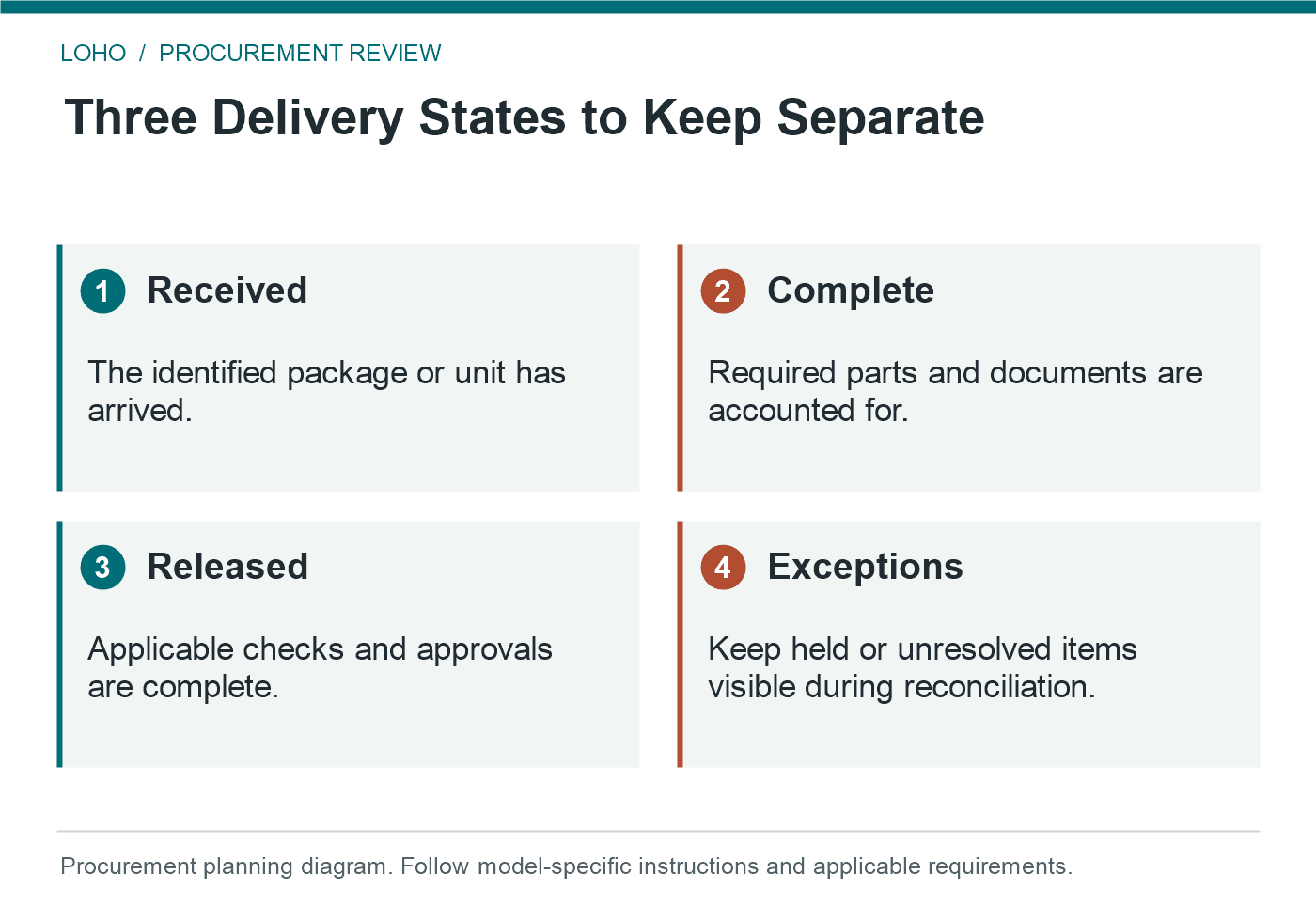
Receipt confirms that an item arrived. Completeness confirms that the required components and documents are present. Release for use follows the applicable checks and approvals. Combining all three into a single delivered status makes it difficult for staff to identify what remains outstanding.
Use a visible hold status for packages with damage, missing parts, incorrect identification, or unresolved technical questions. Record the affected items and the decision owner. An issue affecting one configuration does not automatically establish the status of every other group in the shipment; scope the review appropriately.
The MHRA's Managing Medical Devices guidance addresses acquisition, deployment, and ongoing equipment management. A practical allocation system should therefore leave an accessible record of what entered service, where it went, and which documents apply. The purchasing spreadsheet should not be the only surviving source of equipment identity.
Control Transfers Between Wards After Delivery
A later ward transfer may change the equipment's use context even though the bed itself is unchanged. Check the receiving ward's requirements and the complete accessory combination before treating the transfer as a purely administrative move. Preserve the bed's manufacturer identity and service history when updating its location.
If a bed is reassigned from one approved group to another, identify what actually changes. A different room label does not justify fitting an unverified mattress or replacing a control with a convenient spare. Apply the relevant compatibility and technical review to the changed configuration.
Discuss support identification through LOHO's service page. A service enquiry should be able to find the supplied model and revision even when the original delivery ward has changed. This is one reason to keep location information separate from permanent equipment identification.
Reconcile The Order Without Hiding Exceptions
At the end of each phase, reconcile quantities by configuration and status. Record missing items, accepted changes, pending replacements, and units not yet released. Avoid closing the order only because the receiving department has signed the carrier's delivery record.
The hospital bed sample-order guide addresses the reference configuration established before production. Use that reference where applicable, but keep bulk-order reconciliation focused on the actual quantities and destinations. Sample approval cannot tell the facility which accessory carton belongs to an individual delivered bed.
For subsequent orders, review whether the original configuration groups remain appropriate and whether any manufacturer revisions affect them. Do not copy the previous schedule without checking the changed requirements. A useful repeat order preserves verified information while reopening the decisions that genuinely changed.
Conclusion
Manage a bulk purchase as a set of identifiable equipment packages with approved destinations and clear release states. Configuration groups, package mapping, phased receiving, and exception records make the order usable for the teams who must deploy it.
Send LOHO your proposed configuration groups and delivery destinations to discuss an order-specific supply and identification plan. Confirm the schedule, documents, and supported labelling arrangement in writing before relying on them.
FAQ
Should every ward receive the same bed configuration?
Only when the responsible teams confirm that it meets their requirements. Standardisation is useful where appropriate, but it should not conceal meaningful differences in intended use or compatibility.
Can one purchase line cover several configurations?
The order must still identify each configuration and quantity unambiguously. Separate sub-lines or an agreed schedule can provide that detail if the main purchasing system uses a consolidated line.
Are room labels suitable as permanent asset identities?
Not on their own. Rooms and locations can change. Maintain the manufacturer's identification and the organisation's equipment record independently of the current allocation.
Does a signed delivery note mean beds are ready for use?
No. Receipt, completeness, and release should be recorded separately. Required assembly, technical, documentation, and user-handover checks still need to be completed.
What should happen when one ward cannot receive its allocation?
Agree a documented storage or reassignment plan and review any affected requirements. Keep the equipment identity, configuration, and current status traceable through the change.